
Aquarium Light Spectrum: A Practical Planted-Tank Guide

Aquarium light spectrum describes the mix of wavelengths a fixture emits. It affects plant responses and how colours look, but spectrum alone cannot tell you whether the substrate receives enough light—or too much.
Translate the specification sheet
| Term | What it tells you | What it does not prove |
|---|---|---|
| Spectrum or spectral distribution | The relative output across different wavelength bands. | Total intensity, coverage at the substrate or suitability for a particular aquarium. |
| Colour temperature (K) | How warm or cool a white light appears to human vision. | A complete spectral curve or plant-growing performance. |
| CRI | How colours render under the source compared with a reference. | Plant-useful intensity or even coverage. |
| Lumens | Visible brightness weighted to human vision; useful for comparing some lamps. | How photons are distributed by wavelength or where light reaches in the tank. |
| PAR | The photosynthetically active waveband; a PAR meter reports photon flux at its sensor. | Plant success without position, duration, carbon, nutrition and species context. |
| Watts | Electrical power consumed. | Light output: different fixtures can convert power to light with different efficiency. |
Michigan State University Extension separates light into duration, quantity and quality. That framework is useful here: spectrum is “quality,” but a planted aquarium decision also needs intensity, daily schedule and distribution.
Why red, green and blue all matter to the discussion
Plants respond to a range of visible wavelengths. Red and blue output are often emphasised because of their roles in photosynthesis and plant form, but green light is not useless; it contributes to photosynthesis and penetrates leaves and canopies differently. Research on terrestrial crops helps explain the principles, but it does not create a universal aquarium channel recipe.
White LEDs commonly combine a blue-emitting diode with a phosphor that produces a broader visible output. Additional red, green or blue diodes may change rendering and spectral shape. Two fixtures marketed as “full spectrum” can therefore look and perform differently.
Read the spectral graph without over-interpreting it
- Check the axes. The horizontal axis should show wavelength; the vertical axis may be relative output rather than calibrated photon flux.
- Look for measurement conditions. Distance, fixture setting and whether a diffuser or cover was used affect relevance.
- Distinguish a shape from an amount. A graph normalised to its highest peak shows proportions, not total output.
- Ask whether every channel setting has data. A graph for maximum output may not represent the programme you plan to use.
- Pair the graph with coverage data. Tank-length fit, optics, mounting height, water depth and hardscape determine where the spectrum arrives.
A buying hierarchy that keeps spectrum in context
- Safe physical fit: aquarium length, mounting method, load, cable routing, destination voltage and plug, and the maker’s wet-environment instructions.
- Plant-demand fit: the exact plants’ light categories, their placement and the aquarium depth.
- Coverage and intensity: documented output or measurements at useful distances, plus dimming range.
- Repeatable control: a dependable timer, memory behaviour after power loss and a schedule that can be recorded.
- Colour rendering: a white balance that shows livestock, red plants, green plants and hardscape naturally to you.
- Spectrum extras: channel control or published spectral data that serves a specific, understood goal.
Tune channels with a reference scene
Set a stable, moderate profile and photograph the same front view with camera white balance locked. Check four references: a healthy green leaf, a red or bronze leaf if present, a neutral grey stone and the livestock’s natural colour. Oversaturated red can make plants look healthier than they are; heavy blue can make water appear “crisp” while distorting colour.
Change one channel or overall intensity at a time. Keep the photoperiod, fertiliser, CO₂ and maintenance stable unless a separate verified problem requires correction. Assess new leaves, internode spacing, lower-leaf retention and algae location—not only how dramatic the aquarium looks on the first evening.
Common spectrum claims to challenge
- “6500 K is automatically perfect.” Colour temperature describes white appearance, not output or coverage.
- “More red always makes red plants redder.” Colour depends on exact plant genetics and the complete system; see the red aquarium plants guide.
- “Blue causes algae.” Algae pressure also reflects total exposure, plant health, waste, carbon and circulation; diagnose the pattern rather than one channel.
- “PAR is all that matters.” A reading at one point cannot describe the whole tank, spectrum, photoperiod or plant suitability.
- “Full spectrum means identical performance.” The label has no single aquarium standard; compare the underlying data.
Practical questions
Do I need adjustable RGB channels?
No. They are useful for rendering and controlled experimentation, but a well-designed fixed or white-spectrum planted light can be a better choice when its output, coverage and timer fit the aquarium.
Can a phone app measure PAR?
A phone may help compare relative brightness under consistent conditions, but it is not automatically a calibrated underwater PAR meter. Do not treat an app number as validated equipment data.
Should spectrum be changed when algae appears?
First map the algae and confirm the total light schedule, intensity, room sunlight, plant condition, waste and circulation. The lighting-and-algae guide gives a one-variable test.
Sources
Build a planted aquascape starter kit
Begin with a simple layout foundation, then choose lighting and maintenance tools that match the plants and available space.
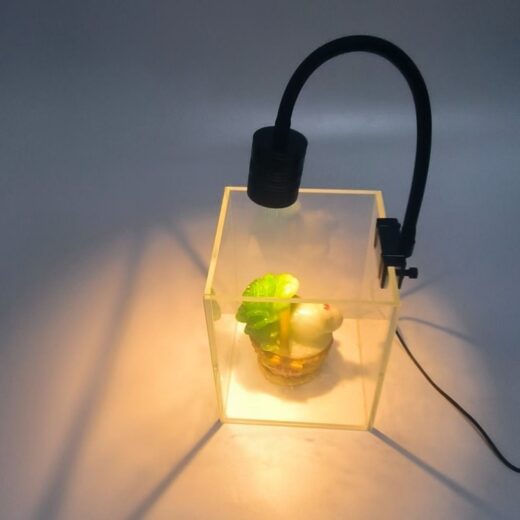
7 W USB Aquarium Plant Spotlight – Standard & Dimmable Models
Products matched to this guide
Selected for relevance to the setup and needs covered above.
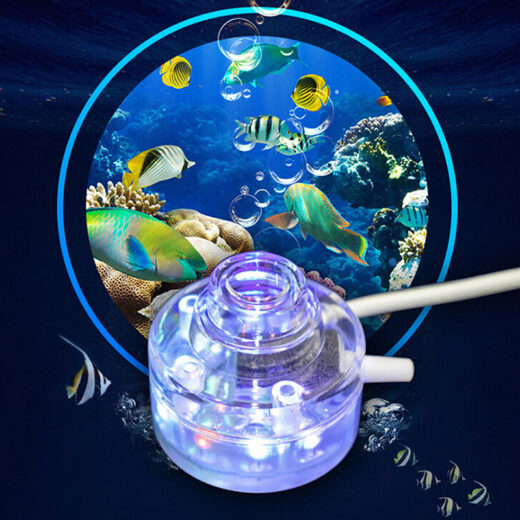
Aquarium LED Lamp – US/EU/UK Plug
Aquarium LED lamp with UK, EU or US plug options. Choose the regional version that matches…
View product
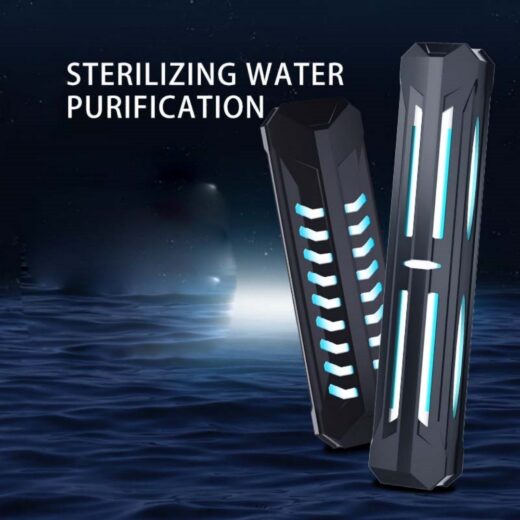
ZYUV3D Aquarium Lamp – Model and Plug Options
A timed ZYUV3D aquarium sterilizing lamp offered in 305, 307, 309, 311, 313, 315, 318 and…
View product