
Red Aquarium Plants: Colour, Light and Nutrition Guide
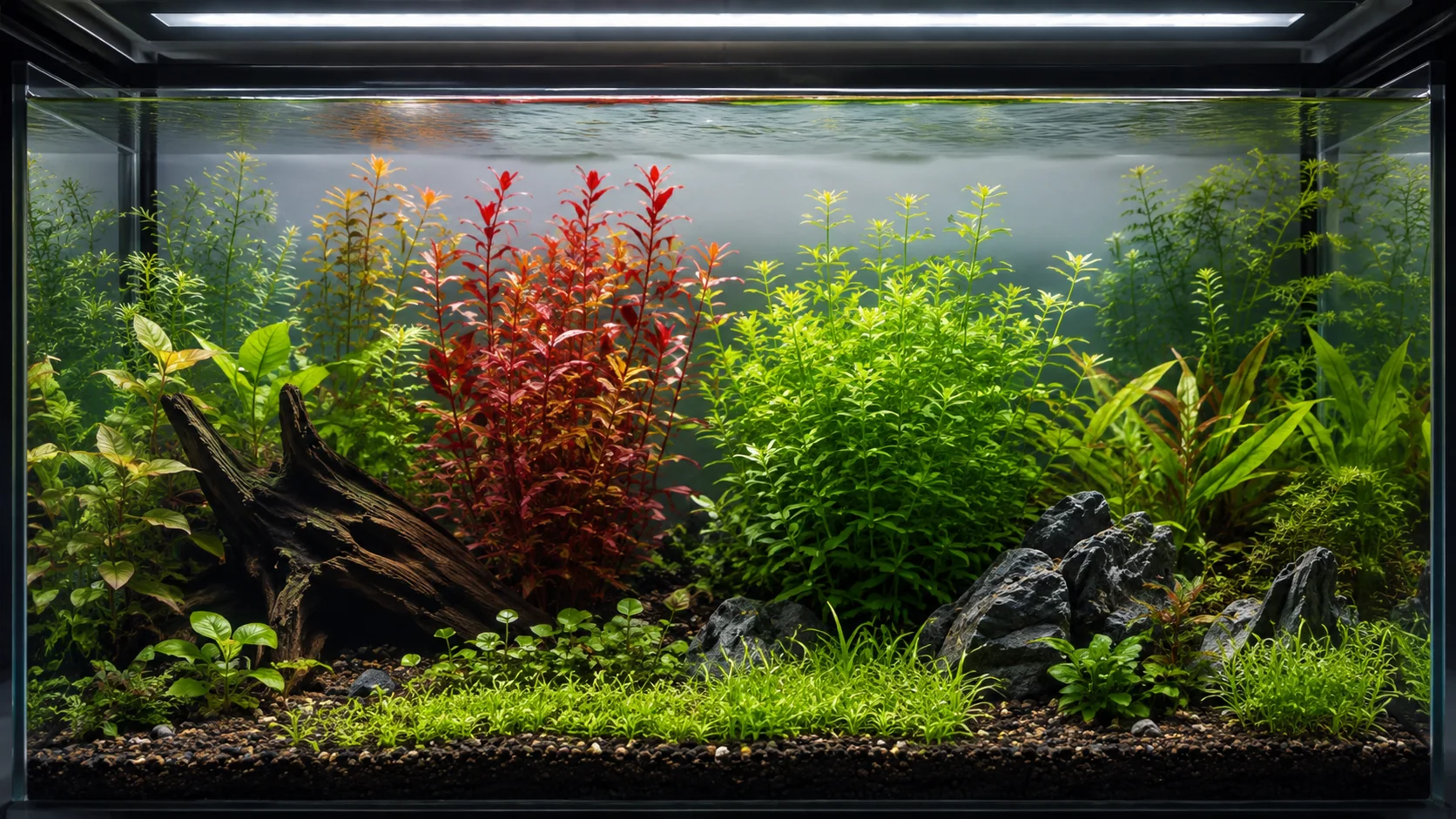
Red aquarium plants are not one care category. Colour potential, growth speed and system demand belong to the exact species or cultivar—not to the shopping label “red plant.”
Start with the exact plant name
“Red stem plant” and “red aquarium plant” are shopping descriptions, not care requirements. Record the scientific name and cultivar from the supplier label. Similar-looking plants may differ in mature size, growth speed, light demand, carbon demand and the shade they can realistically produce.
Check the plant against a recognised grower’s database before changing the aquarium. If the seller cannot confirm the identity, do not rely on precise colour or difficulty claims until the seller confirms the plant’s identity.
| Confirm before buying | Why it matters |
|---|---|
| Scientific name and cultivar | Colour potential and care demand are plant-specific. |
| Grower difficulty rating | It indicates whether the plant is intended for a simpler or more intensive system. |
| Mature height and growth form | A suitable foreground accent, midground rosette and background stem require different space. |
| Light and carbon guidance | The label “red” does not tell you whether added CO₂ or stronger light is expected. |
| Temperature guidance | The measured aquarium temperature must suit the exact plant, regardless of market or season. |
Choose colour that matches the current system
Plant choice is more reliable than trying to force a demanding species into a low-energy aquarium. For example, Tropica lists Ludwigia palustris ‘Super Red’ as one of its easier red stem plants, while also noting that stronger light and added CO₂ can improve its growth and colour. That is guidance for that cultivar, not permission to apply the same settings to every red plant.
A slower focal plant may be a better fit than a fast stem group in a small or lightly maintained aquarium. Tropica describes Lagenandra meeboldii ‘Red’ as a slow-growing midground or focal plant whose colour responds to lighting. Compare such options by their complete care profile, not by which product image looks most crimson.
Use red as a focal group, not visual confetti
One deliberate group usually reads more clearly than isolated red stems scattered through the tank. Place the group where its mature height fits the composition, with enough surrounding space for trimming and enough contrast from nearby green plants to make the colour useful.
Check the view from the normal seating position before planting. A red plant hidden behind hardscape or shaded by faster growth cannot perform the visual role you chose it for. Leave access to remove weak lower stems and replant healthy tops when the species’ normal maintenance method requires it.
Light, carbon and nutrition must be considered together
More light can increase the demand placed on the rest of the planted system. It is not a safe standalone colour control. Before raising intensity or extending the photoperiod, confirm that the exact plant is intended for that light level and that its carbon and nutrient requirements can be met consistently.
Do not diagnose iron deficiency from red colour alone, and do not reduce general nutrition to “stress” a plant red. Colour, leaf size, internode spacing and growth rate can respond to several overlapping conditions. Follow the exact fertiliser label and the plant grower’s guidance; this article does not provide a universal dose.
Tropica’s fertiliser and CO₂ guide explains why plant difficulty and carbon demand should be matched. Use it as manufacturer guidance, then verify the instructions for the products actually used in your aquarium.
Judge the newest healthy growth
Old leaves record old conditions, shipping and the plant’s previous growth form. Evaluate the leaves produced in your aquarium: are they intact, increasing in size as expected for the species, and forming at a normal spacing? Colour is one observation among those signals, not the only success measure.
| Observation | What it does not prove | Useful next check |
|---|---|---|
| Healthy new leaves are less red than a reference image. | It does not prove a deficiency. | Confirm the cultivar, photo conditions and grower’s expected colour range. |
| New leaves are pale, small or distorted. | It does not identify one missing nutrient. | Review the complete plant requirements and the aquarium’s recent changes before adding a product. |
| Lower leaves decline while upper growth continues. | It does not prove light is the only cause. | Check shading, crowding, flow, maintenance and the normal growth habit of that species. |
| Algae appears after a lighting increase. | It does not mean another increase will help the plant. | Return to the plant’s documented range and review whether the whole system supports the new demand. |
Avoid the common colour shortcuts
- Do not buy an unidentified red plant and reverse-engineer its care from appearance.
- Do not assume iron alone controls red colour.
- Do not raise light rapidly to copy an edited or professionally lit photograph.
- Do not starve a plant in pursuit of stress colour.
- Do not change light, CO₂ delivery and fertilisation together in response to one leaf.
- Do not keep a demanding plant solely because its colour suits the layout.
Account for local temperature and plant delivery
Use the measured aquarium temperature, not a regional assumption. An air-conditioned room in Dubai and a heated room in London, Berlin or Amsterdam can each differ substantially from the outdoor climate. Check the actual tank and compare it with the grower’s range for the exact plant.
Fresh deliveries may also show shipping or transition damage that colour adjustments cannot fix. In UAE and GCC heat, minimise time in hot vehicles or exposed delivery areas and inspect plants promptly. The DaraSphere guide to shipping live aquarium plants in GCC heat covers that stage separately.
Use a restrained adjustment sequence
- Confirm the plant’s scientific name and cultivar.
- Compare its current position and measured tank conditions with a recognised grower’s guidance.
- Check whether the newest leaves are otherwise healthy before treating colour as a problem.
- Correct an identified mismatch using the equipment or product maker’s instructions.
- Reassess the next healthy growth before deciding whether another adjustment is justified.
If the aquarium cannot meet a plant’s documented demand, choose a different red or bronze species—or use hardscape and green leaf contrast to create the focal point. A stable planted tank is a better outcome than a particular shade of red.
Related DaraSphere guides: Aquarium Plants, Low-Tech Plants for Hot Climates and Epiphyte Aquarium Plants.
Next step: If new growth is pale, damaged or distorted rather than simply less red, use the plant deficiency visual guide to separate observation from diagnosis.
Build a planted aquascape starter kit
Begin with a simple layout foundation, then choose lighting and maintenance tools that match the plants and available space.
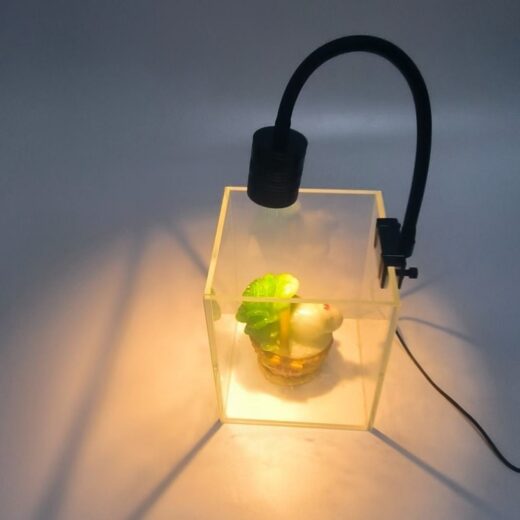
7 W USB Aquarium Plant Spotlight – Standard & Dimmable Models
Products matched to this guide
Selected for relevance to the setup and needs covered above.
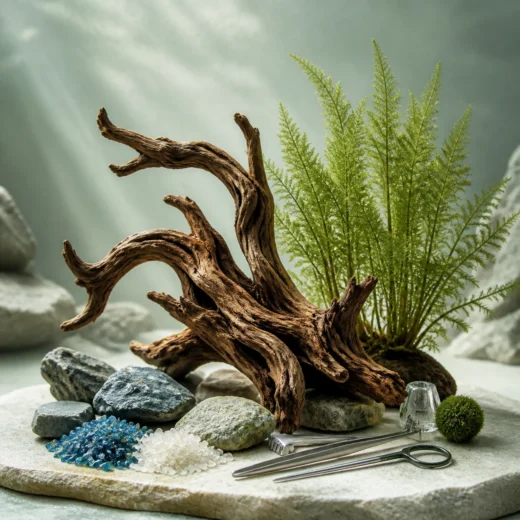
Natural Aquascape Value Bundle
A coordinated hardscape and planting set for an immediate, nature-inspired visual transformation. Shipping calculated at checkout.
View product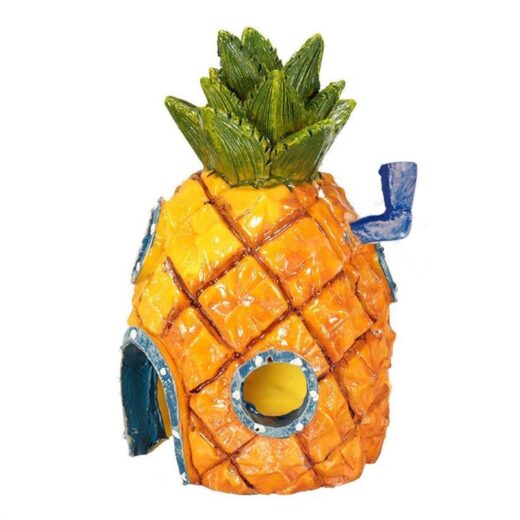
Pineapple House Aquarium Decoration – Resin 13 cm
A playful pineapple-house ornament made from resin. The compact design measures approximately 7.5 × 7.5 ×…
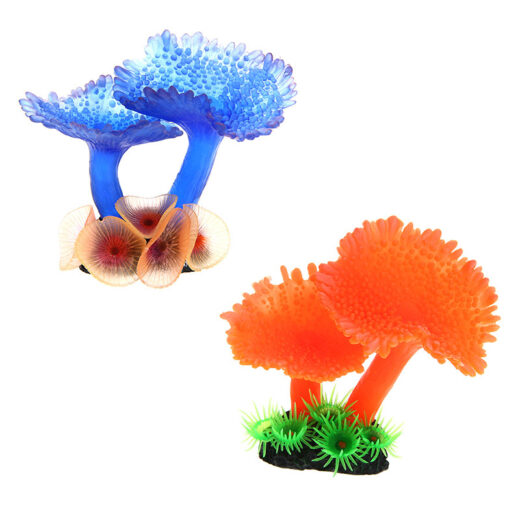
View productArtificial Coral Plant Aquarium Decoration
Artificial coral plant aquarium decoration in blue or orange. A colourful, repositionable accent for planted and…
View product