
12 August 2026
Aquascaping Golden Ratio: Useful Guide, Not a Fixed Rule
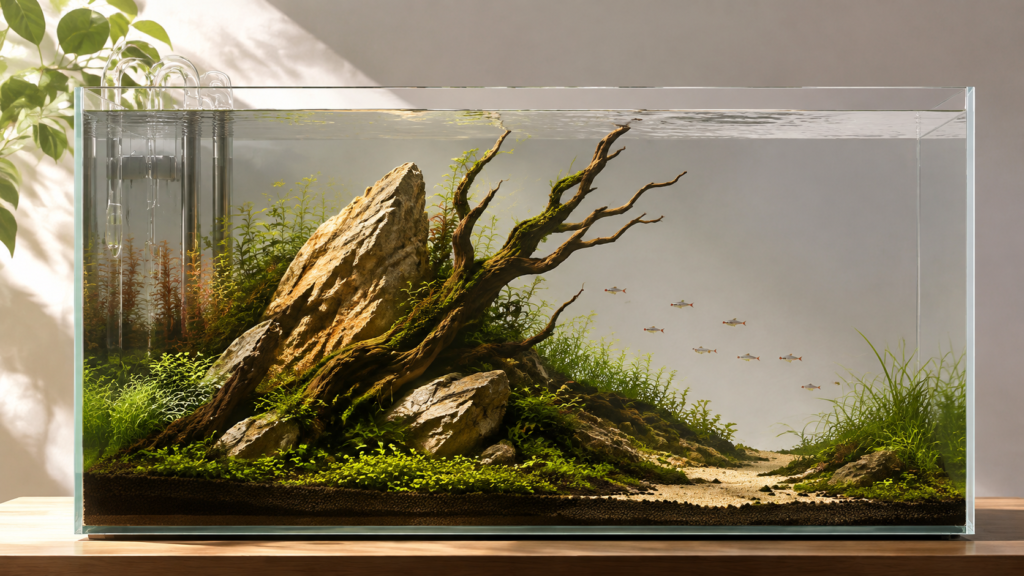
The golden ratio can suggest a focal area, but depth, visual weight, plant growth and negative space matter more than placing one object on a mathematical line.
Explore aquascaping and aquarium-design guides for layouts, plants, hardscape, lighting and practical setup decisions.
The golden ratio can suggest a focal area, but depth, visual weight, plant growth and negative space matter more than placing one object on a mathematical line.
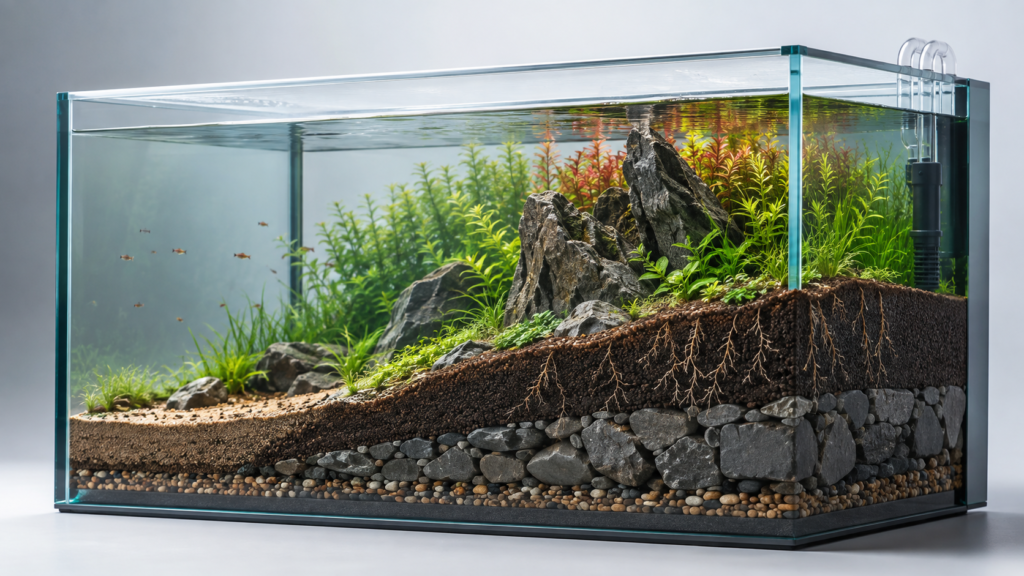
Substrate depth must anchor the selected roots and hardscape while remaining stable, maintainable and appropriate for the exact material.
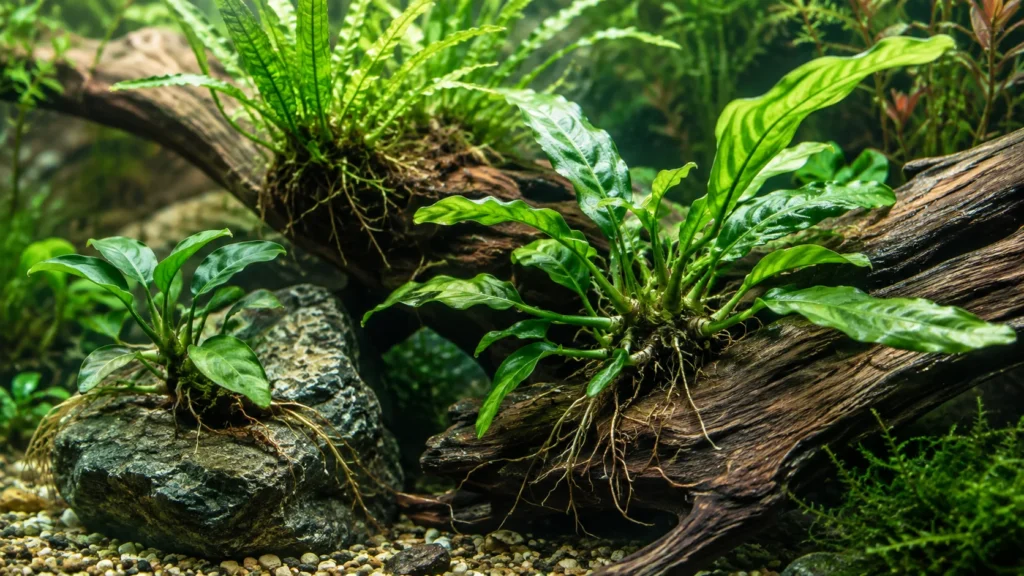
Epiphytes attach to hardscape and are useful in shaded layouts, but their rhizomes and leaves still require correct placement and care.
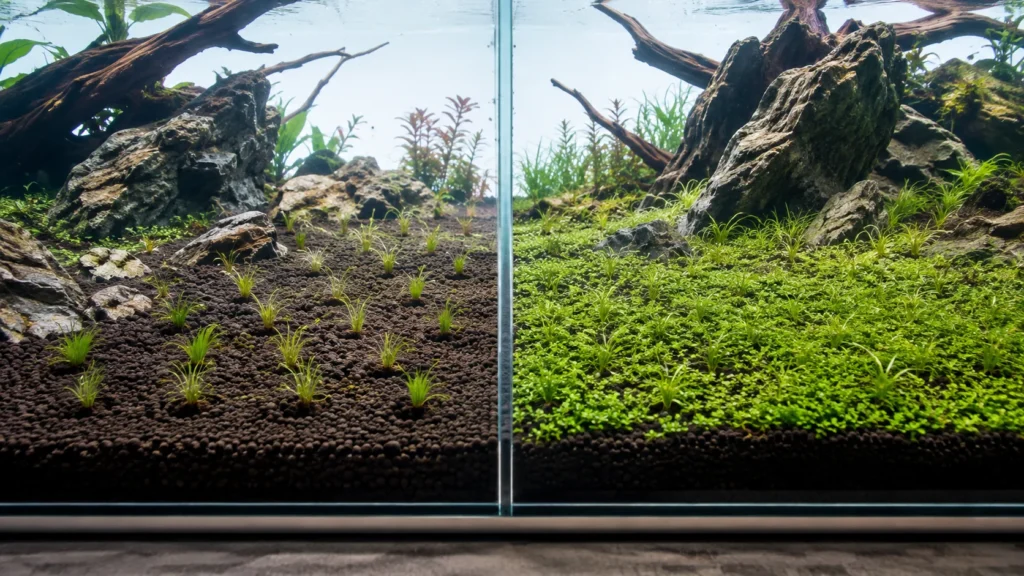
Carpet plants differ sharply in light, carbon, substrate and trimming demand; choose by the complete system rather than the finished photograph.
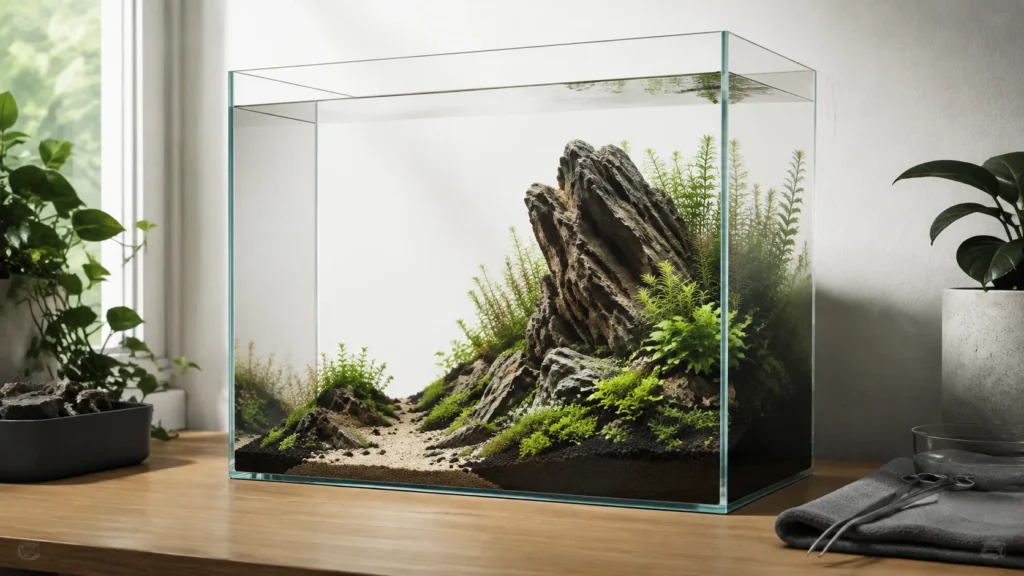
Nano aquascapes magnify every design and husbandry decision because hardscape, equipment and livestock share very limited real volume.
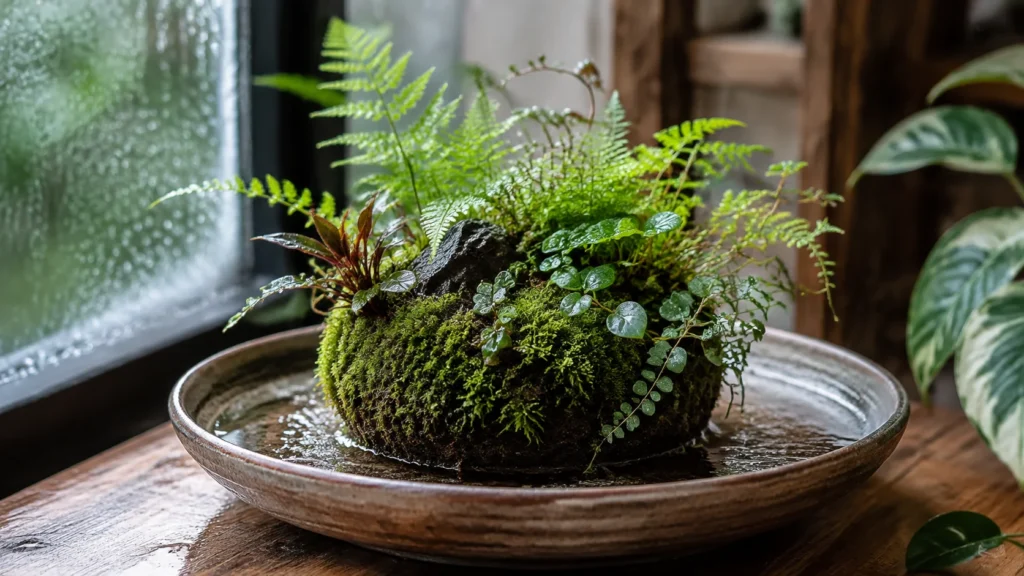
Wabi-Kusa presents aquatic or moisture-loving plants in an emersed composition where humidity, transition and containment matter as much as light.
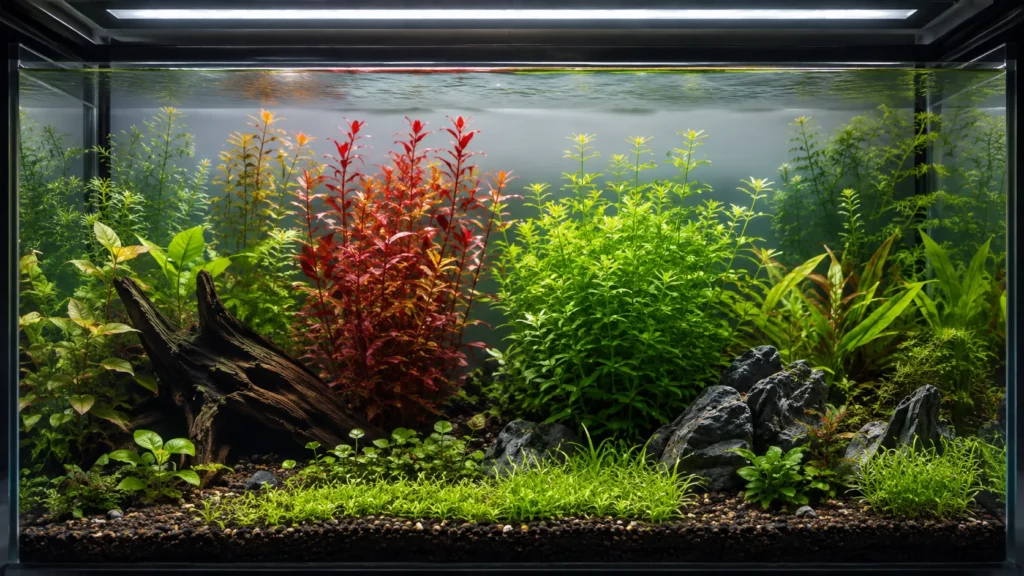
Red colour is a species and system response, not proof that maximum light or heavy dosing is safe.
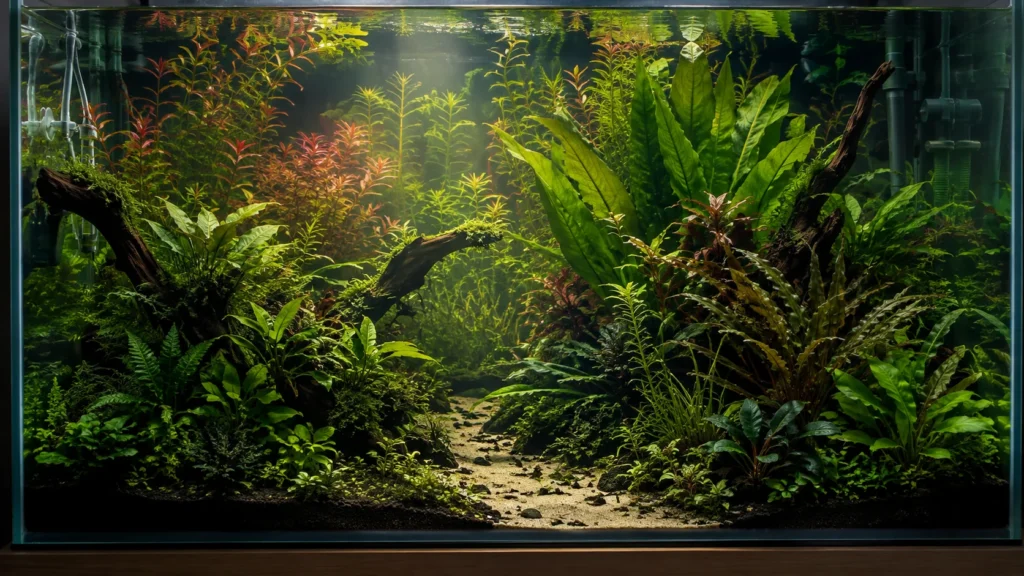
Jungle style looks abundant and informal, but healthy density still depends on deliberate plant zones, circulation and maintenance access.
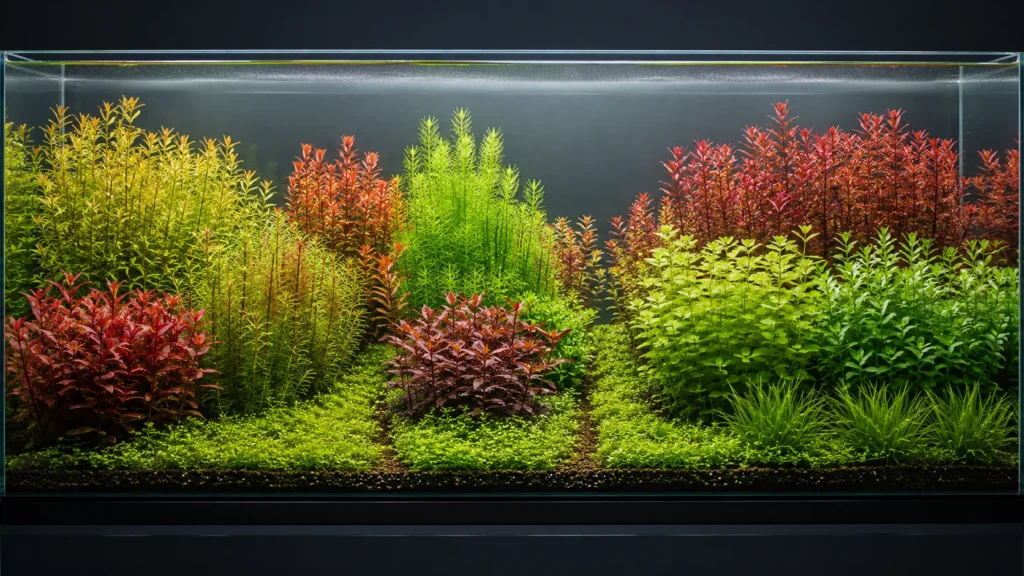
Dutch aquascaping creates structure mainly with grouped plants, controlled height, leaf contrast and carefully maintained negative space.
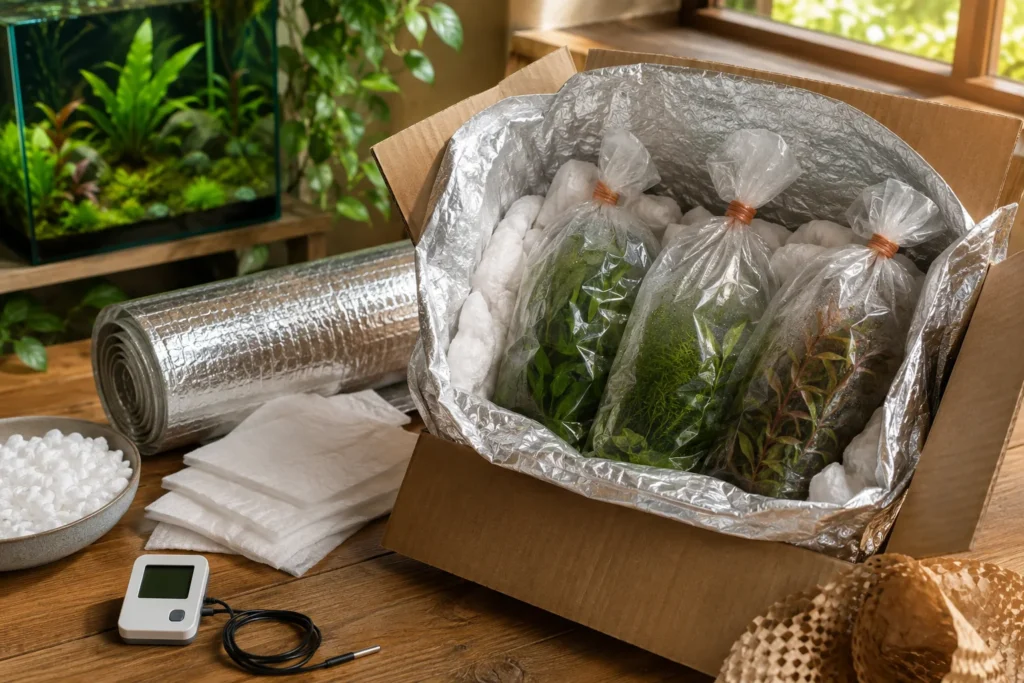
A compliance- and heat-risk framework for any future DaraSphere live aquatic plant service in Gulf markets.