
Jungle Aquascape Guide: Natural Density Without Chaos
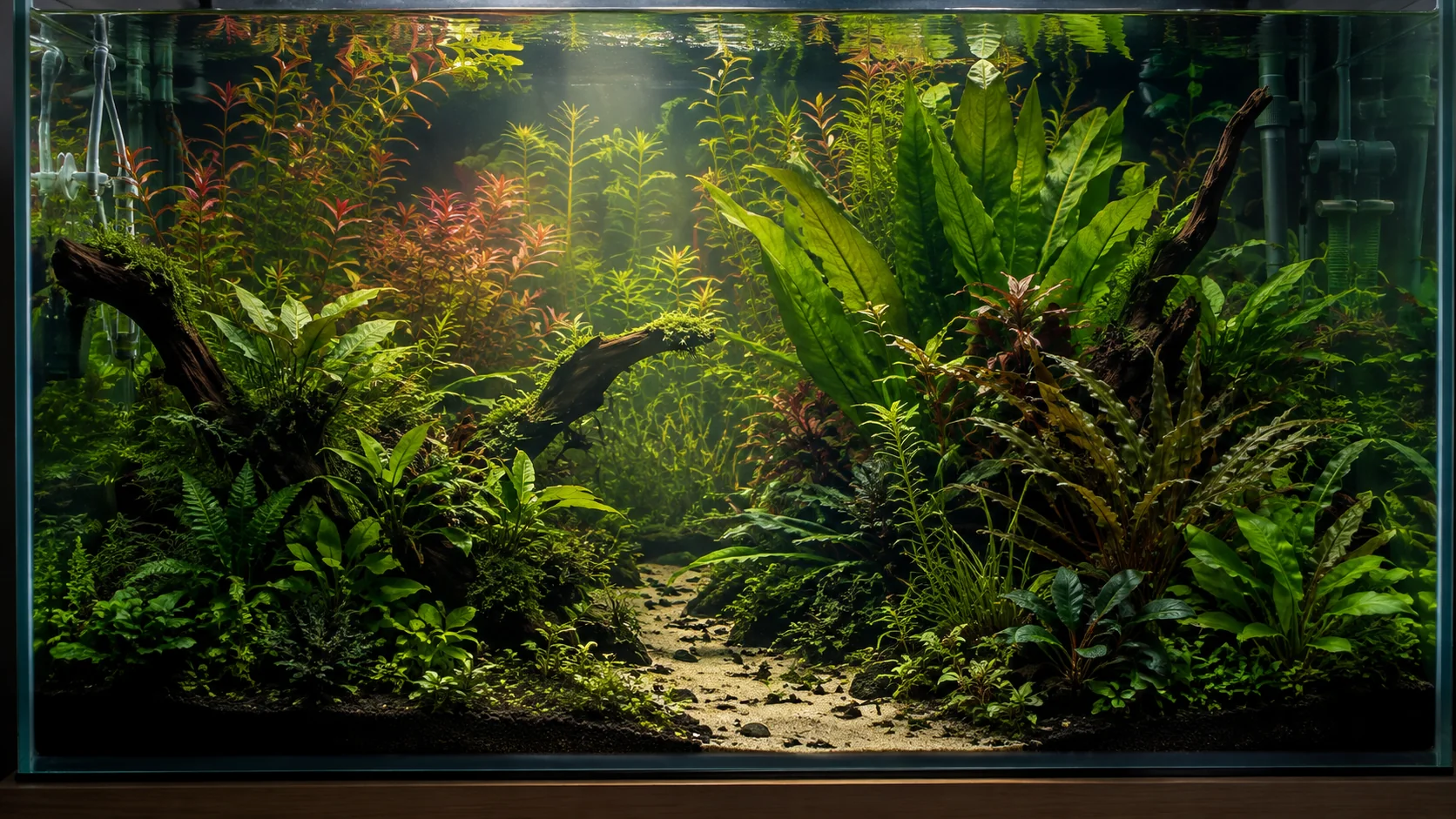
Jungle style looks abundant and informal, but healthy density still depends on deliberate plant zones, circulation and maintenance access.
Choose compatible plants with different heights and leaf forms, create one or two open viewing or swimming areas, keep filter intake and outlet paths clear, and thin growth before lower leaves decay. Natural appearance comes from controlled overlap—not from filling every space.
Draw the open areas before adding plant mass
Mark at least one clear viewing area and the space livestock will need according to reliable species-specific guidance. Keep a route from front to back if that helps the layout retain depth. These openings can be modest, but they need to survive after leaves expand.
Also mark the filter intake and outlet, the glass areas you must clean and the places where a siphon or scissors will enter. A plant group that covers a piece of equipment may look natural for a week but becomes a problem when the equipment needs service.
Give each plant a job in the composition
Use a dominant background mass to establish height, supporting groups in the middle and a restrained foreground that does not seal the substrate from view. Epiphytes can soften wood or stone where their attachment needs are respected, while rooted plants need suitable substrate space.
Choose every plant by exact identity and mature behaviour. Combine growth rates that can be maintained together; otherwise a fast species may repeatedly shade or overtake the slower group. Different leaf forms add the layered appearance more reliably than an unlimited number of species.
| Planting role | Useful question |
|---|---|
| Background canopy | Can its height and surface spread be controlled without blocking light and flow? |
| Midground mass | Will it remain visible when the background reaches mature density? |
| Attached epiphyte | Is the rhizome or attachment point placed according to that plant’s requirements? |
| Open foreground edge | Can debris be seen and removed before it accumulates beneath the planting? |
Protect circulation without blasting delicate leaves
Dense growth creates sheltered areas and can collect loose material. Position and maintain the filter so water can pass around the main plant groups, while avoiding a concentrated jet that continuously bends or damages delicate foliage. The right arrangement depends on the equipment and the completed hardscape.
Watch for reduced surface movement, debris collecting in the same place and plants obscuring the intake. These observations indicate where pruning or equipment service may be needed; they do not justify changing flow or filtration without checking the device instructions and livestock requirements.
Thin from within the plant group
Repeatedly cutting only the visible top can leave shaded, declining material beneath the canopy. Remove damaged leaves, thin selected stems from the base and divide groups that have expanded beyond their allotted area. Preserve uneven heights so the layout stays natural rather than becoming a clipped hedge.
When trimming stems, keep healthy tops for replanting only if the species and intended group benefit from that method. Remove loose cuttings promptly so they do not block the intake or settle in inaccessible gaps.
Do not let density hide livestock or waste
Plant cover can be useful for some animals, but suitability depends on the exact species, its adult space, social behaviour and water needs. Confirm those requirements before stocking. A dense layout is not a reason to exceed what the remaining open water can support.
Arrange the planting so every animal can be observed during routine checks and food can be placed and removed without disappearing into the thicket. If declining plant matter or waste cannot be found, the layout has become too difficult to inspect.
Recognise when the natural look is becoming neglect
| Observation | Inspect before adding or replacing anything |
|---|---|
| Lower leaves are weakening | Shading, plant density, access to light and the documented needs of that species. |
| Debris returns behind one group | Blocked water movement, the group’s footprint and whether routine tools can reach it. |
| The intake becomes hidden | Whether stems or roots need thinning and whether the intake can still be serviced safely. |
| The tank appears flat | Loss of the foreground edge, open path or height distinction between plant masses. |
Adapt the planting plan to the aquarium’s location
In UAE and GCC rooms, track the aquarium near sun-facing glass and during changes in cooling rather than assuming dense plants shield it from heat. For UK, German and Dutch homes, check local effects from radiators, cold windows and seasonal daylight. Plant and livestock decisions should use measured tank conditions, not a regional stereotype.
If locally available plants are sold without a reliable identity, do not use appearance alone to decide their position or compatibility. An unidentified fast grower can alter both the maintenance workload and the space planned for the other groups.
Build the jungle in layers
- Measure the internal footprint and reserve open water, equipment and tool routes.
- Choose a manageable set of identified plants with compatible care conditions.
- Place the background mass without covering the planned outlet path or surface.
- Add midground and attached plants where their mature forms will remain visible.
- Keep the foreground restrained enough to inspect and clean.
- Allow the groups to establish, then thin the areas that threaten access or healthy lower growth.
- Assess livestock only against species-specific requirements and the open space that remains.
Tropica’s growing-in guidance covers early planted-tank establishment, and its guide to maintaining a successful aquarium provides additional manufacturer context. Follow the documented requirements of the actual plants and products you use.
Related DaraSphere guides: Aquascaping Styles, Dutch Aquascape Planning and Nano Aquascape Design.
Build a planted aquascape starter kit
Begin with a simple layout foundation, then choose lighting and maintenance tools that match the plants and available space.
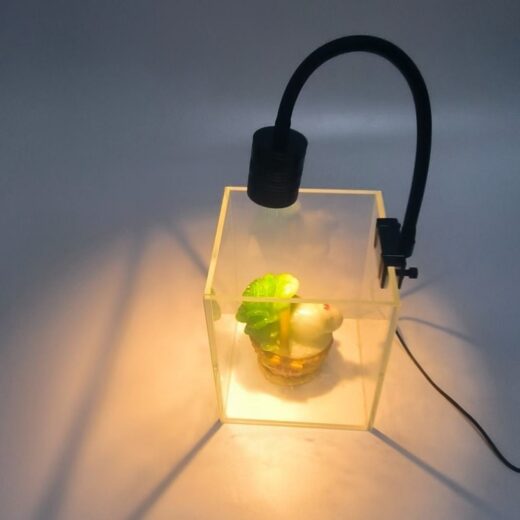
7 W USB Aquarium Plant Spotlight – Standard & Dimmable Models
Products matched to this guide
Selected for relevance to the setup and needs covered above.
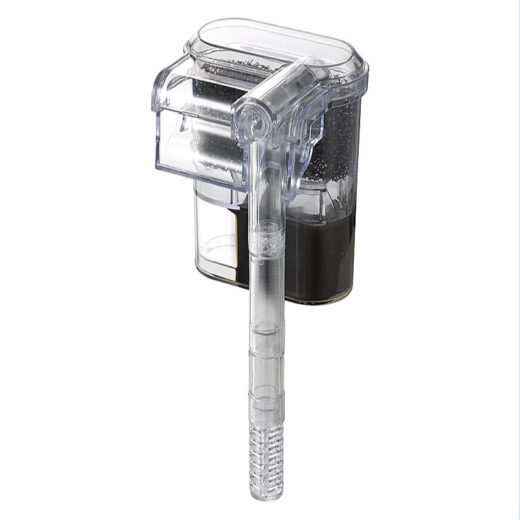
USB Mini Hang-On Waterfall Aquarium Filter
A compact USB-powered hang-on waterfall filter for small aquariums. Its transparent-grey ABS housing keeps the tank…
View product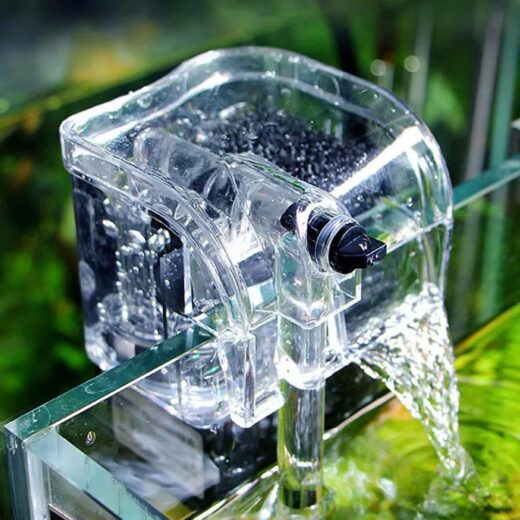
Nano Hang-On Back Aquarium Filter for Betta & Shrimp – 1–5 Gallons
Compact white hang-on-back filter for 1–5 gallon nano tanks, with adjustable flow, aeration and surface skimming.…
View product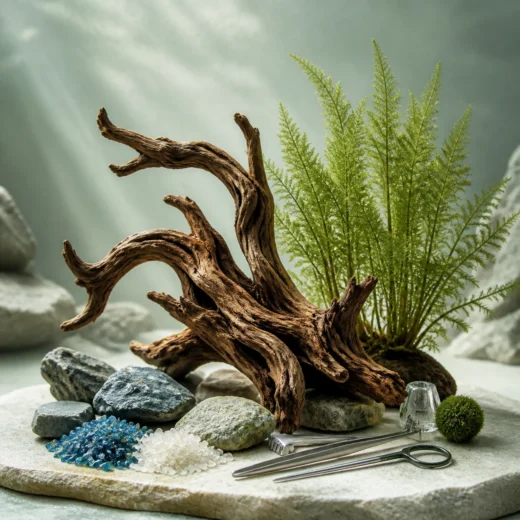
Natural Aquascape Value Bundle
A coordinated hardscape and planting set for an immediate, nature-inspired visual transformation. Shipping calculated at checkout.
View product