
Aquarium Plants
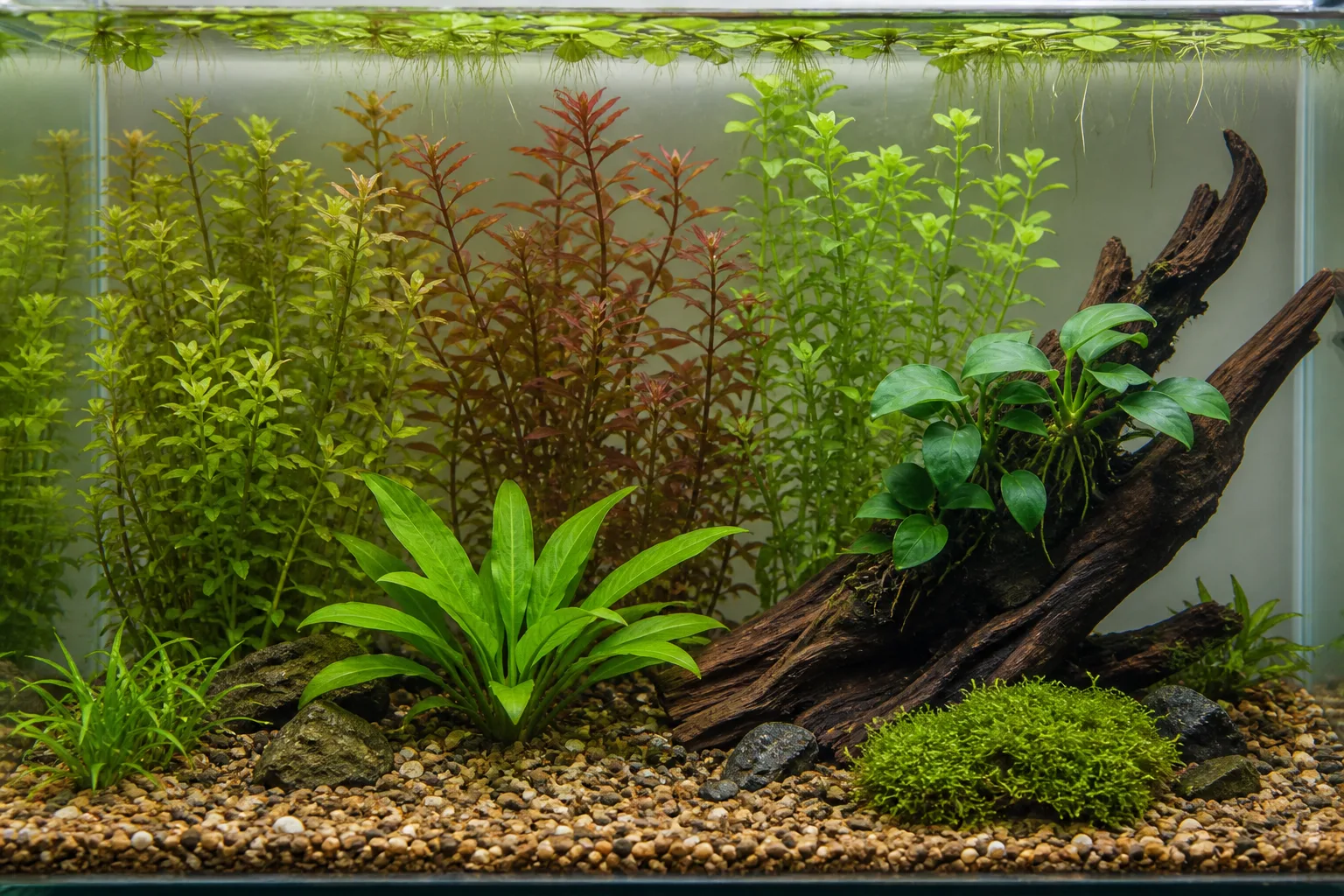
Choose plants by role, demand and planting method. Start with the space you need to fill, then check the exact plant entry against your light, CO2 plan, substrate and maintenance time.
Build a shortlist in five checks
- Identity: record the scientific name and cultivar, not only a shop nickname.
- Placement: decide the plant’s mature role and the space available.
- Demand: compare the grower’s light and CO2 category with your actual equipment plan.
- Planting method: confirm whether it belongs in substrate or on hardscape.
- Maintenance: plan trimming, thinning, replanting and access before purchase.
Practical plant examples by aquarium role
The examples below use current Tropica grower guidance. They are selection examples, not DaraSphere stock claims. Grower categories are comparative labels; check the exact entry again before buying because plant forms and guidance can change.
| Exact plant | Useful role | Light and CO2 guidance | Planting method | Main constraint |
|---|---|---|---|---|
| Eleocharis acicularis ‘Mini’ | Foreground carpet | Tropica describes moderate to strong light and CO2 injection for best results. | Divide the tissue-culture portion and plant small portions into substrate with tweezers. | The carpet needs sufficient light and circulation; plan periodic cleaning and eventual trimming or replanting. |
| Staurogyne repens | Foreground to midground group | Tropica says it prefers medium to high light and supplemental CO2. | Remove the longest upright shoots, divide a pot into small groups and plant them close together. | Its low, creeping form takes time to develop and the grower also calls for regular nutrition. |
| Cryptocoryne wendtii ‘Tropica’ | Midground rosette | Tropica lists low light and low CO2 demand. | Plant the roots in substrate while keeping the leaf base above it. | The grower lists a 10–20+ cm height and a 10–20 cm rosette width, so allow space rather than packing it tightly. |
| Limnophila sessiliflora | Background stem group | Tropica lists low light and low CO2 demand. | Plant separate stems in a group with space between them. | It is fast-growing and can reach the upper background, so make trimming access part of the layout. |
| Microsorum pteropus ‘Trident’ | Hardscape epiphyte or midground accent | Tropica lists low light and low CO2 demand. | Fasten it to stone or wood; if placed near substrate, do not cover the horizontal stalk. | Growth is slow and the grower lists a mature height of 15–20+ cm, so do not assume it will remain a tiny foreground plant. |
Match planting method to plant form
Tropica’s planting guide separates stems, rosettes, carpeting plants, rhizomes, floating plants, mosses, bulbs or tubers, and stolons. Use the method for the exact form you bought.
- Stem plants: separate and space stems so each has access to light and water flow.
- Rosettes: place roots in the substrate without burying the leaf base.
- Carpeting plants: divide into small portions and distribute them across the planned area.
- Rhizome plants: attach them to wood or rock, or keep the rhizome above the substrate. Tropica specifically warns against covering Anubias and Microsorum rhizomes.
- Mosses: attach a thin layer to hardscape rather than creating a thick, loose clump.
Decide whether a low-tech setup fits the plant
Treat “low-tech” as a description of your equipment and maintenance plan, not as a promise attached to a plant name. If you do not plan injected CO2, remove plants whose exact grower guidance calls for CO2 injection for the result you expect. Then compare the remaining plants for light demand, mature size, planting method and trimming access.
In the example table, Cryptocoryne wendtii ‘Tropica’, Limnophila sessiliflora and Microsorum pteropus ‘Trident’ carry low light and low CO2 labels from the grower. That makes them reasonable candidates for further comparison—not guaranteed performers in every aquarium. For warm rooms, use the low-tech plants for hot climates guide to check temperature-related constraints separately.
Plan the layout by mature role
- Foreground: protect the viewing area and decide whether you want an open substrate, small groups or a full carpet.
- Midground: use rosettes or compact groups to connect foreground detail with taller plants.
- Background: choose stems or tall rosettes only where you can reach them for trimming and replanting.
- Hardscape: use epiphytes and mosses to connect wood or rock without burying a rhizome.
Sketch the mature footprint before purchase. If two candidates occupy the same role, keep the one whose demand and maintenance fit your system more closely rather than buying both by default.
Use maintenance as a selection filter
| Question | What to record |
|---|---|
| How often will the form need attention? | Trimming, thinning, replanting or attachment work described by the grower. |
| Can you reach it? | A clear tool path that does not require dismantling the hardscape. |
| What changes as it matures? | Expected height, spread, density and shade from the exact plant entry. |
| What is the rejection rule? | A documented mismatch with your setup—not a vague “beginner” or “advanced” label. |