
Low-Tech Aquarium Plants for Warm Tanks: Evidence-Led Shortlist
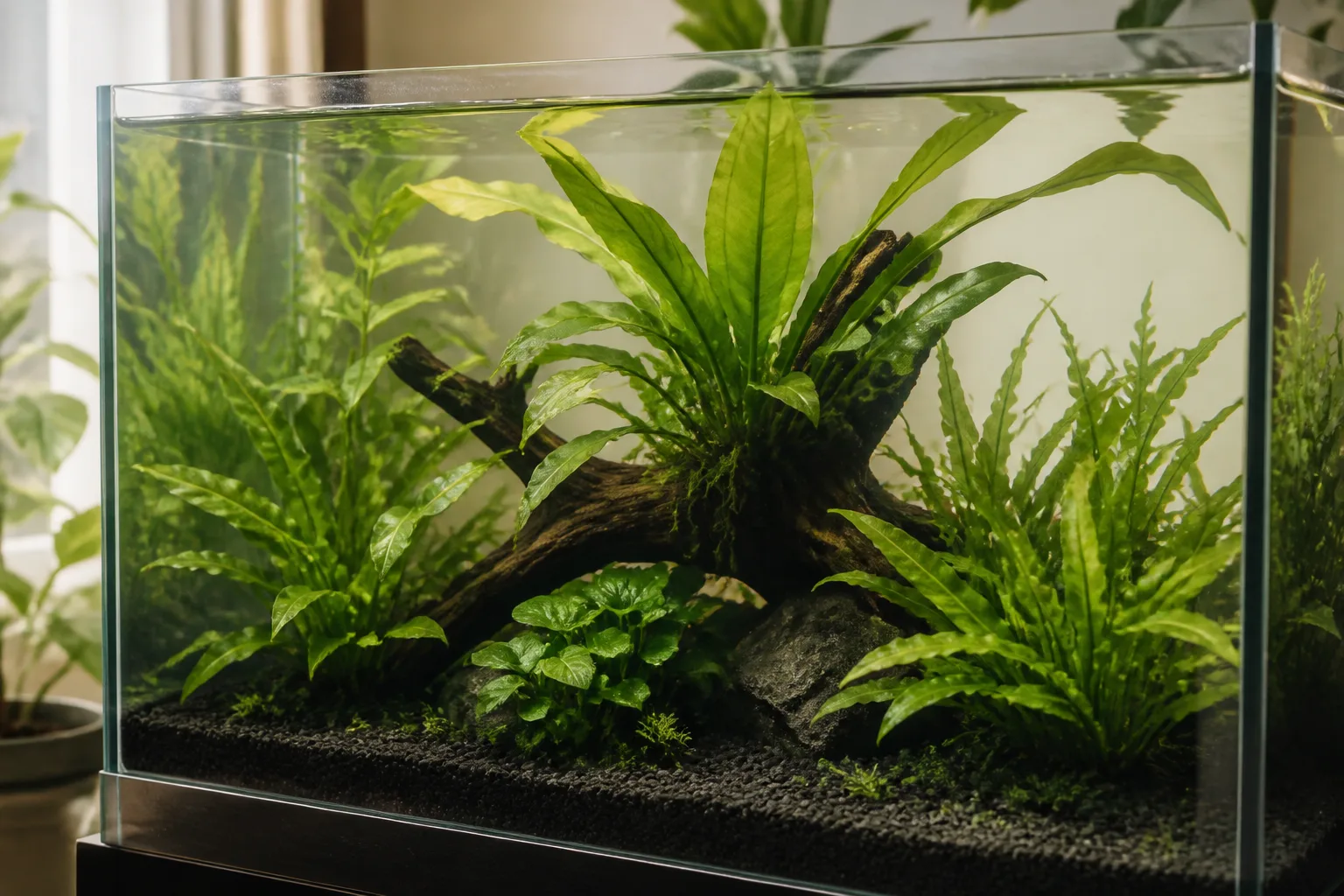
Short answer: start with the real aquarium temperature, then check the exact plant identity and care sheet. “Warm climate” is not a plant specification, and a plant-group suggestion is not an exact temperature tolerance.
Use warm-aquarium guidance at the right scope
In a warm discus-aquarium context, Tropica recommends Cryptocoryne, Microsorum and Echinodorus as plant groups to consider. Source: Tropica: Make your aquarium a success.
Use those groups as a research starting point. Do not assume that every species or cultivar within a group has the same temperature, light, size or growth requirements.
Separate plant choice from livestock choice
Build two records: one for the exact plant and one for every animal in the aquarium. Keep the plant if both records fit the measured environment. If the evidence conflicts, change the plant shortlist rather than using the aquascape to override the animal’s documented needs.
Place rhizome plants correctly
Tropica’s planting guide says the rhizomes of Anubias and Microsorum should not be covered. Source: Tropica: Planting.
That makes attachment to hardscape a useful design option, but it does not make either genus automatically suitable for every warm tank.
A defensible shortlist worksheet
- Exact scientific or supplier identity: ______
- Care sheet source and date: ______
- Documented temperature scope: ______
- Documented light category: ______
- Adult size and placement: ______
- Livestock requirement checked separately: yes / no
Tropica’s own warm-aquarium recommendation is limited to named plant groups, while its planting guide provides separate instructions for rhizome placement. Source: Tropica: Make your aquarium a success; Tropica: Planting.
What this guide deliberately does not claim
It does not provide a universal 28°C list, certify current stock, or promise that plants will compensate for unsuitable livestock conditions. Those decisions require exact, current evidence.
Build the layout after the evidence shortlist
Assign a role only after a plant survives the identity and care-sheet checks. Use foreground, midground, background or hardscape attachment as design roles, not as proof of environmental suitability.
| Role | Evidence to record | Design question |
|---|---|---|
| Focal plant | Exact identity and mature form | Will it remain visible at the intended scale? |
| Supporting group | Light, temperature and placement source | Can it be repeated without crowding access? |
| Hardscape plant | Attachment or planting instruction | Is the rhizome or base treated correctly? |
| Fast-growing support | Exact care sheet | Can the maintenance routine keep pace? |
For a broader selection framework by planting form, documented demand and maintenance role, use the aquarium plants guide.
Failure modes to avoid
- Choosing from a group name without confirming the exact plant.
- Using room climate as a substitute for measured aquarium temperature.
- Letting a plant recommendation override animal requirements.
- Turning a supplier list into a promise that every item will thrive.
A useful shortlist may contain only a few plants. The goal is traceable fit, not the longest list.
Build a planted aquascape starter kit
Begin with a simple layout foundation, then choose lighting and maintenance tools that match the plants and available space.
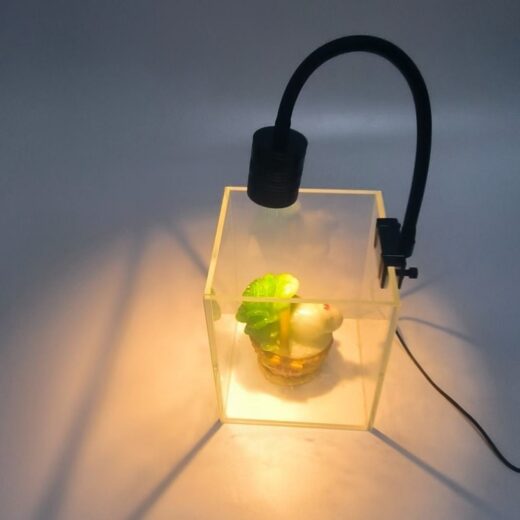
7 W USB Aquarium Plant Spotlight – Standard & Dimmable Models
Products matched to this guide
Selected for relevance to the setup and needs covered above.
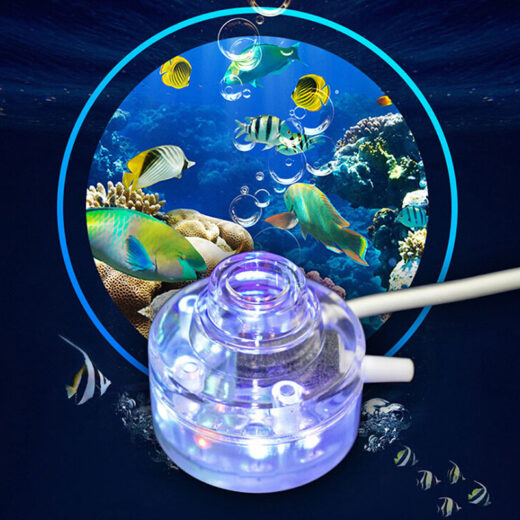
Aquarium LED Lamp – US/EU/UK Plug
Aquarium LED lamp with UK, EU or US plug options. Choose the regional version that matches…
View product
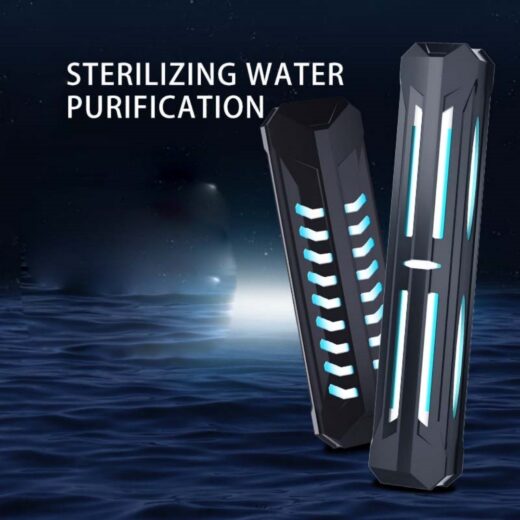
ZYUV3D Aquarium Lamp – Model and Plug Options
A timed ZYUV3D aquarium sterilizing lamp offered in 305, 307, 309, 311, 313, 315, 318 and…
View product