
17 August 2026
Planted Aquarium Cleaning Rhythm: Daily, Weekly and Monthly
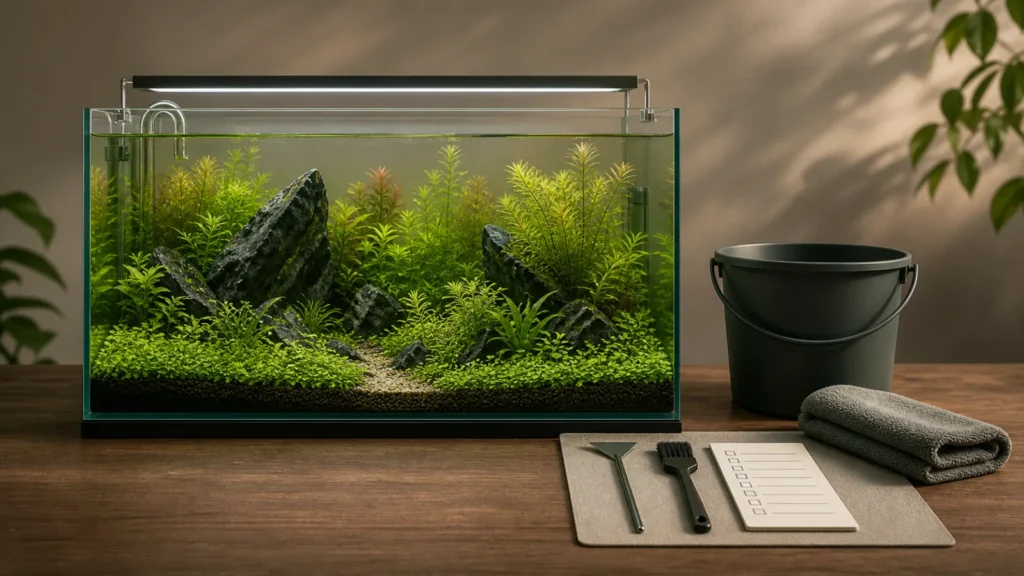
A cleaning rhythm separates quick observation from planned water, plant, glass and equipment care so the tank is never repeatedly reset.
Use these practical aquarium-care and water-quality guides to plan testing, maintenance, cycling and troubleshooting without relying on one universal routine. Start with the exact tank, livestock, equipment and test evidence, then open the focused guide for the problem you need to solve.
A cleaning rhythm separates quick observation from planned water, plant, glass and equipment care so the tank is never repeatedly reset.

Cyanobacteria is bacterial growth rather than true algae and often forms cohesive blue-green, dark green or reddish sheets with a distinctive odour.
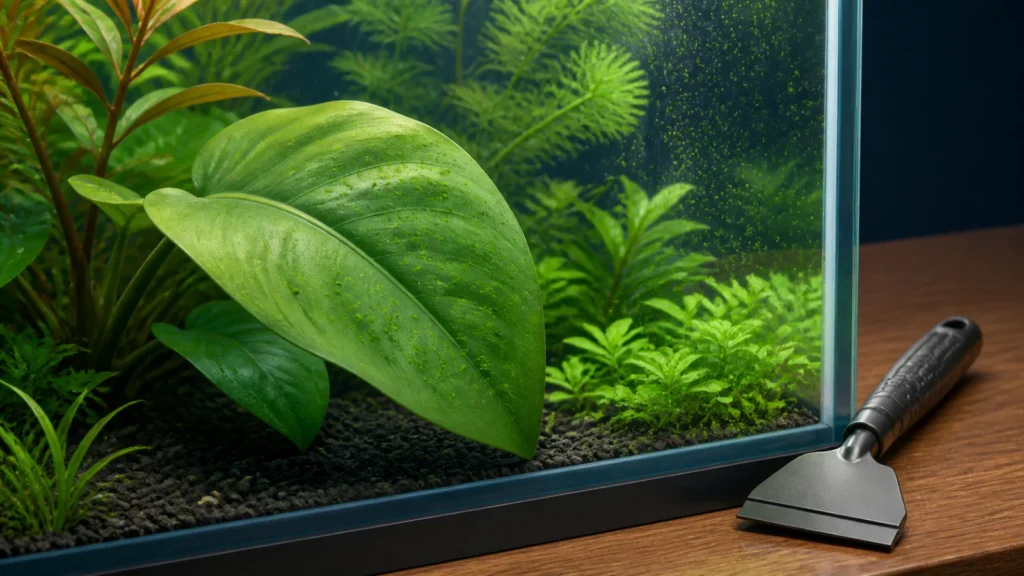
Green spot algae forms hard green dots on glass and slow leaves; identify it before changing light or nutrients.
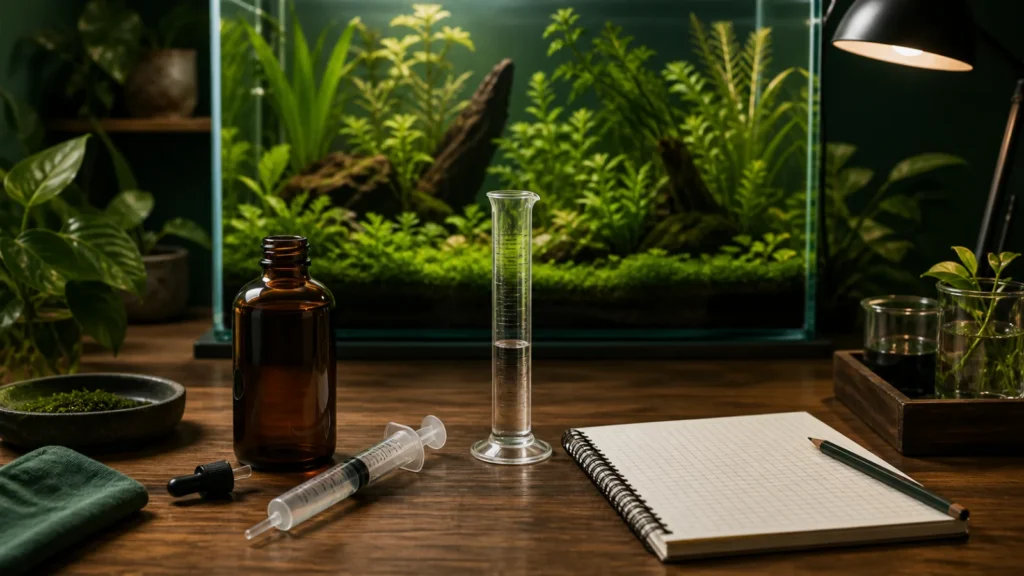
A dosing routine should be based on the exact product, actual water volume, plant mass, substrate and response—not a copied pump count.
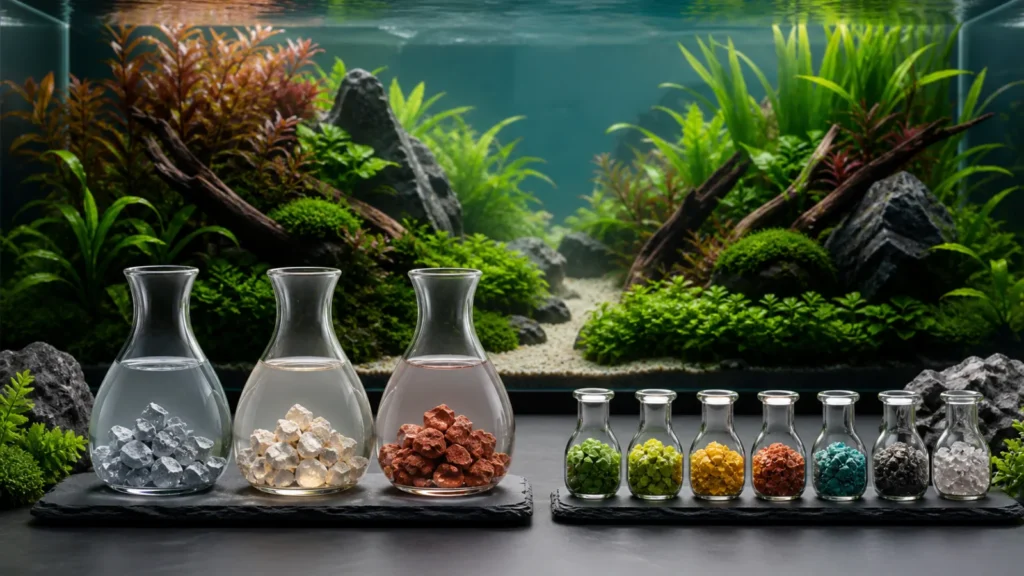
Macro and micro labels describe nutrient groups, not a licence to dose blindly; plant demand depends on biomass, growth rate and the whole system.
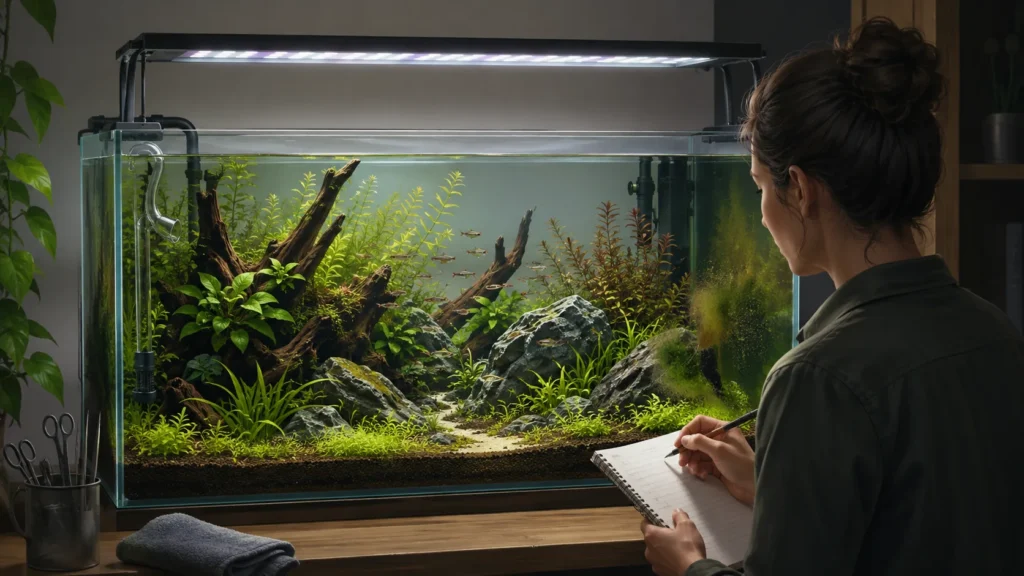
Light can amplify algae pressure, but algae diagnosis must also consider plant health, waste, circulation, carbon and maintenance.
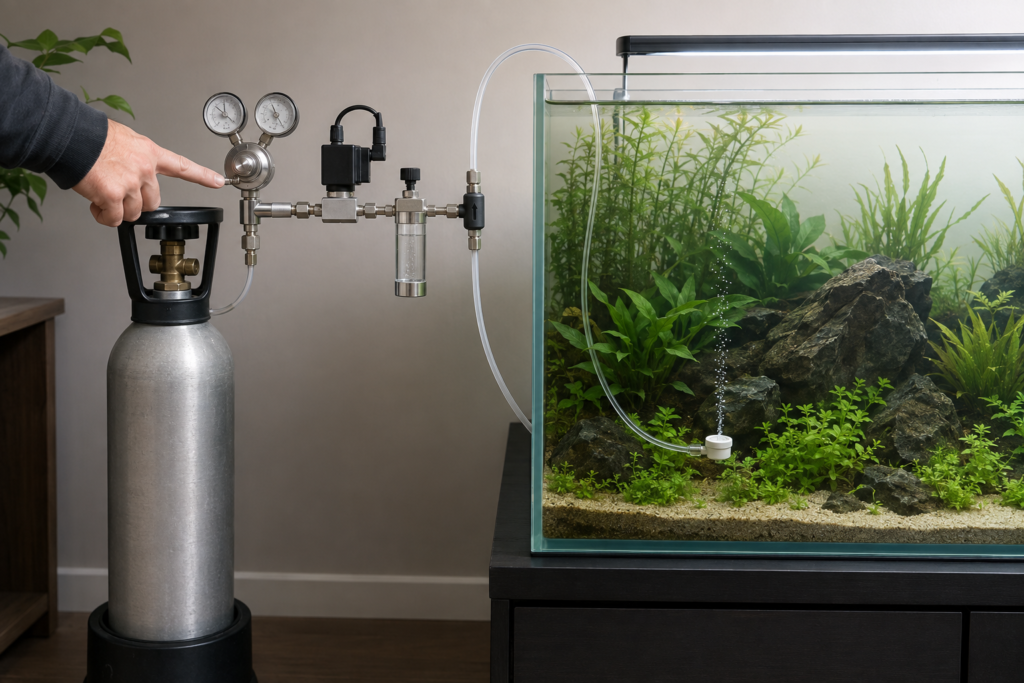
Troubleshoot CO₂ as a timed delivery and circulation system; do not increase gas from one indicator colour or one plant symptom.
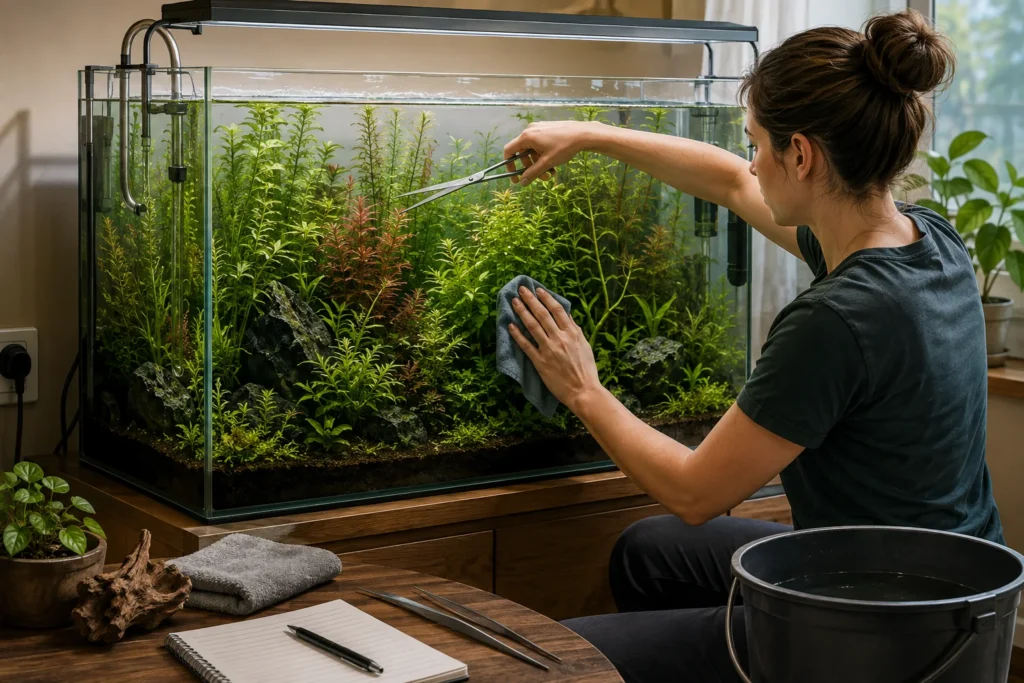
A stable planted aquarium is maintained through small repeatable actions, not occasional resets after the display deteriorates.
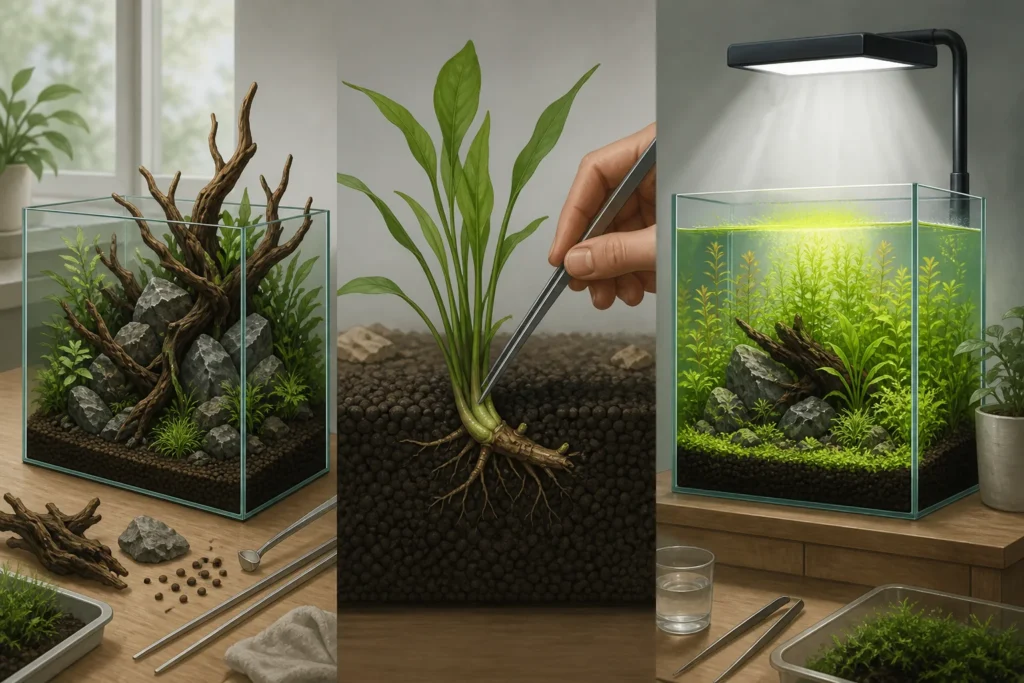
Most early planted-tank failures are system mismatches: the light, plants, substrate, filtration and care routine were chosen independently.
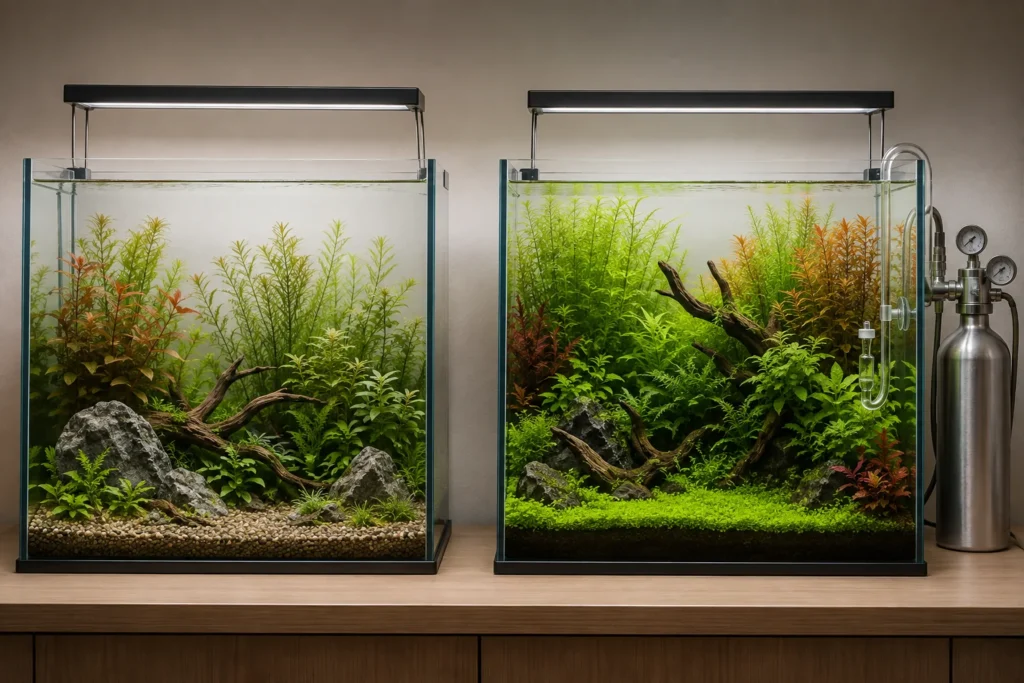
A decision tree for choosing a no-added-CO2, modest-carbon or pressurised planted aquarium without letting the light dictate the whole system.