
30 L Nano Planted Tank Equipment Decision Checklist
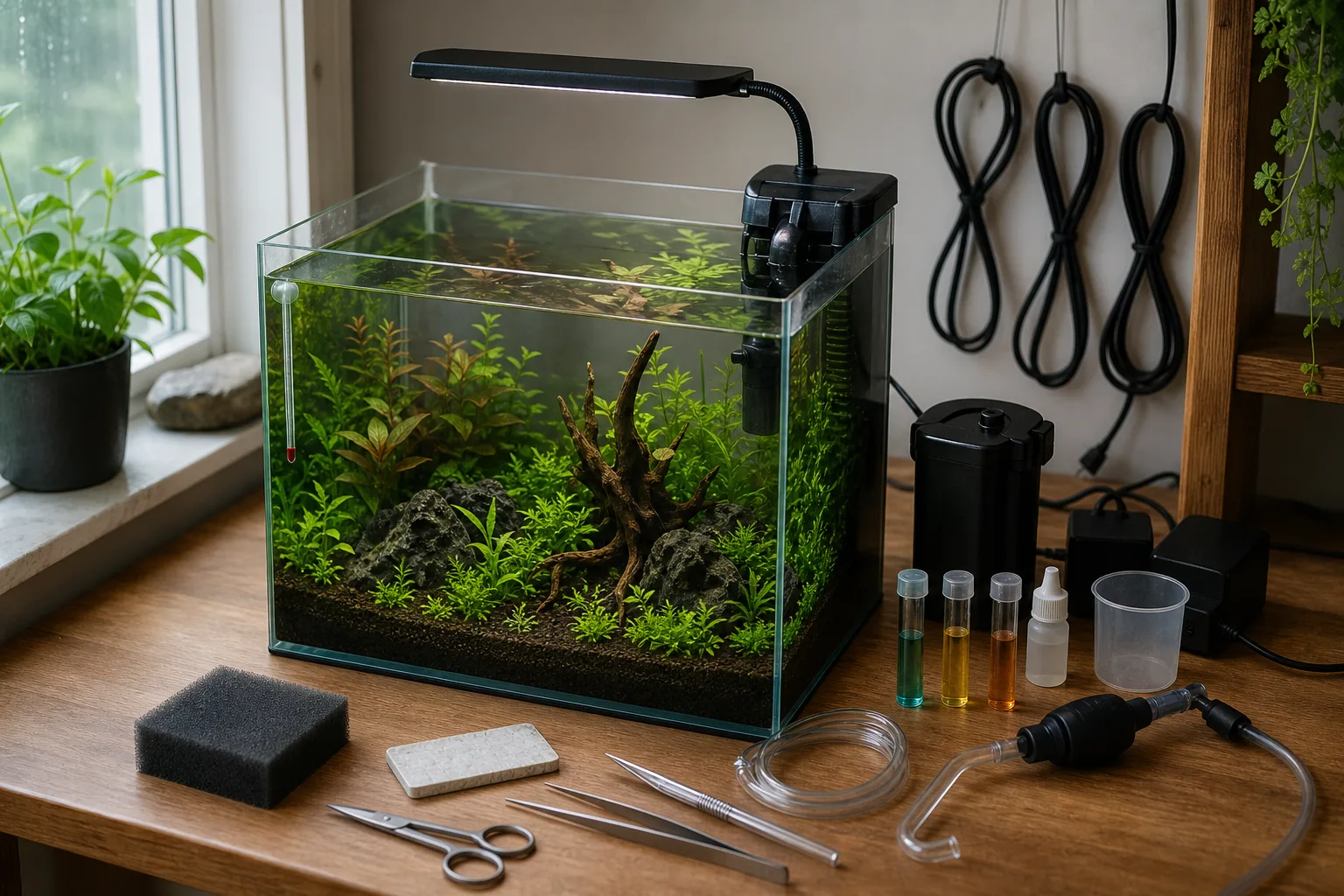
Short answer: use this page to document decisions, not to copy a universal shopping cart. It names equipment categories and evidence gates without assuming that one product model suits every setup.
1. Separate water-only mass from total installed load
NIST states that water density is approximately one gram per cubic centimetre; therefore, 30 litres of water alone is approximately 30 kilograms. Source: NIST: Density.
Do not treat that calculation as the filled-tank weight. Record the exact aquarium’s empty weight, verified component weights and the support manufacturer’s rated capacity before making a support decision.
2. Build the category checklist
OATA’s freshwater-aquarium shopping list includes an aquarium, filter, heater, lighting for live plants, substrate, water conditioner and water-testing kits. Source: OATA: Freshwater aquarium care.
Use those as categories to review. Whether an item is required, optional or inappropriate depends on the exact plants, livestock, water, room conditions and documented product evidence.
3. Record a circulation reference without promising installed flow
Tropica recommends pump capacity equivalent to three to five aquarium volumes per hour. Source: Tropica: Water circulation.
Apply any arithmetic to the documented working volume, then compare it with the exact filter manual. Mark installed performance as “not measured yet” until you have measured it.
4. Match light evidence to the plant plan
Tropica explains that wattage is not directly comparable across different light-source types and presents a manufacturer lumen framework linked to its plant categories. Source: Tropica: Light.
Record fixture dimensions, mounting range and coverage evidence for the exact tank footprint. A tank-length label alone does not establish plant suitability.
5. Include water testing
OATA links leftover food and fish waste to ammonia, identifies ammonia and nitrite as highly toxic, and recommends regular water-quality checks. Source: OATA: Freshwater aquarium care.
6. Keep electrical suitability product-specific
HSE workplace guidance says electrical equipment should suit its intended use and operating conditions, and warns that unsuitable equipment in wet surroundings can become live. Source: UK HSE: Introduction to electrical safety.
This general principle does not certify any aquarium device. Verify the exact item’s supply, instructions and environmental suitability; keep unresolved items off the shortlist.
Decision record
| Category | Evidence needed | Status |
|---|---|---|
| Aquarium and support | Exact identity, empty weight and rated support capacity | Verified / hold |
| Filter | Exact manual and model data | Verified / hold |
| Light | Dimensions, mounting and coverage evidence | Verified / hold |
| Testing | Method, instructions and recording plan | Verified / hold |
| Electrical equipment | Supply and environmental documentation | Verified / hold |
Heaters, chillers, air pumps and CO2 systems remain conditional until a documented need and exact product evidence exist.
Build a planted aquascape starter kit
Begin with a simple layout foundation, then choose lighting and maintenance tools that match the plants and available space.
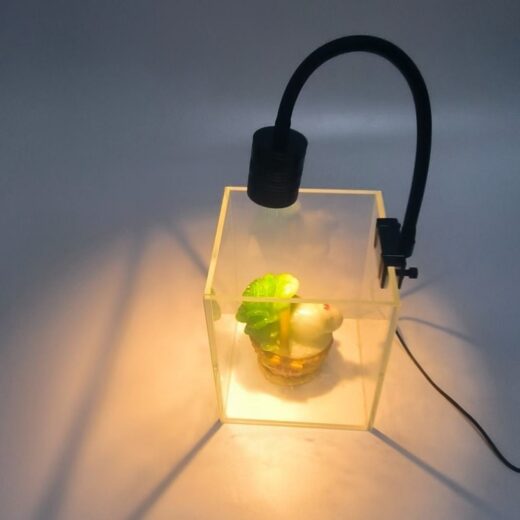
7 W USB Aquarium Plant Spotlight – Standard & Dimmable Models
Products matched to this guide
Selected for relevance to the setup and needs covered above.
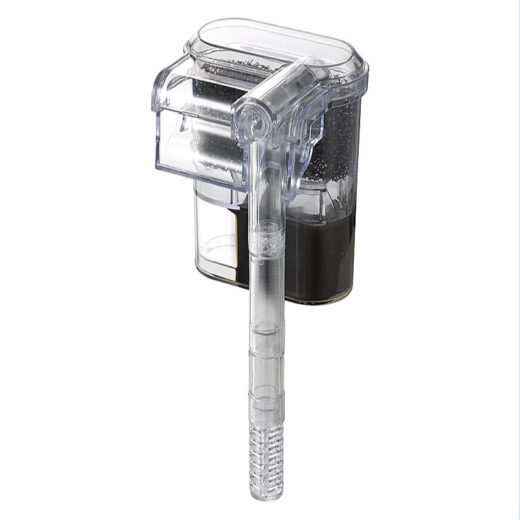
USB Mini Hang-On Waterfall Aquarium Filter
A compact USB-powered hang-on waterfall filter for small aquariums. Its transparent-grey ABS housing keeps the tank…
View product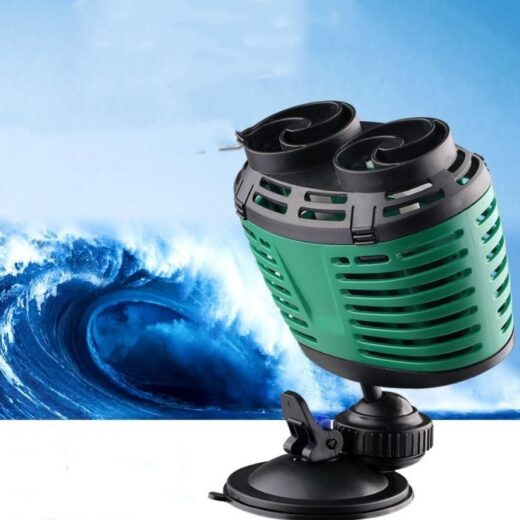
Silent Mini Aquarium Wavemaker – 200A/201A/202A
Compare the 200A, 201A and 202A mini aquarium wavemaker options; verify model, voltage, plug, mounting method…
View product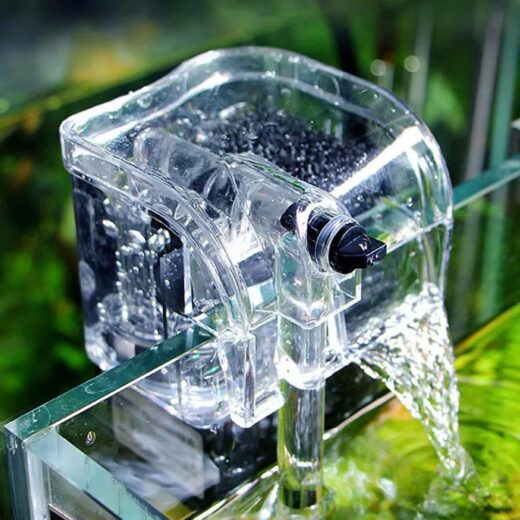
Nano Hang-On Back Aquarium Filter for Betta & Shrimp – 1–5 Gallons
Compact white hang-on-back filter for 1–5 gallon nano tanks, with adjustable flow, aeration and surface skimming.…
View product