
Aquasoil vs Sand vs Gravel for Planted Aquariums
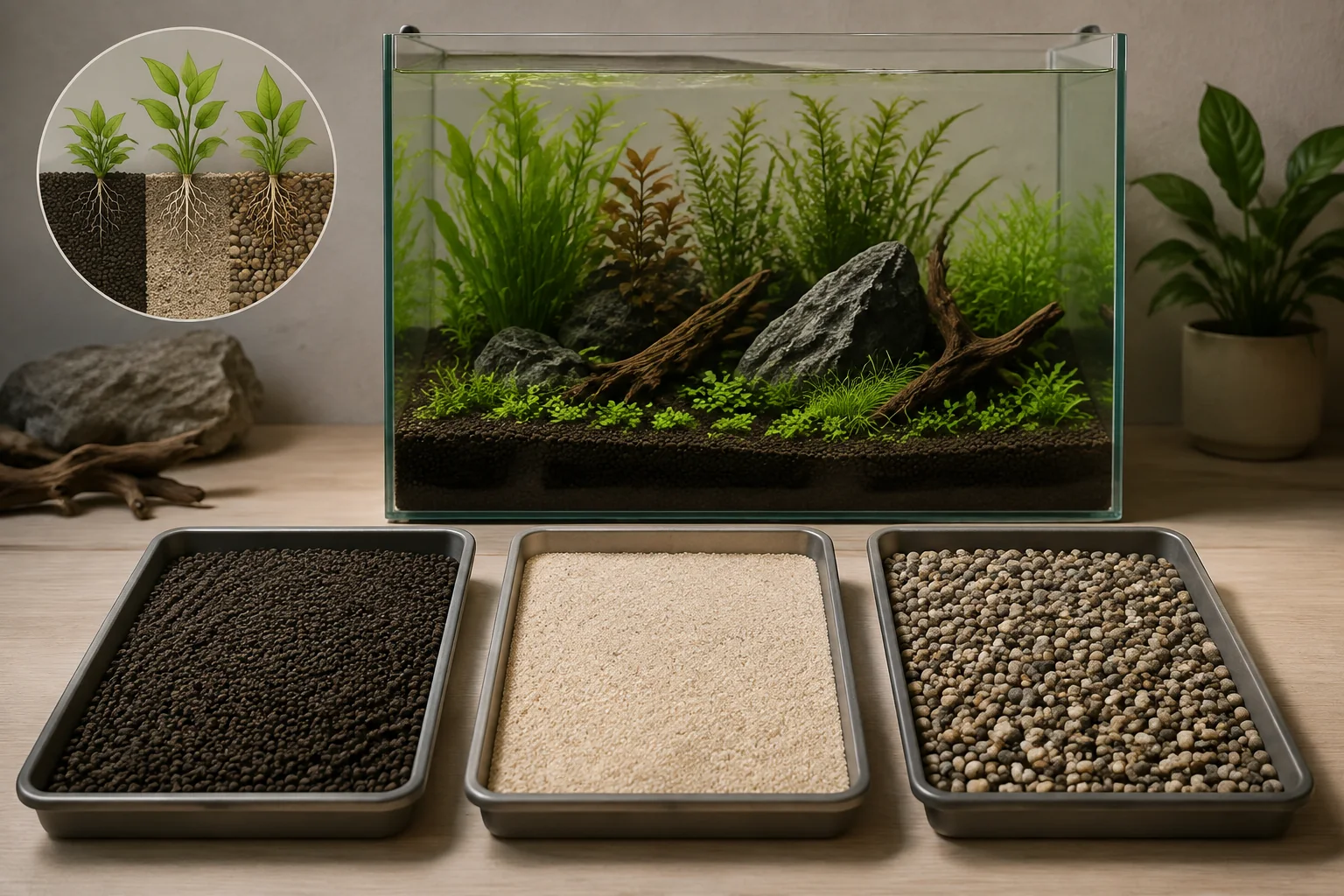
The best substrate is the one that supports the chosen plants, water and maintenance plan; there is no universal winner for every planted aquarium.
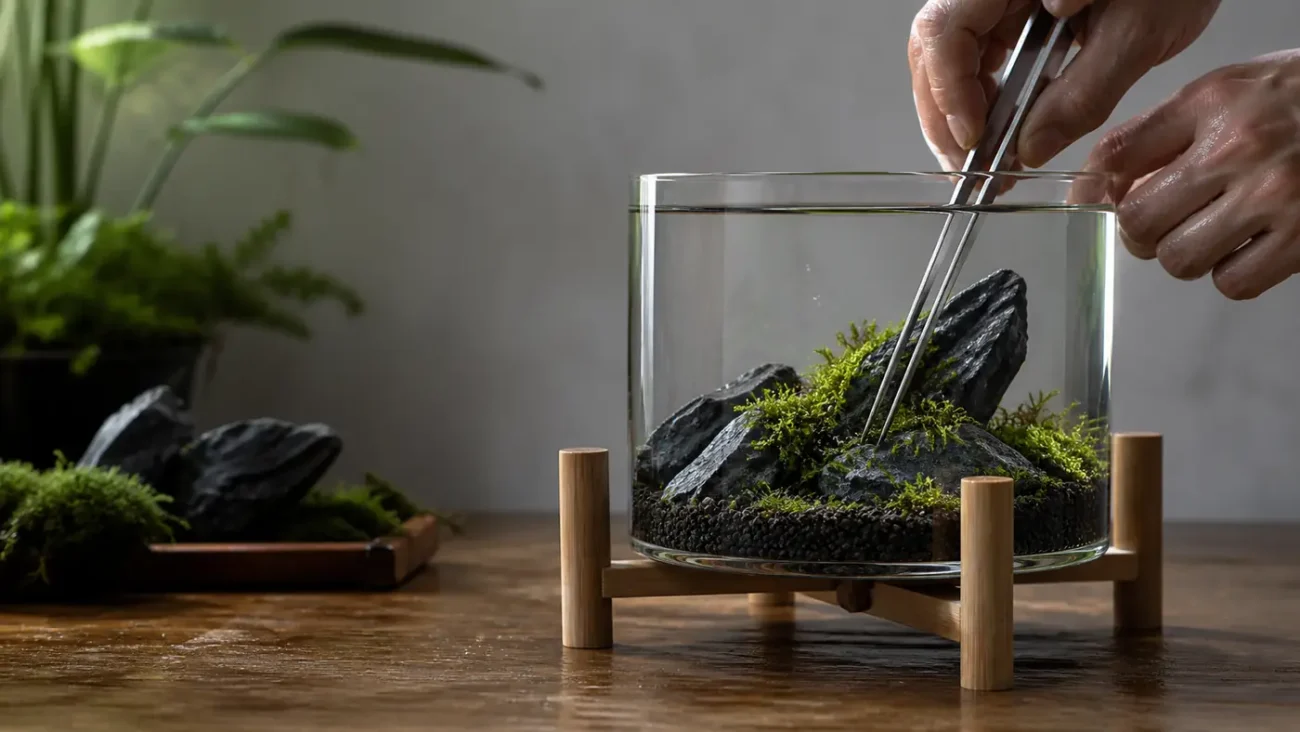
Substrate decisions are difficult to reverse after planting. Grain size changes how roots anchor and how debris is removed; active soils may alter water chemistry; and deep decorative slopes can compact or collapse if they are not engineered carefully.
Compare the exact product documentation rather than assuming all brown granules are aquasoil or every bag of sand is inert. Natural materials can vary, and livestock requirements may rule out an otherwise attractive choice.
Key takeaways
- Aquasoil can support roots and may lower pH or KH, but start-up water changes and chemistry monitoring can be required.
- Sand is not automatically nutrient-rich and can compact if depth and grain choice are poorly planned.
- Aquarium gravel is easy to understand but root-feeding plants may need targeted nutrition.
- Cosmetic top layers should not be mixed accidentally into active soil during maintenance.
Side-by-side substrate comparison
Use the table as a selection filter, then check the exact manufacturer's instructions. Product composition and effects differ between brands.
| Factor | Aquasoil | Sand | Aquarium gravel |
|---|---|---|---|
| Plant nutrition | Often designed as a root-supporting active substrate | Usually relies on water-column or root feeding | Usually relies on water-column or root feeding |
| Water chemistry | May lower pH or KH and release nutrients initially | Often inert, but verify the material | Often inert, but calcareous gravel can alter hardness |
| Root anchoring | Granules generally support fine roots | Fine grains can hold delicate roots but may compact | Depends strongly on grain size |
| Cleaning | Avoid aggressive deep vacuuming | Surface-clean carefully | Debris may settle between grains |
| Rescaping | Granules can break down and mix with cosmetic sand | Easy to disturb and level | Generally durable and reusable if safe |
| Best fit | Plant-led layouts with a chemistry plan | Cosmetic zones or species-led requirements | Flexible lower-tech systems |
When aquasoil is worth the extra management
ADA describes substrate as a foundation for roots and microorganisms, and its Aqua Soil documentation explains that the product can make water mildly acidic. Tropica likewise notes that aquarium soil can reduce KH and pH and calls for regular water changes during the first weeks.
That can be useful in the right plant-led system and inappropriate in another. Measure source water, understand the livestock's range and follow the exact start-up instructions instead of copying a dosing schedule from a different soil.
When sand or gravel is the cleaner decision
An inert substrate keeps water-chemistry changes more predictable and separates the physical base from the nutrition strategy. This is useful when plants are mainly attached to wood and stone, when the layout uses removable pots, or when livestock needs a particular surface.
Inert does not mean maintenance-free. Grain size, bed depth, flow and the amount of trapped organic waste still matter. Confirm that decorative stone or gravel is not calcareous if stable soft water is required.
Plan the cross-section before opening a bag
Sketch substrate depth at the front, middle and back. Mark rock bases, plant zones and cosmetic sand paths. Use structural supports that are aquarium-safe and keep heavy stone from resting on unstable loose granules.
Buy from the calculated tank footprint and the manufacturer's coverage guide, not from nominal tank litres alone. A shallow foreground and deeper planted rear may need less material than a uniform deep bed.
Practical checklist
- List rooted plants and epiphytes separately.
- Record source-water pH, KH and GH.
- Check whether the exact substrate alters water chemistry.
- Draw the substrate profile and hardscape footprint.
- Plan how each zone will be cleaned without mixing materials.
Frequently asked questions
Can I put aquasoil under sand?
Layered systems can work, but disturbance can mix the materials and create maintenance problems. Follow a proven product-specific method and plan barriers before filling.
Does aquarium sand need root tabs?
That depends on the plants and fertilisation plan. Sand is usually a physical substrate rather than a complete nutrient source.
How deep should planted aquarium substrate be?
There is no single depth for every product and plant. Use the substrate manufacturer's guidance, root requirements and the planned slope while avoiding unstable deep areas.
Sources and editorial method
This guide combines manufacturer documentation, official safety or regulatory guidance where relevant, and DaraSphere catalogue checks. Product availability and specifications can change; verify the current product page before ordering.