
How Much Aquarium Hardscape Do I Need? Calculator Guide
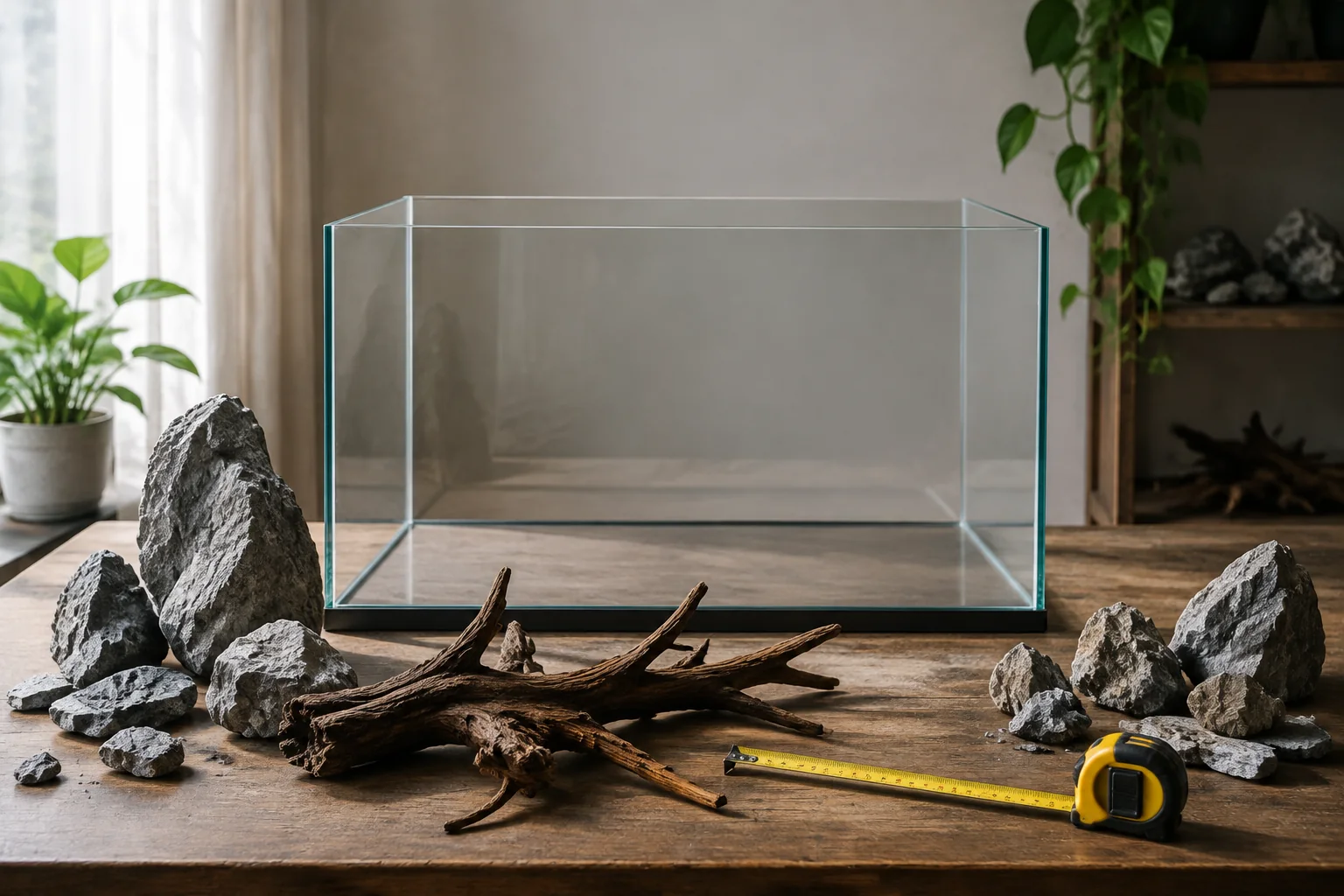
Hardscape is better estimated by visible footprint and composition than by a universal kilograms-per-litre rule.
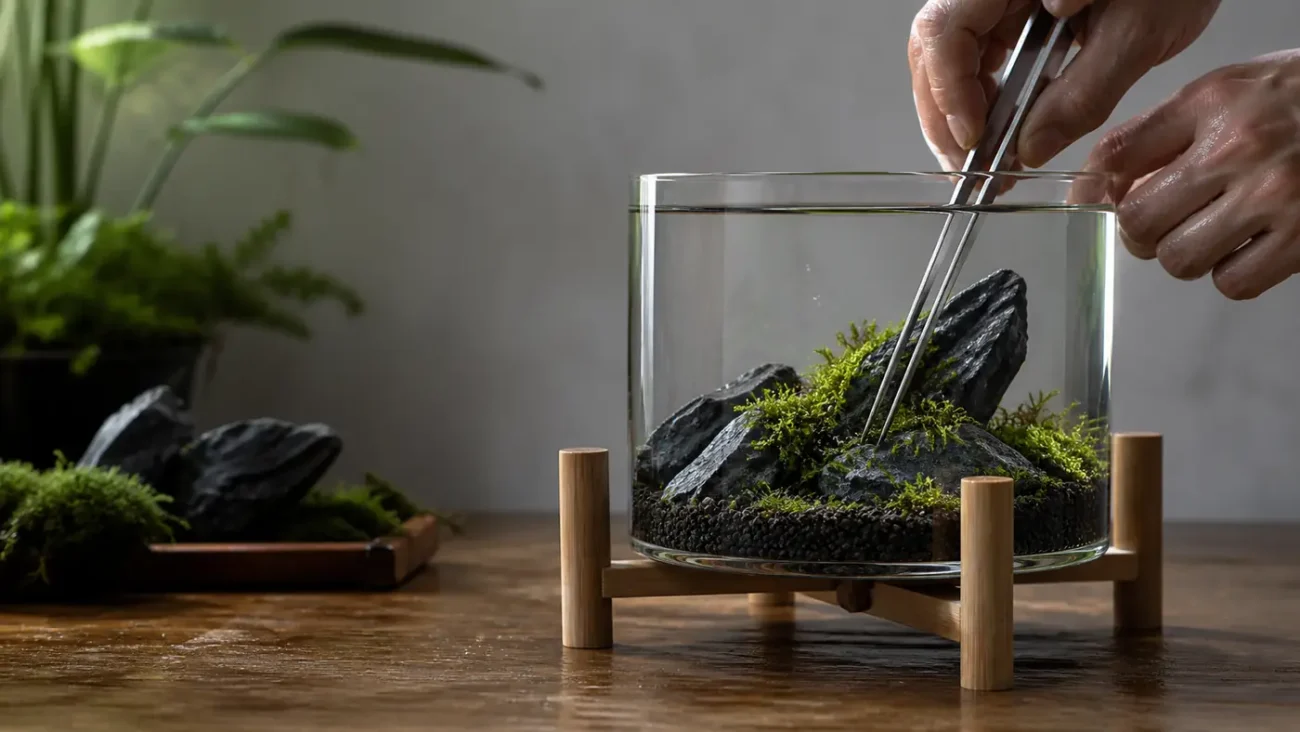
Two 60-litre tanks can need very different hardscape quantities. A shallow Iwagumi uses stone mass differently from a branching wood layout, and porous dragon stone weighs less than a denser rock at a similar visual size.
This calculator therefore estimates covered base area and composition height. It intentionally avoids a false conversion from tank litres to kilograms.
Key takeaways
- Use internal base dimensions, not the catalogue's external size.
- Calculate visual coverage, then choose material by pieces and scale.
- Keep open access for flow, planting and cleaning.
- Support heavy stone on a stable, aquarium-safe base rather than loose sloped soil.
Hardscape footprint calculator
Base area in square centimetres equals internal length multiplied by internal depth. Multiply that result by the chosen coverage percentage. For example, a 60 × 30cm base is 1,800cm²; a 40% composition targets about 720cm² of visible base footprint before planting.
- 20–30% coverage: open, minimal composition with generous negative space.
- 35–50% coverage: balanced mixed layout with room for plants and maintenance.
- 50–65% coverage: dense composition that needs careful circulation and access planning.
- Above 65%: treat as an advanced layout and verify water volume, flow paths and cleaning access.
| Tank base | 30% footprint | 40% footprint | 50% footprint |
|---|---|---|---|
| 30 × 20cm | 180cm² | 240cm² | 300cm² |
| 60 × 30cm | 540cm² | 720cm² | 900cm² |
| 90 × 45cm | 1,215cm² | 1,620cm² | 2,025cm² |
Build a full-size cardboard mock-up
Cut or mark the internal tank footprint on cardboard. Add a line for the planned substrate height and a frame or ruler for water height. Arrange dry, cleaned material while viewing from the same angle as the finished aquarium.
Photograph several options. The camera quickly reveals a centred main stone, parallel branches or equal-size pieces that make a composition look static.
Choose pieces by role, not by bag weight
ADA's composition guidance begins with a stable framework and visual balance. Select a dominant piece first, then supporting pieces that repeat texture and direction without becoming identical.
A small spare allowance creates choice and permits safe support pieces. Do not force every purchased piece into the tank; unused suitable material can be kept for a later rescape.
- Main piece: establishes direction and scale.
- Secondary pieces: support the main line and hide structural joins.
- Small transition pieces: connect hardscape to substrate and planting.
- Spare material: allows selection without overcrowding.
Safety and water chemistry check
Use only material sold or verified as aquarium-safe. Some stone can change hardness or pH; some wood may be contaminated, structurally weak or unsuitable for submersion. Test and follow supplier guidance before the material enters the aquarium.
The layout must remain stable during maintenance. Avoid pressure points against glass, unstable stacked stone and trapped pockets that cannot be cleaned or circulated.
Practical checklist
- Measure the internal base and water height.
- Select a target footprint percentage.
- Mock up the layout outside the tank.
- Verify material chemistry and aquatic suitability.
- Check stability, circulation and cleaning access.
- Photograph the final arrangement before dismantling for installation.
Frequently asked questions
How many kilograms of rock do I need per litre?
There is no reliable universal ratio because stone density, shape, layout style and desired open space vary. Plan by full-size footprint and actual pieces.
Should hardscape touch aquarium glass?
Avoid unstable pressure points. Heavy pieces should be supported securely and positioned so maintenance cannot shift them into the glass.
Can I use rocks found outdoors?
Only after expert identification and verification that collection is legal and the material is uncontaminated and compatible with the intended water chemistry.
Sources and editorial method
This guide combines manufacturer documentation, official safety or regulatory guidance where relevant, and DaraSphere catalogue checks. Product availability and specifications can change; verify the current product page before ordering.
Build a planted aquascape starter kit
Begin with a simple layout foundation, then choose lighting and maintenance tools that match the plants and available space.
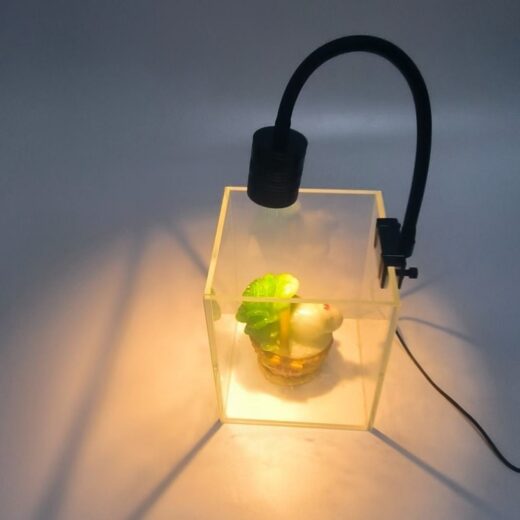
7 W USB Aquarium Plant Spotlight – Standard & Dimmable Models
Products matched to this guide
Selected for relevance to the setup and needs covered above.
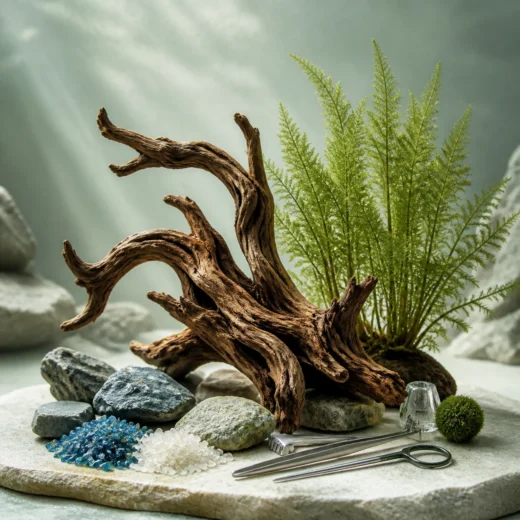
Natural Aquascape Value Bundle
A coordinated hardscape and planting set for an immediate, nature-inspired visual transformation. Shipping calculated at checkout.
View product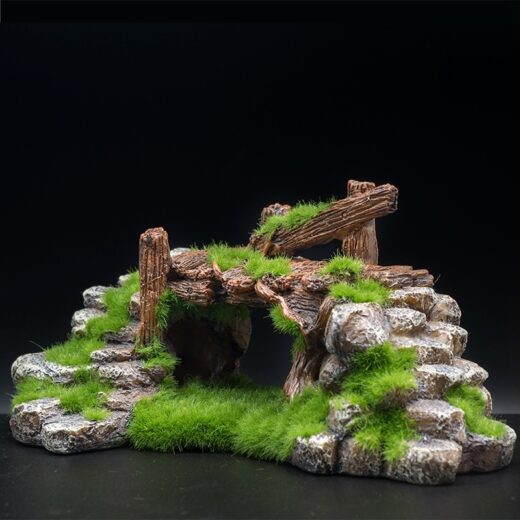
Flocked Resin Aquarium Landscape Rock – 18.8 cm
A green, flocked rock-style ornament with a compact 18.8 × 11.5 × 9 cm footprint. Made…
View product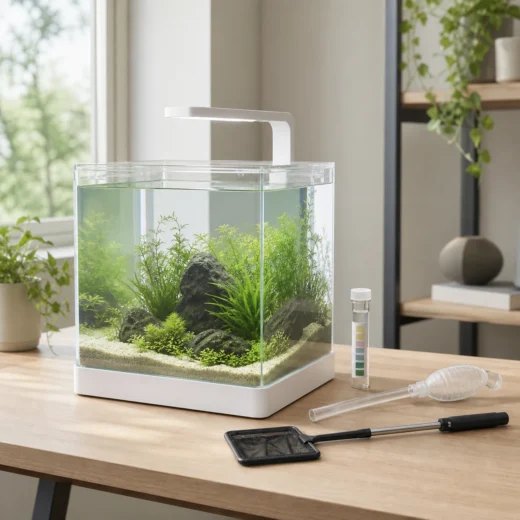
Desktop Aquarium Quick-Start Bundle
Four-piece desktop aquarium starter bundle with an acrylic tank system, 6-in-1 test strips, manual siphon cleaner…
View product