
Aquarium CO₂ Regulator Guide: Safety and Stable Control
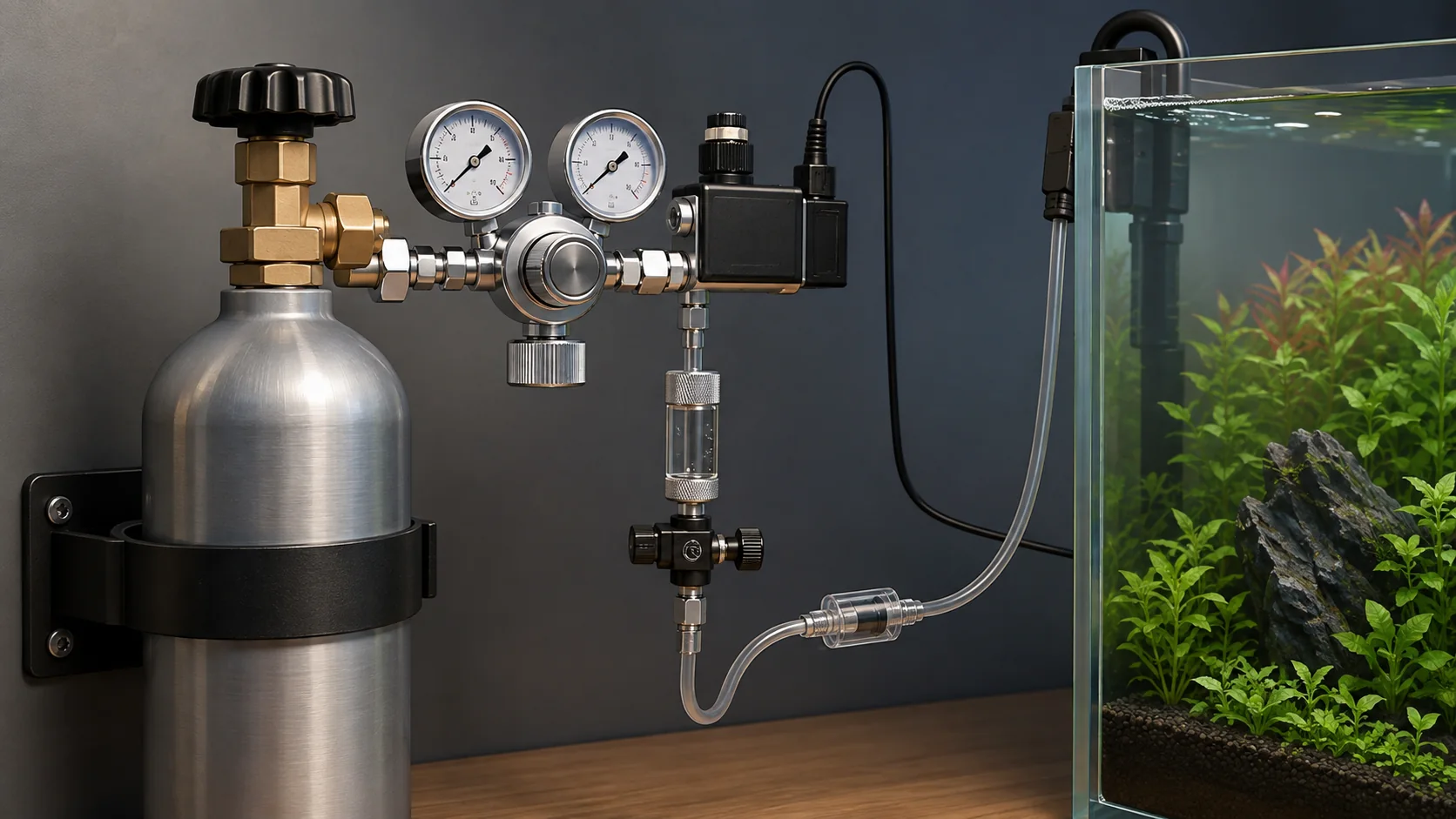
A planted-tank CO₂ regulator is a pressure-control device, not a universal connector. The safe choice is the one documented for the exact cylinder, gas, inlet pressure and downstream equipment you will use.
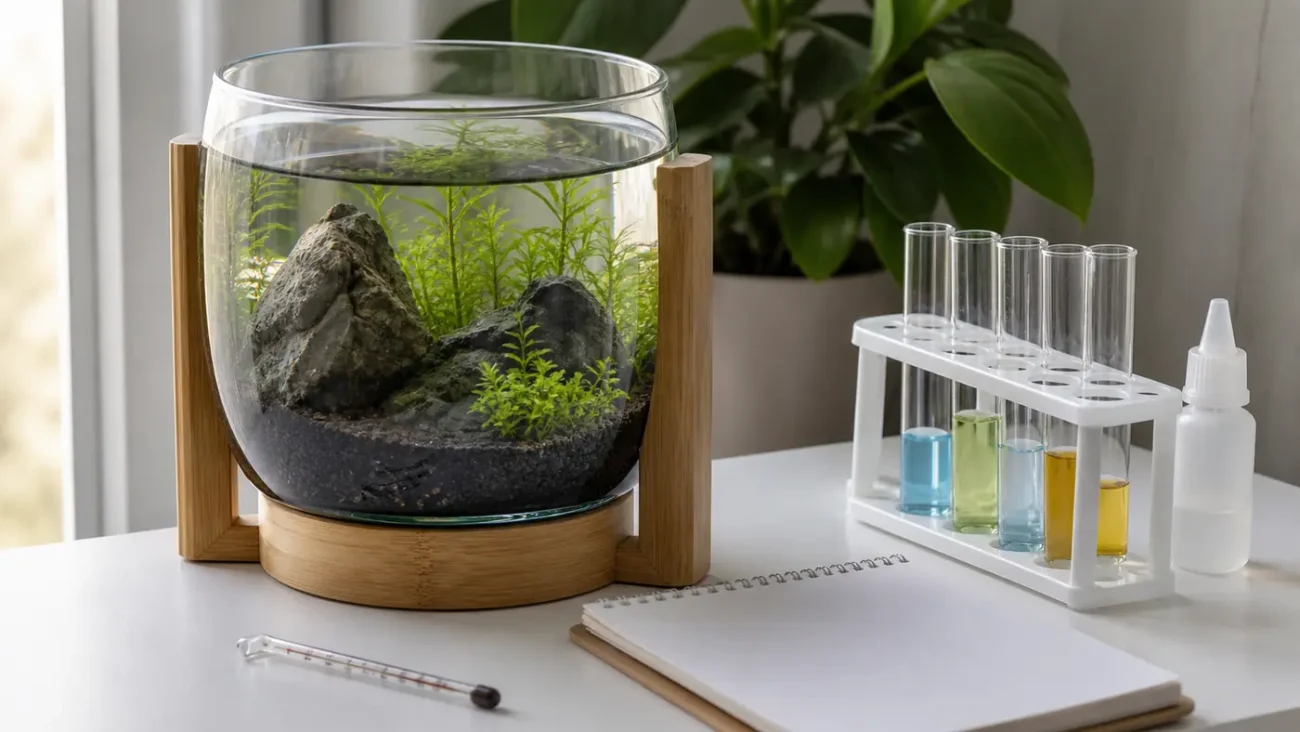
Five non-negotiable checks
- The cylinder valve and regulator inlet are an exact documented match.
- The regulator is rated for CO₂ and the cylinder’s maximum service conditions.
- The cylinder has a stable upright restraint and the valve remains accessible.
- The solenoid, tubing, check valve and diffuser are compatible with the planned system.
- Commissioning and leak checks follow the relevant manuals, without improvised adapters or sealants.
What the regulator does—and what it does not do
The cylinder contains CO₂ at a pressure far above the useful delivery pressure for aquarium equipment. The regulator reduces that pressure; a fine-control valve then meters the downstream flow. A solenoid can automate shut-off, while a check valve is intended to resist water moving back toward the gas equipment. These parts have different jobs, so one cannot compensate for another that is missing, incorrectly installed or incompatible.
A pressure gauge is not a substitute for observing actual delivery. A bubble counter is only a local reference for that particular counter, fluid and installation; it is not a transferable dose. Plant and livestock response must be evaluated in the aquarium, and any CO₂ adjustment belongs inside a broader plan for circulation and gas exchange.
Use a compatibility gate before comparing features
- Identify the cylinder. Record the supplier, gas, valve/outlet specification and any service instructions. Do not infer the connection from a photograph or a country name.
- Verify the regulator. Check the manufacturer’s approved gas, inlet connection, maximum inlet pressure, outlet range and required seals. An adapter is acceptable only when the cylinder supplier and equipment manufacturer explicitly support that configuration.
- Verify the controlled side. Confirm the fine-control valve, solenoid, tubing, check valve, manifold and diffuser are intended for the pressures and gas involved.
- Verify electricity separately. For a powered solenoid, match the stated voltage, frequency and plug to the destination supply. Use only equipment and timers intended for their installed location.
- Plan support and service. The cylinder needs an upright restraint that cannot slide free, with space to close the valve and inspect the assembly.
Commission without improvisation
Read the cylinder supplier’s and regulator manufacturer’s procedures together before opening the cylinder. Inspect for visible damage or missing seals, keep the adjusting control in the prescribed starting position, and connect the approved parts without forcing threads. Open valves only in the manner and sequence specified for that equipment. Use the approved leak-detection method at the stated test points; never use a flame to look for a leak.
If a joint bubbles during an approved leak test, pressure behaves unexpectedly, a gauge is damaged, the valve will not operate normally, or gas is suspected in the room, close the cylinder valve if this can be done safely, ventilate the area and stop. Do not keep tightening, add an unapproved compound or continue experimenting. Contact the supplier or a qualified compressed-gas service provider.
Stabilise the aquarium side
After the hardware passes its checks, treat the first aquarium setting as a baseline rather than a target. Record the on/off schedule, fine-control position or local bubble reference, diffuser location, filter state and visible surface movement. Observe livestock throughout commissioning. Changes in breathing, position or behaviour require immediate attention and restoration of safe gas exchange; seek species-specific professional guidance when the cause is unclear.
Make small, deliberate adjustments and allow the system to settle before judging the result. A large correction made in response to one indicator colour or one weak leaf can overshoot and hides whether distribution, light or plant health was the real limitation.
Failure modes this framework prevents
The fitting appears to screw on
Partial thread engagement does not prove that the connection standard, sealing surface or pressure rating is correct. Stop and verify both specifications.
The bubble rate drifts
Do not assume the regulator alone is responsible. Check the documented installation for leaks, water backflow, pinched tubing, a fouled diffuser and changes in cylinder state. Isolate the fault before replacing parts or increasing flow.
The solenoid clicks but delivery does not stop
A sound is not a functional test. Close the cylinder and follow the solenoid and regulator troubleshooting instructions; do not leave a shut-off operating unattended until it has passed the manufacturer’s functional check.
The cylinder is nearly empty
Do not chase the previous bubble reference by making a large final adjustment. Follow the supplier’s replacement and depressurisation procedure, then recommission the new cylinder as a new setup.
Stop-or-proceed checklist
- Can every pressure-side component be identified by model and specification?
- Do the cylinder supplier and regulator documentation agree on the connection?
- Is the cylinder upright, restrained and protected from damage or heat?
- Can the valve be reached quickly without moving the cylinder?
- Has the exact assembly passed the manufacturer-approved leak check?
- Are the solenoid and timer electrically compatible with the destination?
- Is there a written baseline for the aquarium-side setting and observation plan?
CO₂ regulator questions
Can I choose a regulator from the cylinder size alone?
No. Cylinder size does not establish the valve connection, gas approval, inlet rating or sealing method. Use the exact supplier and manufacturer specifications.
Is an adapter a normal solution to a thread mismatch?
Only when the cylinder supplier and equipment manufacturer explicitly approve the complete arrangement. An adapter changes the pressure boundary and must not be treated as a guess-and-check accessory.
What should I do if I suspect a leak?
Close the cylinder valve if it is safe to do so, ventilate the area, avoid ignition sources and stop using the system. Follow the supplier’s emergency guidance and have the equipment checked by a qualified provider.
Safety and technical sources
The cylinder rules below are general occupational safety references, not a substitute for the instructions supplied with aquarium equipment or for local compressed-gas requirements.
Build a water-quality starter setup
Combine suitable filtration with monitoring and maintenance tools; equipment supports, but does not replace, a correct cycling process.
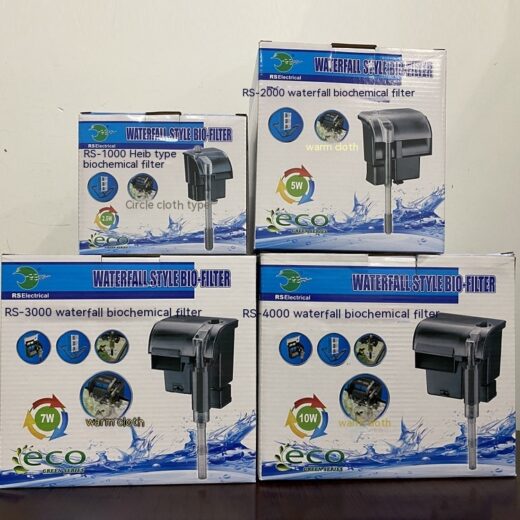
Aquarium Waterfall Bio Filter – RS1000 to RS4000
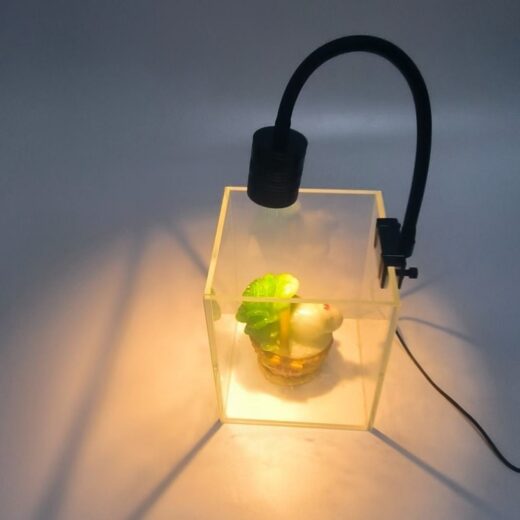
7 W USB Aquarium Plant Spotlight – Standard & Dimmable Models
Products matched to this guide
Selected for relevance to the setup and needs covered above.
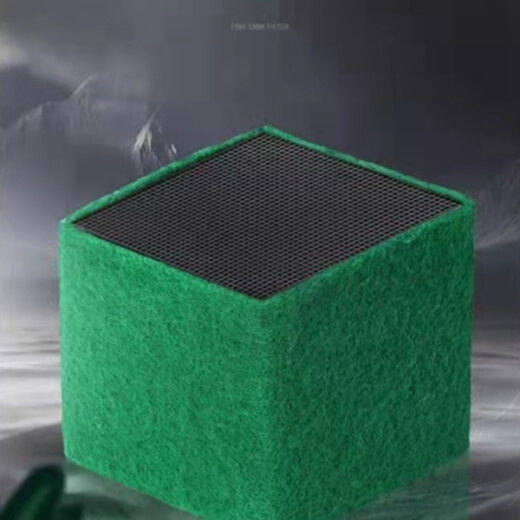
Filter Media Cube – Black/Green, Small/Large, 1–3 Pack
Cube-format aquarium filter media in black or green, small or large, with 1-, 2- and 3-piece…
View product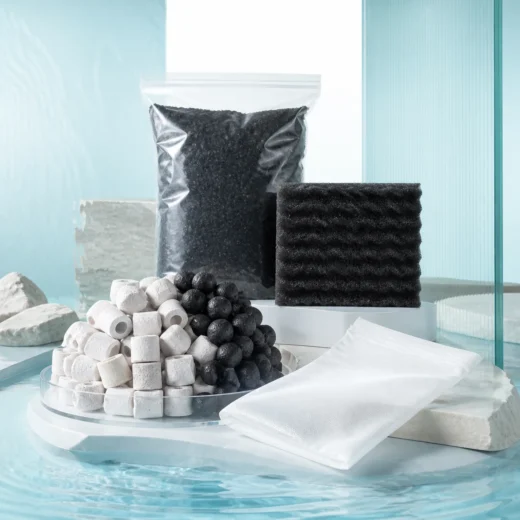
Aquarium Filter Refresh Essentials Bundle
A flexible set of mechanical and chemical media components for compatible aquarium filters. Measure the chamber…
View product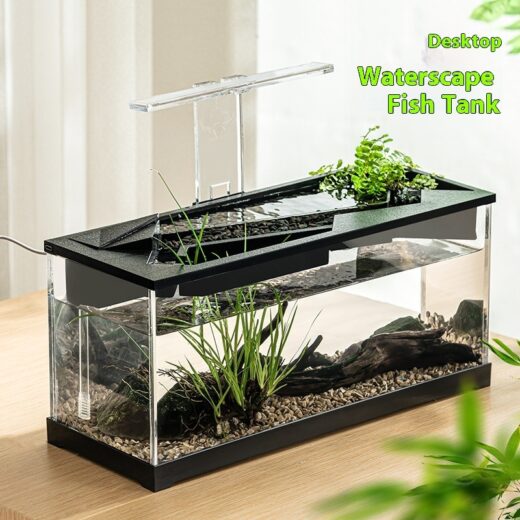
43 cm Acrylic Aquarium Kit – Pump & Light Options
Compact 43 cm acrylic aquarium with five pump, lamp, pad and external-light package options. Select the…
View product