
How to Build an Aquarium Fish Feeding Schedule That Actually Fits Your Tank
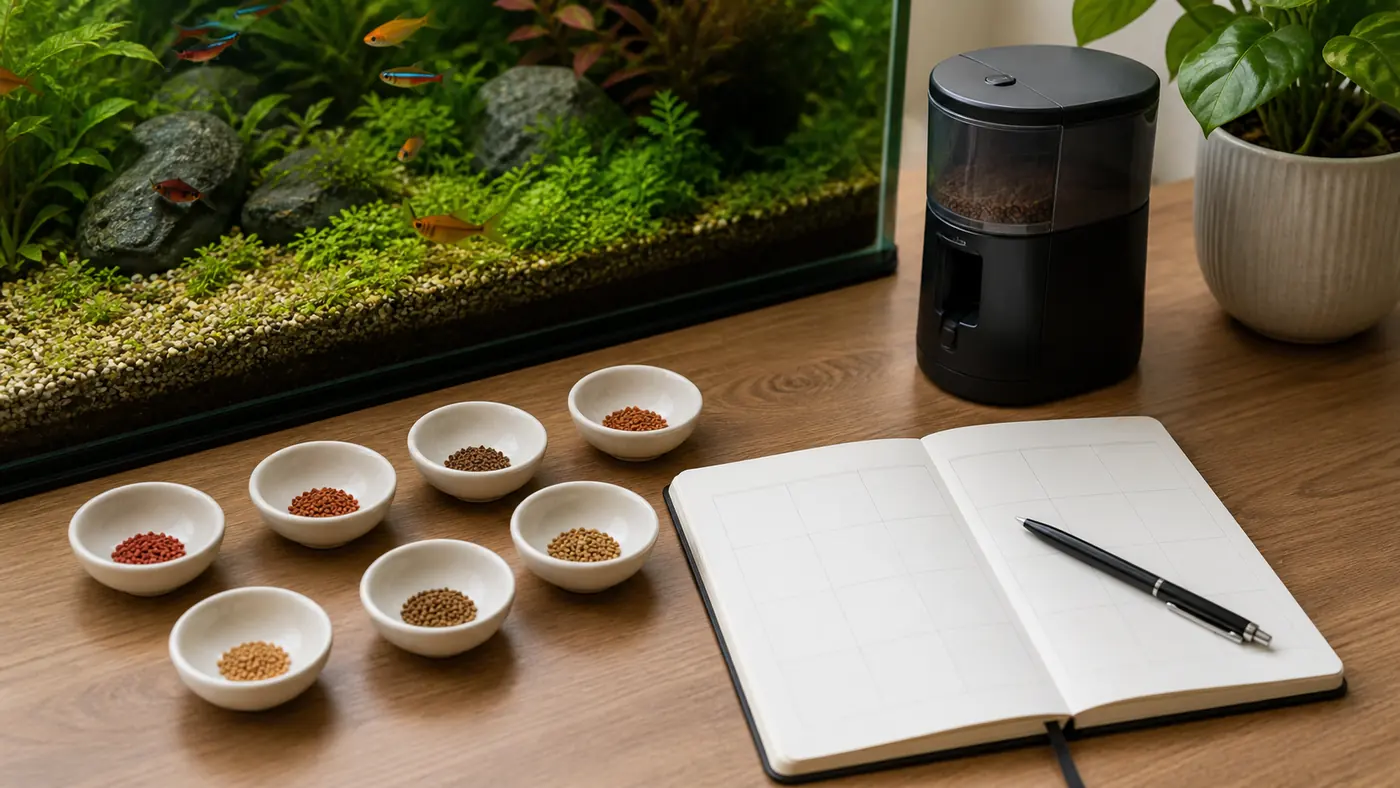
“How often should I feed my fish?” sounds like a question with one neat answer. It is not.
A young, fast-growing fish does not have the same needs as a mature adult. A warm tropical aquarium is different from a cool-water setup. Surface feeders, bottom dwellers, grazers and nocturnal species do not all meet the same food at the same time. (FAO: Freshwater Fish Feeding Management)
A useful feeding schedule starts with observation, not a universal number. The goal is to provide appropriate nutrition while keeping uneaten food and waste low. (Merck Veterinary Manual: Nutrition in Fish) (University of Florida IFAS: Ammonia in Aquatic Systems)
For broader habitat and routine-care context, visit the fish welfare and responsible keeping hub.
What determines feeding frequency?
Five factors matter more than any generic timetable.
Species and natural feeding behaviour
Some fish take small amounts throughout the day; others eat larger, less frequent meals. Mouth position and swimming zone matter too. A floating flake may suit a surface feeder but never reach a shy bottom-dwelling fish in time. (Merck Veterinary Manual: Providing a Home for Fish)
Research the specific species in the aquarium. In a mixed community, one schedule may need several food formats or feeding locations. (Merck Veterinary Manual: Nutrition in Fish)
Age and life stage
Fry and juveniles often need more frequent, carefully controlled feeding than healthy adults. Breeding fish or animals recovering from illness may have different needs, but those cases deserve species-specific professional guidance rather than a general internet timetable. (FAO: Freshwater Fish Feeding Management)
Water temperature and metabolism
Temperature affects activity and digestion. This is especially important for cool-water fish and ponds, where seasonal changes can alter feeding behaviour. Follow reliable species and food-manufacturer guidance rather than continuing the same quantity when appetite changes. (FAO: Freshwater Fish Feeding Management)
Food type and nutrient density
A pinch of flakes, a spoon of granules and several large pellets are not equivalent portions. Foods also expand, sink or break apart differently. Use the product instructions as a starting point, then watch how the fish respond. (Merck Veterinary Manual: Fish Nutritional Disorders)
Our fish food compatibility guide explains how common dry foods behave in both manual and automatic feeding.
Tank population and competition
The number of fish is only part of the picture. Bold fish may take most of the meal while shy or slow species receive little. Feeding at two locations, using sinking food or staggering formats can help, but every change should be observed. (Merck Veterinary Manual: Nutrition in Fish)
Begin with an observation-based portion
Many care guides suggest offering only what fish can consume within a short period. That is a useful observation tool, not a licence to keep adding food for several minutes. (RSPCA: What to Feed Your Fish)
Start conservatively. Watch whether food is actively eaten, trapped behind decor, pulled into the filter or left on the substrate. The right portion should feed the intended fish without leaving a visible trail of waste. (RSPCA: What to Feed Your Fish)
If you are using an automatic feeder, never guess the outlet setting over the aquarium. Test it over a tray and compare several releases. Our automatic feeder calibration guide shows the process.
A practical way to create the schedule
Use a seven-day observation period when the aquarium is stable.
- Record the food type and amount offered.
- Note the time of day.
- Watch which fish eat and where.
- Record visible leftovers after feeding.
- Note unusual behaviour, waste or changes in water quality.
- Adjust only one variable at a time.
This does not need to become a scientific project. A simple note on a phone is enough. The value comes from seeing patterns that memory misses.
Example feeding log
| Day | Time | Food | Portion | What happened | Adjustment |
|---|---|---|---|---|---|
| Monday | 08:00 | Small pellets | Small measured scoop | All eaten; bottom fish slow to arrive | Add a few sinking pellets separately |
| Tuesday | 08:00 | Pellets + sinking food | Same main portion | Better distribution | Keep routine |
| Wednesday | 08:00 | Same | Same | A little food entered filter flow | Move feeding point |
The example is a method, not a prescription. Your entries should reflect your fish and food.
Once a day or several smaller meals?
Healthy adult fish in many home aquariums are often maintained on one or more controlled feedings per day, but frequency must match the species. Splitting the daily amount into smaller meals can improve access for some fish, yet it also creates more opportunities to overfeed if each “small” meal is not measured. (FAO: Freshwater Fish Feeding Management)
When using a feeder with multiple daily cycles, calculate the total daily amount. Two releases should usually divide the planned daily portion rather than duplicate it. (FAO: Freshwater Fish Feeding Management)
Before considering the DaraSphere automatic aquarium feeder, verify its current timing, food-compatibility, mounting and power documentation; then confirm that those conditions match the established routine.
Match timing to the fish and the aquarium
Feed when you can observe the aquarium. This makes it easier to spot a fish that does not approach food, an outlet that has clogged or a portion that lands in the wrong place. (RSPCA: What to Feed Your Fish)
Consider these timing details:
- Allow fish to become active after the lights come on.
- Provide nocturnal species with appropriate food when they are likely to feed.
- Avoid dropping food directly into strong filter flow.
- Keep timing reasonably consistent.
- Coordinate food formats so slower fish are not excluded.
If an automatic feeder releases food while lights are off, confirm that the intended fish can still find and use it. Some feeders start their first cycle as soon as they are activated, so programming instructions matter. (RSPCA: What to Feed Your Fish)
Signs the portion may be too large
Overfeeding is not always obvious at the surface. Look for a pattern rather than a single clue:
- food remains after the active feeding period;
- flakes or pellets collect behind decor;
- the substrate becomes unusually dirty;
- water becomes cloudy or develops an odour;
- algae or pest snails increase alongside excess nutrients;
- fish appear bloated or produce unusually long waste;
- filter maintenance becomes more frequent.
Source for the preceding checklist: University of Florida IFAS: Ammonia in Aquatic Systems
These signs can have other causes, so do not diagnose the aquarium from one symptom. Review the feeding log, water tests, stocking and maintenance together. Read how overfeeding affects aquarium water quality for a structured troubleshooting approach.
Signs the schedule may not be reaching every fish
The tank can be overfed while an individual fish is underfed. Dominant fish may take floating food before shy fish leave cover. Bottom feeders may receive only leftovers, which are not automatically a complete diet. (Merck Veterinary Manual: Nutrition in Fish)
Watch body condition, normal activity and access during feeding. Use appropriate sinking or targeted food where needed. If a fish stops eating, loses weight or behaves unusually, investigate promptly and seek qualified advice rather than simply increasing the whole tank’s portion. (Merck Veterinary Manual: Nutrition in Fish)
How to use an automatic feeder without losing control
Automation should reproduce a routine you already understand.
- Establish the manual portion first.
- Use one dry food with predictable flow during calibration.
- Test several releases over a tray.
- Start with the smallest outlet setting.
- Check where food lands in the aquarium.
- Observe the fish through several cycles.
- Inspect the drum for moisture and clumps.
- Recheck the amount after refilling or changing food.
If the feeder will be used during travel, combine it with the aquarium holiday checklist.
Should fish have a fasting day?
Blanket advice about weekly fasting is too broad. Whether a short fast is appropriate depends on the species, age, health and established husbandry. It is not suitable for every fish, especially fry or animals with particular nutritional needs. (FAO: Freshwater Fish Feeding Management)
Use reliable species-specific guidance. Do not add a fasting day simply to compensate for routinely oversized portions; correct the portions instead.
Review the schedule when something changes
Reassess feeding after:
- adding or removing fish;
- changing food brand, format or pellet size;
- changing temperature;
- moving the feeder or filter outlet;
- treating illness;
- noticing weight or behaviour changes;
- returning from a holiday;
- switching from manual to automatic feeding.
Even a good schedule is not permanent. It should respond to the aquarium without becoming erratic.
Frequently asked questions
How many times a day should aquarium fish be fed?
There is no single safe frequency for every species. Use species-specific guidance, life stage, food instructions and observation to establish the routine. (FAO: Freshwater Fish Feeding Management)
How do I measure a fish food portion?
Use a small scoop, spoon or counted pellets rather than an unrepeatable “pinch.” For an automatic feeder, collect and compare several releases over a tray. (EHEIM autofeeder 3581 Operating Manual)
Why do my fish always act hungry?
Approaching the feeder or glass does not by itself establish that the planned ration is inadequate. Judge the schedule using body condition, access to the correct diet, leftovers and water quality. (Merck Veterinary Manual: Nutrition in Fish)
Can I put different foods in one automatic feeder?
Mixed sizes may separate inside the drum and dispense unevenly. Test the exact mixture repeatedly. A twin-chamber feeder or separate targeted feeding may be more predictable. (EHEIM Automatic Feeder Catalogue)
What if food goes straight into the filter?
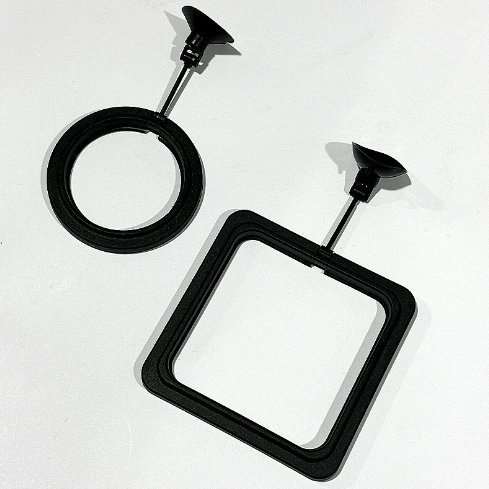
Move the feeding point, adjust surface flow if appropriate, or use a feeding ring compatible with the aquarium. Do not compromise essential filtration. (Merck Veterinary Manual: Providing a Home for Fish)
Consistency should still include observation
A feeding schedule is not a number copied from a label. It is a routine built from species knowledge, measured portions and what you see in the tank. (Merck Veterinary Manual: Nutrition in Fish)
Keep the plan simple enough to repeat, but flexible enough to review. Whether you feed by hand or use a timer, observation remains the most important part of the routine.
Editor’s source note: Species-specific feeding and health concerns should be reviewed by a qualified aquatic professional. General timings in third-party sources must not be presented as universal rules.
Build a reliable automatic-feeding setup
Start with a compatible feeder, then protect the routine with suitable water-care and maintenance equipment.
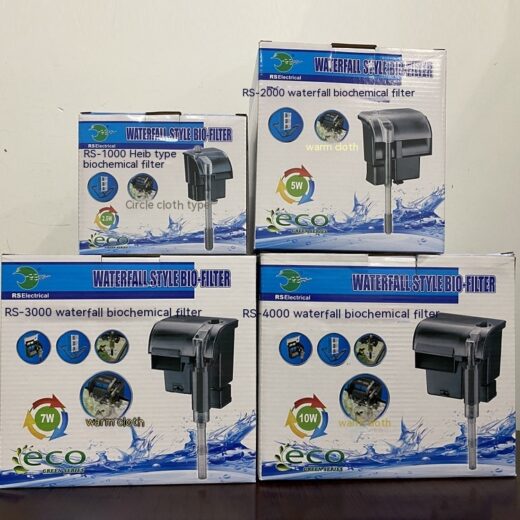
Aquarium Waterfall Bio Filter – RS1000 to RS4000
Products matched to this guide
Selected for relevance to the setup and needs covered above.
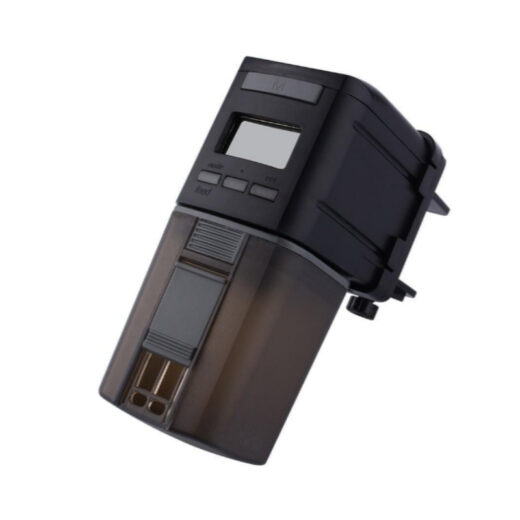
Automatic Fish Feeder for Goldfish & Koi – Standard/Wi-Fi
Automatic dry-food feeder for goldfish and koi, available as a standard black model or Wi-Fi remote-control…
View product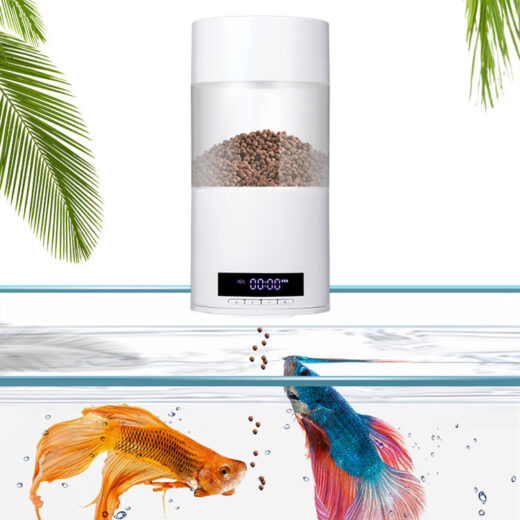
Automatic Aquarium Fish Feeder with 24-Hour Timer
500 ml automatic fish feeder with a 24-hour timer, USB cable and battery-operation option for repeatable…
View product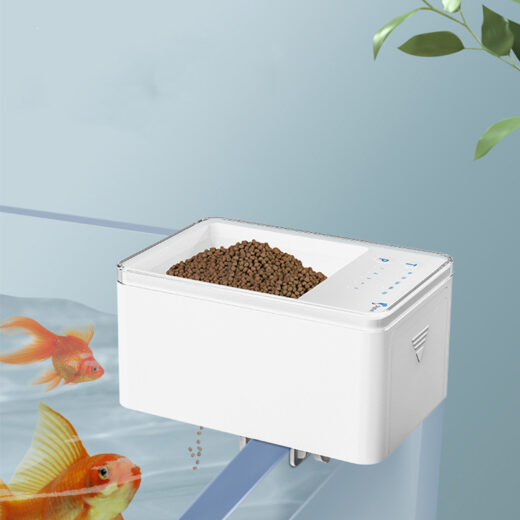
Digital Automatic Fish Feeder with LED Display – 500 ml
A compact 500 ml automatic aquarium feeder with an LED display, 24-hour scheduling and one-to-four daily…
View product