
Do You Need CO2 in a Planted Aquarium? Decision Tree
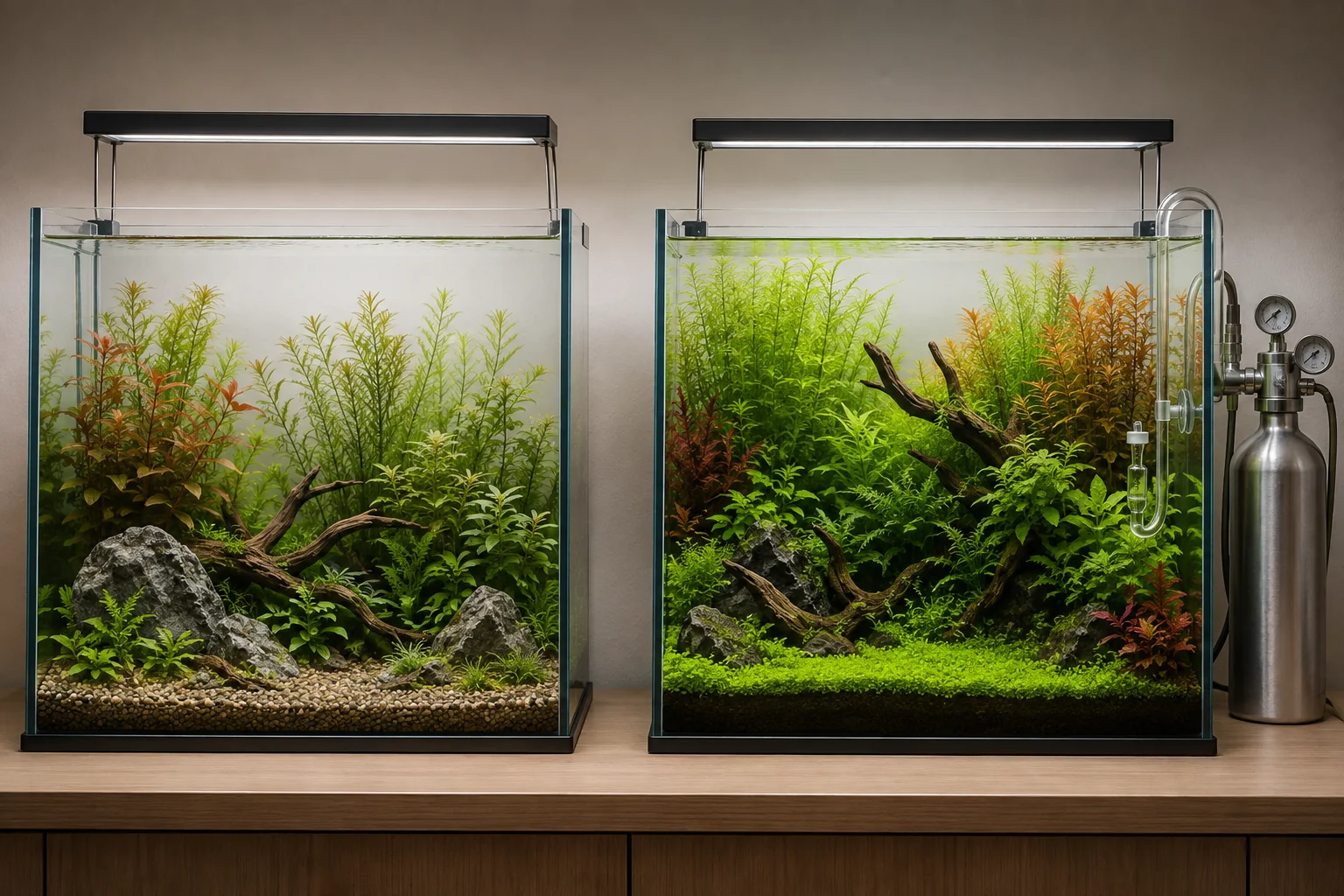
Short answer: added CO2 is not an automatic next step. Define the plants, light, growth goal, livestock and exact system documentation before deciding. This page gives no injection rate, pressure setting or livestock-safety threshold.
Decision 1: is the goal possible within a lower-demand design?
Tropica states its manufacturer position that most aquarium plants benefit from added CO2. Source: Tropica: CO2.
That is a plant-manufacturer position, not evidence that every aquarium should add CO2. If the exact plant plan fits a lower-demand route and simplicity is the priority, keep the design within that boundary.
Decision 2: is one exact system documented?
Tropica’s CO2 System Nano page identifies a model-specific pressurised system and provides model-specific setup and adjustment steps. Source: Tropica: CO2 System Nano.
The instructions for one system must not be transferred to another cartridge, regulator, diffuser or cylinder. This article does not reproduce a setup procedure.
Decision 3: is the fish-safety boundary understood?
UK government advisory standards for fish in scientific settings state that fish oxygen requirements vary with carbon dioxide concentration and that high concentrations of free carbon dioxide can be fatal to fish. Source: UK government advisory standards: Fish.
This is an independent safety boundary from scientific fish-care guidance. It is not a home-aquarium target and does not validate a bubble rate, colour rule, night schedule or emergency procedure.
Decision outcomes
Stay with a lower-demand plan
Choose this outcome when the plant and growth goals fit it. Record the plants, light evidence and maintenance plan.
Research one exact system
Choose this outcome only when one complete current manual and exact component list are available. The result is research readiness, not installation approval.
Stop for qualified review
Choose this outcome when livestock safety, product compatibility, pressure handling or abnormal fish behaviour is unresolved. Do not improvise a setting.
Build a planted aquascape starter kit
Begin with a simple layout foundation, then choose lighting and maintenance tools that match the plants and available space.
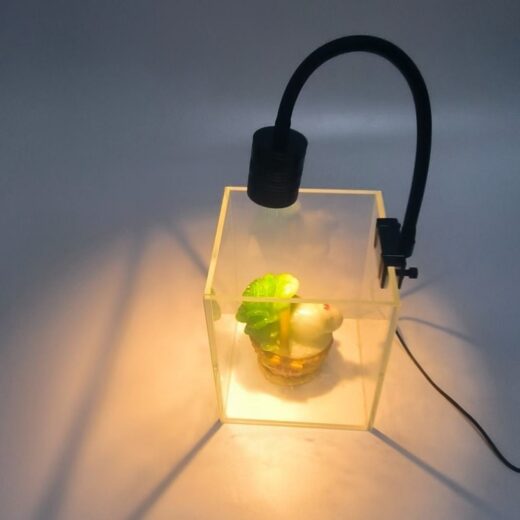
7 W USB Aquarium Plant Spotlight – Standard & Dimmable Models
Products matched to this guide
Selected for relevance to the setup and needs covered above.
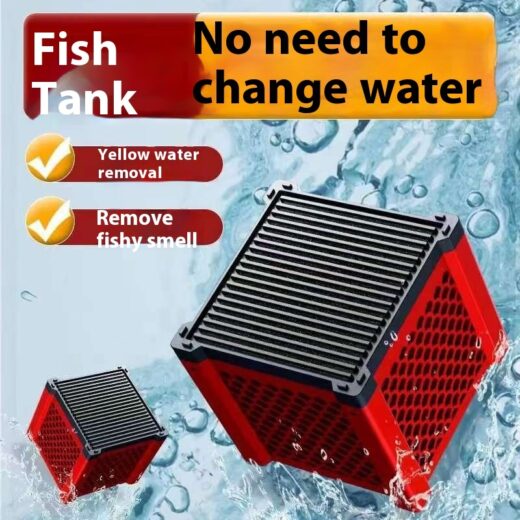
Aquarium Filter Media Cube – 1 Piece
A 12 × 12 × 12 cm honeycomb filter-media cube containing activated carbon for placement in…
View product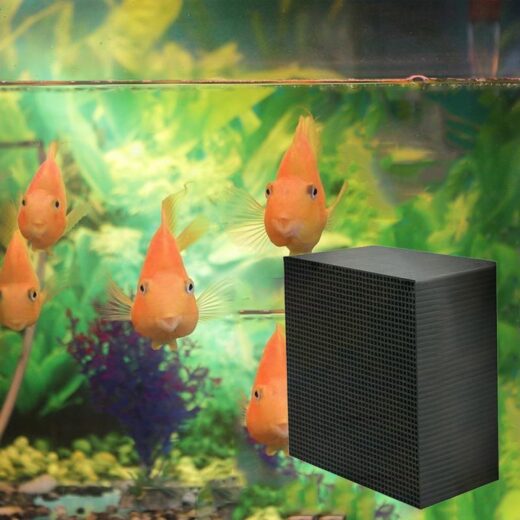
Aquarium Filter Media Combo Set – 1/2/3 Pieces
Aquarium Filter Media Combo Set – 1/2/3 Pieces — supports clearer water and a more manageable…
View product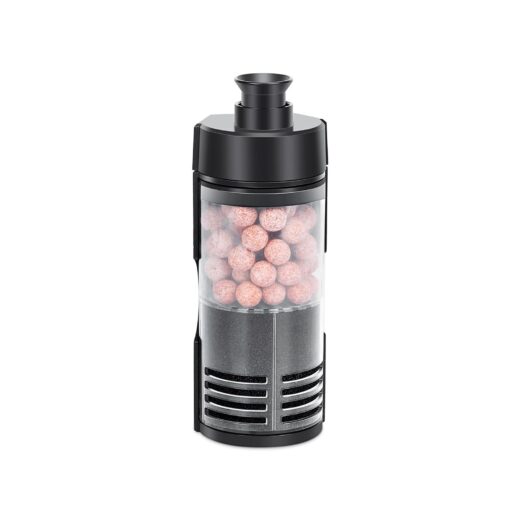
Bio Sponge Filter for Betta, Shrimp & Fry – 2–20 Gallons
Bring sponge and ceramic-media filtration together in a compact, air-driven filter. Choose Small for 2–5-gallon aquariums…
View product