
12 Planted Aquarium Mistakes Beginners Can Avoid
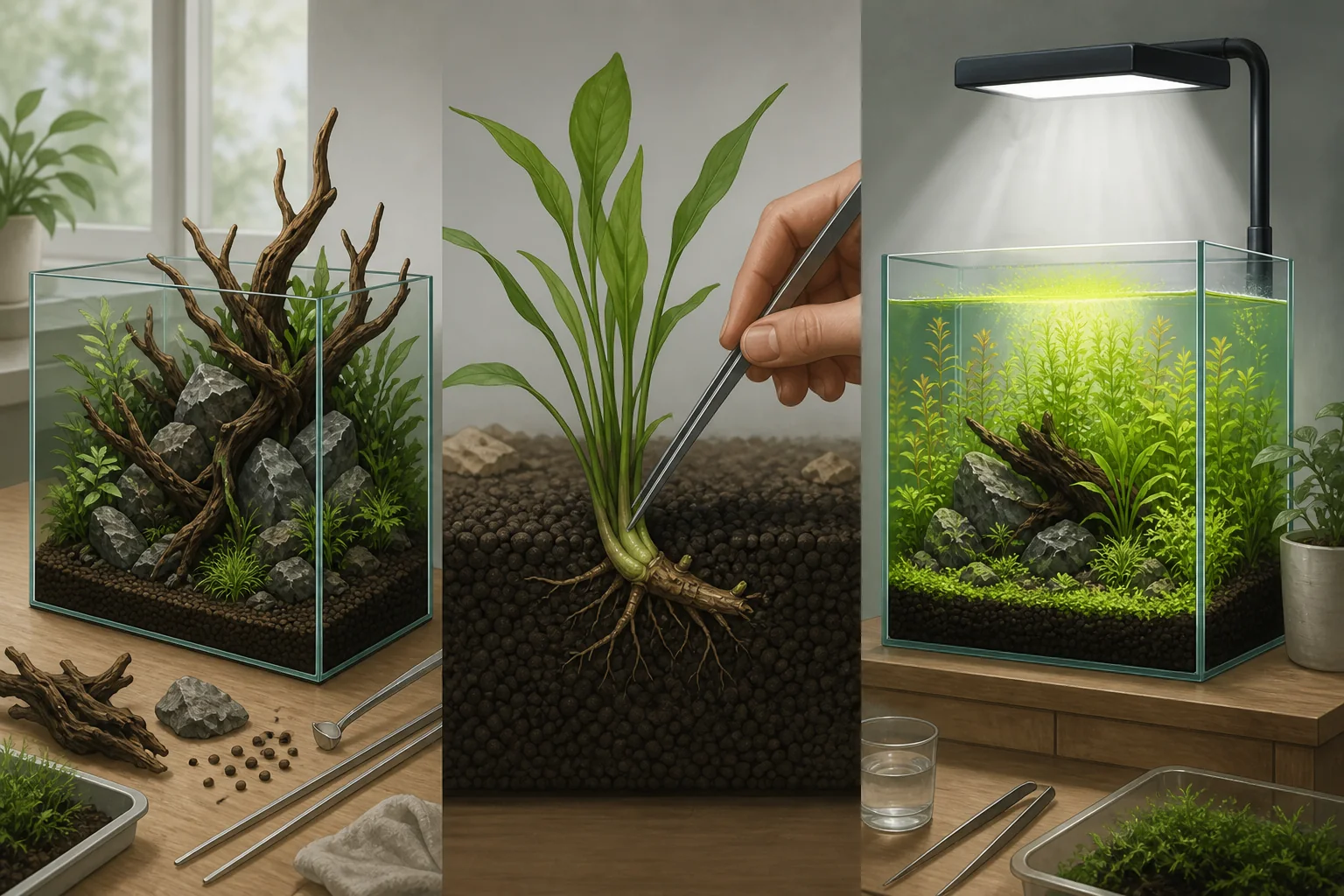
Most beginner planted-aquarium problems start before the first plant goes in. The tank, light, substrate, filtration, plants and livestock are often chosen as separate purchases even though they must work as one system.
Use these twelve mistakes as planning checks, not as a promise that every aquarium should be run identically. Plant species, livestock, source water, room conditions and manufacturer instructions still determine the safe details.
1. Buying equipment before measuring the usable space
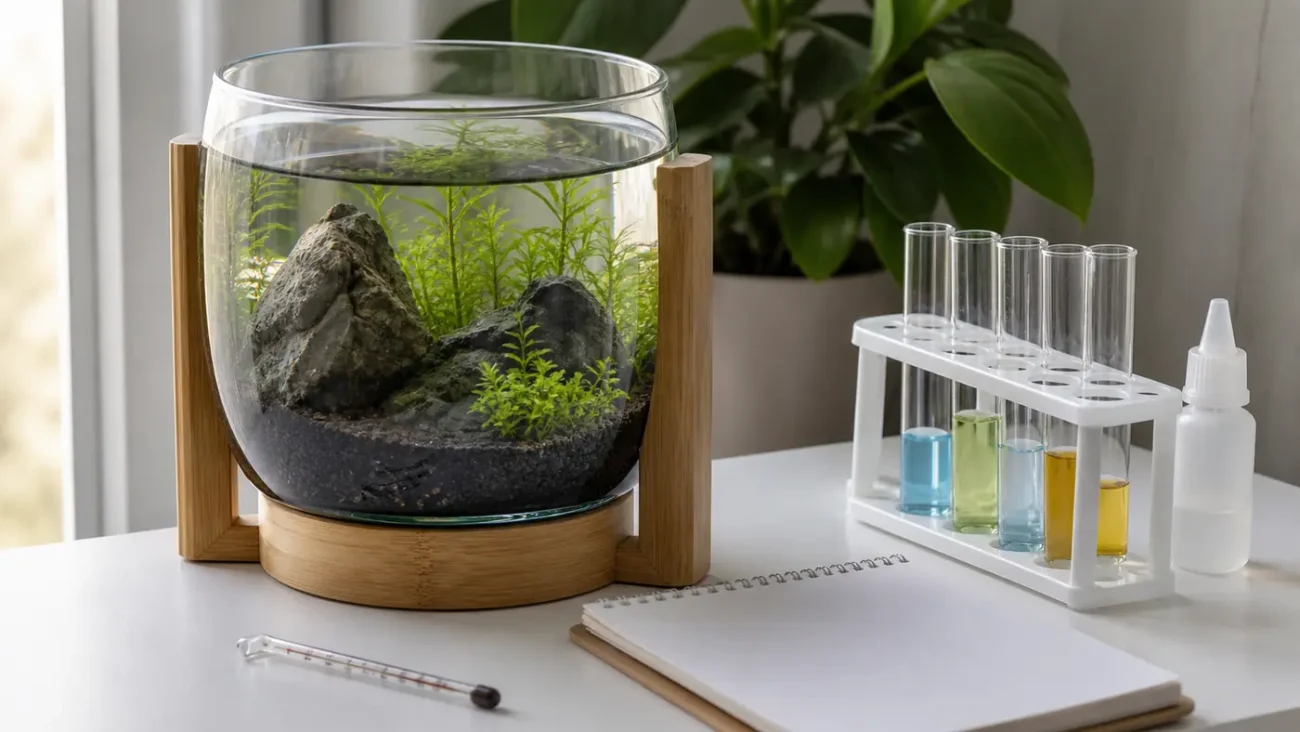
Advertised tank dimensions do not tell you how much room remains after substrate, hardscape, filter parts, a heater where required, light mounts and lid hardware. Measure the internal footprint and the surrounding clearance for cables, hoses and maintenance. Confirm voltage, plug, dimensions and mounting method on the exact product page.
2. Designing for gross capacity instead of real water volume
Substrate and hardscape displace water. That matters whenever a product instruction uses tank volume or replacement-water volume. Record the actual amount added during the initial fill and the amount normally replaced; do not assume the number printed on the aquarium is the correct dosing figure.
3. Choosing plants from finished photographs alone
A compact plant in a styled image may grow tall, spread aggressively or require more light, carbon supply and trimming than the planned system can provide. Verify the exact species identity and mature growth form. For a first layout, a limited group of plants with compatible care requirements is easier to observe and maintain than a broad collection.
4. Starting with more light than the system can support
High intensity is not a shortcut to healthy growth. Light drives demand for carbon, nutrients and maintenance. Begin with a controlled schedule appropriate to the documented plant needs and adjust from plant response. Avoid changing intensity and duration at the same time, because the result will be harder to interpret.
5. Treating CO₂ as a universal requirement or a casual add-on
Some planted aquariums are planned around pressurised CO₂; others use plants suited to lower-input conditions. Decide which system you are building before choosing plants and light. CO₂ equipment involves pressure, diffusion, monitoring and livestock safety, so installation and adjustment must follow the exact manufacturer guidance.
6. Burying every plant the same way
Planting method depends on plant structure. Rosette and stem plants are not planted like epiphytes, mosses or floating plants. In particular, do not bury the rhizome of an epiphyte when the supplier’s planting guidance says it should remain exposed and attached to hardscape. Separate bunches only as the species and supplier instructions allow.
7. Adding livestock before the aquarium is biologically ready
Clear water is not proof that a new aquarium can safely process livestock waste. Establish and verify the biological cycle with appropriate testing and species-specific guidance before stocking. Choose livestock for the aquarium’s mature volume, temperature, water conditions, flow and social needs—not simply because an animal is sold as “small.”
8. Blocking circulation and service access with the layout
Dense stems, tall stones and wood can create stagnant pockets or make the intake, outlet and substrate impossible to reach. Test the layout with equipment positions marked. Leave enough room to remove the filter guard, clean the glass, siphon accessible debris and trim plants without dismantling the aquascape.
9. Dosing several products without reading their analyses
Fertilisers, conditioners, active substrates, foods and treatments may contribute overlapping substances. Use one coherent plan and follow the labels. Calculate from the volume the instruction actually specifies. Never mix concentrates or exceed a dose to “catch up” unless the manufacturer explicitly instructs that use.
10. Correcting several variables at once
When growth slows or algae appears, it is tempting to change the light, fertiliser, flow and water-change routine together. That removes the baseline and may create a rapid swing for livestock. Record the current condition, rule out equipment problems and make one justified change at a time.
11. Cleaning the filter as if every component were disposable dirt
Filter service should restore flow without unnecessarily destroying established biological media. Follow the filter manufacturer’s sequence and replacement guidance. Do not replace all media at once, let biological media dry or wash aquarium equipment with household detergent.
12. Building a routine that only works in an ideal week
A complex layout can fail because its owner cannot repeat the required trimming, water care and equipment checks. Before buying, estimate the real weekly workload. A simpler planting plan with clear access and a written routine is usually a better beginner system than one that depends on frequent rescue work.
Before the first fill: a five-minute decision check
- List the exact plant and livestock requirements you have verified.
- Draw the internal footprint, equipment positions and maintenance routes.
- Choose a light and fertilising plan that belong to the same growth strategy.
- Record real fill volume and the planned testing and cycling method.
- Decide which single observation would justify each future adjustment.
Early plant transition, a damaged old leaf or a small amount of algae does not by itself identify a single cause. Compare repeated observations, healthy new growth and measured conditions. If animal behaviour, water chemistry or dosing safety is uncertain, stop and use qualified species-specific or manufacturer guidance.
Further guidance
Build a planted aquascape starter kit
Begin with a simple layout foundation, then choose lighting and maintenance tools that match the plants and available space.
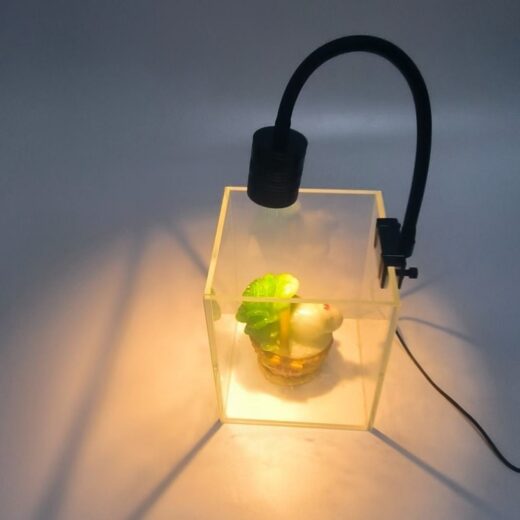
7 W USB Aquarium Plant Spotlight – Standard & Dimmable Models
Products matched to this guide
Selected for relevance to the setup and needs covered above.
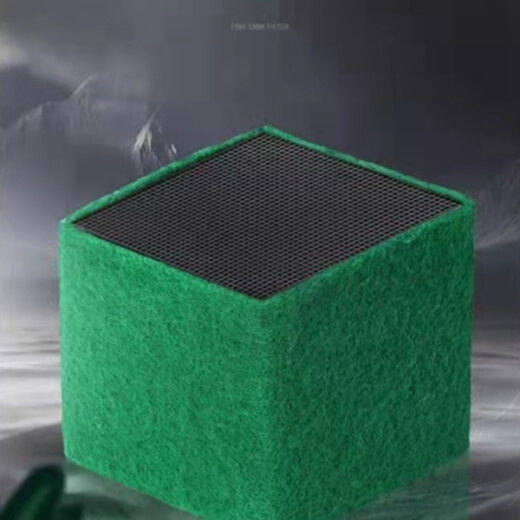
Filter Media Cube – Black/Green, Small/Large, 1–3 Pack
Cube-format aquarium filter media in black or green, small or large, with 1-, 2- and 3-piece…
View product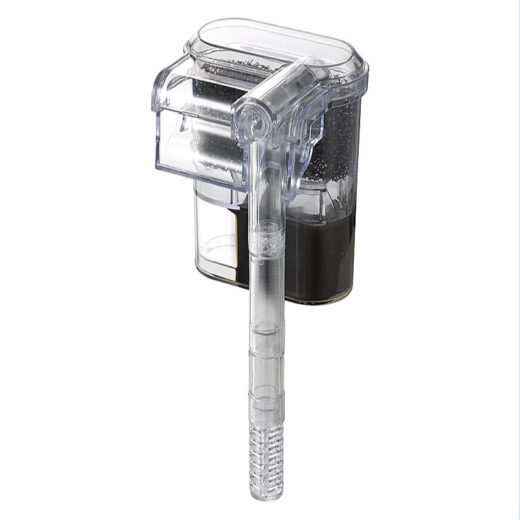
USB Mini Hang-On Waterfall Aquarium Filter
A compact USB-powered hang-on waterfall filter for small aquariums. Its transparent-grey ABS housing keeps the tank…
View product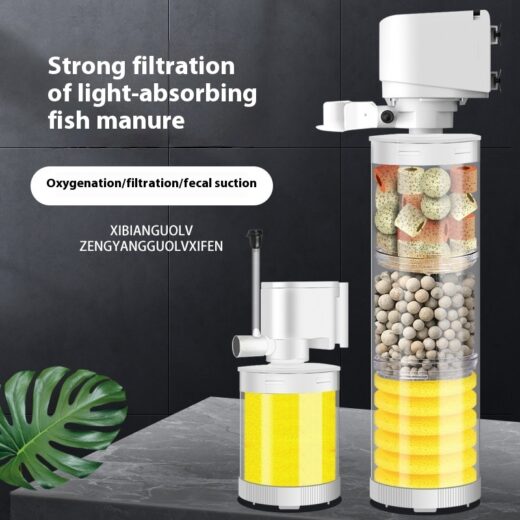
WP-Series Internal Aquarium Filter & Replacement Parts — 5–30 W
This WP-series listing combines complete filter models and replacement-part options. Choose WP1300A 5 W, WP2300A 10…
View product