
Planted Aquarium Fertilizer Dosing: Build a Measured Routine
A fertiliser routine is a controlled relationship between one known product, the water volume it is dosed into, the plant and substrate system, and a repeatable observation cycle. A copied pump count is none of those things.
The dosing routine in one line
- Identify the product and its nutrient scope.
- Use the label’s volume basis and measuring unit.
- Choose water-column or root-zone delivery for the plant and substrate.
- Log doses alongside water changes, pruning and plant mass.
- Adjust only from repeated evidence, not one leaf or one algae patch.
Start with the product, not a method name
“All-in-one”, “micro”, “macro” and “complete” are not interchangeable formulas. Record the manufacturer, exact product name, current label instructions, declared nutrients and whether the product is intended for the water column or substrate. If the label or ingredients cannot be verified, do not dose it.
Use one primary programme so the weekly input can be reconstructed. Adding a complete fertiliser, a separate iron product and another macro supplement may duplicate ingredients even when each bottle looks reasonable alone. Build an ingredient map before stacking products.
Calculate from the correct water basis
Tank capacity on the box is not always the volume relevant to a dose. Substrate, hardscape, the actual fill line and water removed during a change affect the water present. More importantly, labels differ: one may refer to total aquarium water while another is tied to replacement water. Follow the wording on the exact product rather than assuming one basis.
- Write down the label amount and reference volume.
- Estimate the applicable water volume in the same units.
- Scale the label amount proportionally only when the manufacturer permits it.
- Use a marked syringe, measuring cup or verified pump appropriate to the amount.
- Record the calculated dose before dispensing, then record what was actually added.
If the pump output matters, measure it with water in a separate container; pump counts vary by dispenser and are not a universal unit. Never return test liquid to the fertiliser bottle.
Match delivery to plant access
Water-column fertilisers can reach leaves and plants not rooted in the substrate, including mosses, floating plants and epiphytes. Root-zone products place nutrients near established rooted plants. The choice is not a contest between two universal methods; it depends on the plant, substrate, product instructions and what the existing programme already supplies.
Do not insert capsules into an unknown substrate or near animals without checking the product directions. Avoid breaking capsules or dissolving root products unless the manufacturer instructs it. Keep all fertilisers in their original labelled containers and away from children and pets.
Choose a routine you can repeat
A daily plan is not automatically more precise if doses are frequently missed, and a weekly plan is not automatically stable if it conflicts with water changes. Anchor the schedule to a reliable event: for example, a labelled weekly dose immediately after the regular water change when that matches the product instructions.
The log needs only a few fields: date, product, amount, applicable volume, water change, major trim, plant additions and observations of new growth. Photograph the same plants from the same angle. This reveals whether a lower dose followed a large trim or whether apparent “deficiency” occurred after a light change.
Read plant response without overdiagnosing
Judge the newest leaves that formed under the current routine. Old damage may not reverse, and one pale leaf does not identify a nutrient. Check whether the symptom is repeated across the same species, whether new growth is deformed or simply shaded, and whether roots, flow, light or CO₂ changed at the same time.
Algae also does not prove that all fertilisation must stop. Confirm the algae type and review dose history, plant mass, water changes, feeding and light exposure. Use the adjustment instructions for the exact product; a manufacturer may recommend a different response for a nutrient-rich formula than for a trace-only formula.
Failure modes and safer corrections
A pump was copied from another aquarium
Convert back to millilitres and verify the label, applicable water volume and dispenser output. Do not keep the copied number as a target.
A dose was missed
Do not automatically double the next dose. Resume or adjust only as the manufacturer directs; when no catch-up instruction exists, ask the manufacturer or a qualified planted-aquarium professional.
Several products overlap
Pause the optional supplements, list each declared ingredient and rebuild one understandable programme. Never mix concentrates together unless the labels explicitly allow it.
Plant mass changed after pruning
Record the trim. A major removal changes the system you are observing, so maintain the documented baseline and reassess demand from subsequent new growth rather than reacting immediately.
Dosing worksheet
- Exact product and current label
- Nutrients included and delivery route
- Label dose, interval and reference volume
- Applicable aquarium or replacement-water volume
- Measuring tool and verified pump output if used
- Water-change and pruning dates
- New-growth observations and next review date
Fertiliser dosing questions
Should I dose gross tank volume?
Use the volume basis stated on the exact product label. If it calls for aquarium water, estimate the water actually present; if it calls for replacement water, calculate from that amount instead.
Are root tabs and liquid fertiliser duplicates?
Not necessarily, but overlap is possible. Compare their declared nutrients, intended delivery route and the plants being served before using both.
Can a leaf symptom tell me exactly what to add?
No. A symptom is a clue, not a quantitative dose instruction. Review new growth, species pattern, recent changes and the complete programme before adjusting.
Fertiliser sources
Build a planted aquascape starter kit
Begin with a simple layout foundation, then choose lighting and maintenance tools that match the plants and available space.
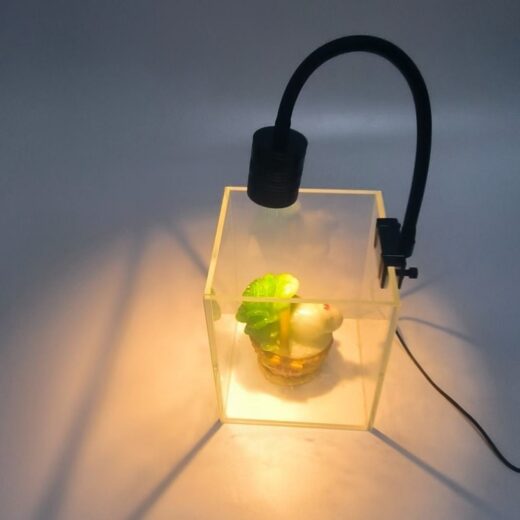
7 W USB Aquarium Plant Spotlight – Standard & Dimmable Models
Products matched to this guide
Selected for relevance to the setup and needs covered above.

Filter Media Cube – Black/Green, Small/Large, 1–3 Pack
Cube-format aquarium filter media in black or green, small or large, with 1-, 2- and 3-piece…
View product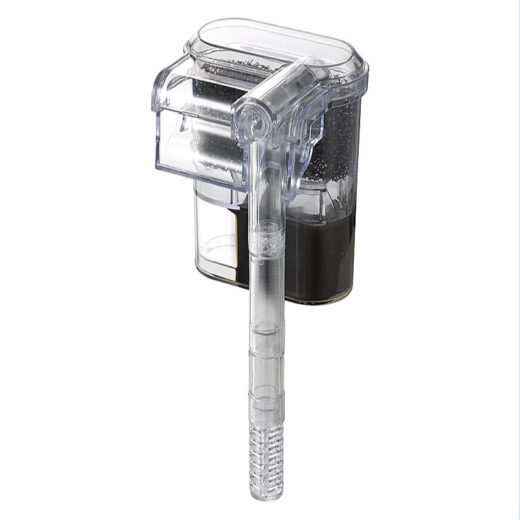
USB Mini Hang-On Waterfall Aquarium Filter
A compact USB-powered hang-on waterfall filter for small aquariums. Its transparent-grey ABS housing keeps the tank…
View product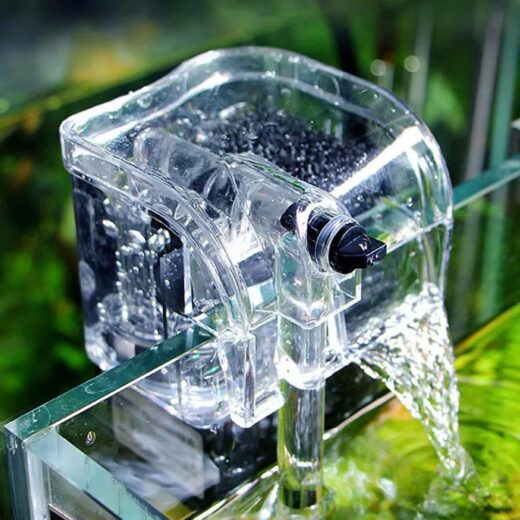
Nano Hang-On Back Aquarium Filter for Betta & Shrimp – 1–5 Gallons
Compact white hang-on-back filter for 1–5 gallon nano tanks, with adjustable flow, aeration and surface skimming.…
View product