
Why Are Aquarium Plants Turning Brown? Check the Leaves First

Aquarium plants can look brown because a film covers their leaves, the leaf tissue is deteriorating, or the plant naturally has brown colouring. Start by checking whether a small patch lifts away without damaging the leaf. Then compare older leaves with new growth and review when the change began. Those observations help you choose between gentle cleaning, a planting check and broader troubleshooting before adding fertiliser or changing the light.
Is the Brown Colour on the Leaf or in the Leaf?
Look closely under neutral white light. Check another leaf and a nearby piece of glass or decoration, too. The same brown dust on several surfaces points towards a coating.
A Soft Coating That Gently Wipes Away
On one sturdy leaf, support the underside and lightly stroke a small patch with a clean fingertip. Keep soap and cleaning-product residues out of the aquarium. Stop if the leaf tears or seems fragile; do not scrub thin leaves to force an answer.
A dusty brown coating that comes away easily is consistent with diatoms, although this check cannot identify an organism definitively. Aquarium Co-Op describes the appearance in its guide to recognising a soft diatom coating. Sediment can also settle on leaves. If intact tissue remains underneath, begin with surface cleaning rather than discarding the plant.
Brown Tissue That Is Soft, Transparent or Breaking Down
If the discoloured part belongs to the leaf and is becoming translucent, mushy or ragged, cleaning will not restore it. Aquarists often call this breakdown “melt”. The word describes what happens to the leaf; it does not establish the cause. A coating and damaged tissue can occur together, so inspect what remains after gentle cleaning.
A Four-Step Leaf Check
- Does a layer lift away? If yes, gently clean the surface and collect loose debris. Then inspect the tissue underneath.
- Is the tissue intact? If yes, compare the colour with the exact plant’s normal appearance. If soft or breaking down, check its planting method, especially any buried rhizome.
- Was the plant recently added or moved? If yes, review transition stress alongside planting errors. If established, check what changed before the browning.
- Is new growth healthy? If yes, monitor it while removing decay. If fresh leaves deteriorate or the base softens, move to broader plant troubleshooting.
Match the Pattern Before Choosing a Fix
| Observed pattern | Next check | Low-risk first action | Avoid this mistake |
|---|---|---|---|
| Soft film on leaves and other surfaces | Does the leaf remain intact underneath? | Clean gently and siphon loose particles. | Throwing away a healthy, coated plant. |
| Older leaves soften after planting | Look for firm new shoots and check planting depth. | Remove decaying tissue; keep conditions steady. | Repeatedly uprooting the plant. |
| Horizontal stem is buried or soft | Identify the rhizome and inspect its condition. | Correct burial; investigate any softening. | Trying extra fertiliser as the only fix. |
| Intact new leaves have brown colouring | Compare the exact species or cultivar. | Photograph and monitor normal growth. | Treating natural colour as disease. |
Recently Planted Leaves and Transition Stress
Some aquarium plants are grown with their leaves above water before sale. After submersion, older leaves may deteriorate while underwater-adapted leaves develop. Plants moved between aquariums can also react to changed conditions. Cryptocoryne is a familiar example.
Recent planting makes adaptation plausible, but it does not excuse every decline. Check the planting depth and whether new shoots remain firm. Remove leaves that are clearly decomposing without repeatedly lifting the plant to examine its roots. Healthy new growth is encouraging; neither leaf loss nor recovery follows a guaranteed timetable.
A Buried or Soft Rhizome
On Anubias and Java fern, the rhizome is the thicker, usually horizontal stem from which leaves and roots emerge. It is different from the thin roots. Covering that stem with substrate can cause problems.
Gently correct an obvious planting mistake and keep the rhizome above the substrate. Tropica’s planting guidance for rhizome plants also describes attaching these plants to rock or wood. If the rhizome already feels soft or falls apart, uncovering it alone may be insufficient. Treat that as a whole-plant problem needing closer assessment.
Older Leaves, Shading and Nutrient Clues
A few older leaves declining while new ones grow deserves a different response from every shoot deteriorating. Check whether a dense canopy now shades the affected leaves, whether they were crushed during maintenance, and whether the pattern repeats across plants.
Nutrient limitation is one possibility, but brown colour cannot identify a missing element. Note which leaves changed first and review the contents and dose of any fertiliser already used. Then check overlapping plant symptoms before choosing a supplement.
Natural Colour and Java Fern Reproduction
Some Cryptocoryne forms naturally produce brown or bronze foliage. Intact, expanding leaves with an even species-appropriate colour need comparison with the plant label and grower’s description. Use the identification guidance to check the needs of your exact plant.
Java fern adds another wrinkle: dark spots underneath a leaf can be reproductive structures, and small plantlets may form on leaves. Look for their position and organised growth. Expanding patches of collapsing tissue still warrant investigation; the presence of a fern does not make every dark mark harmless.
What to Do First, and What to Avoid
Remove Debris Without Damaging Healthy Growth
Siphon loosened film and detached fragments during routine maintenance. Trim clearly decomposing leaves with clean aquarium scissors, taking care around the growing point. Leave firm, functional leaves alone unless there is a specific reason to remove them. Heavy coatings can reduce the light reaching leaves, but aggressive brushing can create fresh damage.
Check the Planting Method and Recent Changes
Write down when browning began and the last relevant change: planting, a move, a new light schedule, altered dosing or a temperature swing. A useful note might be: “Older leaves softened after planting; two new shoots remain firm.” That gives you something to compare at the next inspection.
Do Not Change Several Products at Once
Avoid simultaneously increasing light, adding CO2 and doubling fertiliser. If the plant improves or worsens, you will struggle to tell which change mattered. Correct the clearest problem first and record it. Brown leaves alone also do not justify an algaecide or buying algae-eating animals, which have their own care requirements.
Track New Growth and Know When to Investigate Further
What to Record This Week
Take a photograph now and repeat it under similar lighting from the same angle. Record:
- Which leaves are affected: older, newer or both.
- Whether a coating returns after cleaning.
- Whether fresh leaves stay intact as they expand.
- The one correction made and its date.
Use this week to establish a trend, rather than as a deadline for recovery. Slow-growing plants may need longer to provide a useful comparison. Check sooner if deterioration accelerates.
When Brown Leaves Become a Whole-Plant Problem
Investigate further if new growth also breaks down, the base becomes soft, or several previously healthy plants decline together. Revisit species suitability, planting, light and water conditions with the observations you collected. If fish or shrimp appear distressed, prioritise checking aquarium water quality and getting appropriate help rather than waiting for the plant to recover.
Questions About Brown Aquarium Leaves
Should I Cut Off Every Brown Leaf?
No. Keep naturally coloured leaves and intact leaves beneath a removable film. Remove tissue that is clearly decaying, without damaging healthy shoots or the plant’s base.
Can Brown Leaves Turn Green Again?
A green leaf may become visible when a brown coating is removed. Dead or badly damaged tissue will not become a healthy leaf again. Judge progress mainly by intact new growth.
Does Brown Mean I Need More Iron?
No. Brown colour alone is too vague to justify iron dosing. Compare old and new leaves, check planting and recent changes, then investigate nutrition if the wider evidence supports it.
Featured image: AI-generated conceptual illustration, not a diagnostic photograph.
Build a planted aquascape starter kit
Begin with a simple layout foundation, then choose lighting and maintenance tools that match the plants and available space.
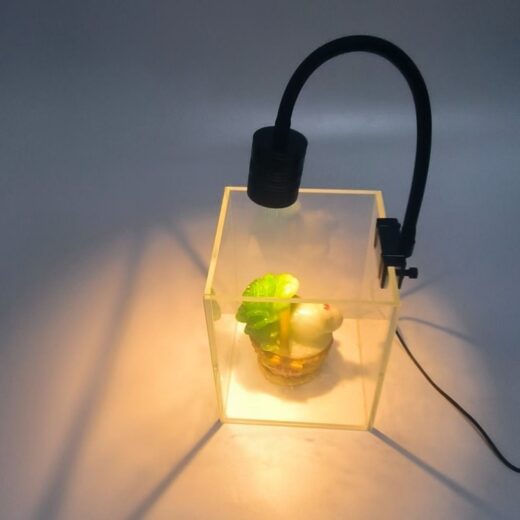
7 W USB Aquarium Plant Spotlight – Standard & Dimmable Models
This is a curated shopping path, not a one-size-fits-all bundle. Confirm dimensions, compatibility, livestock needs and electrical requirements before ordering.