
How to Choose an Automatic Feeder for Different Fish Species
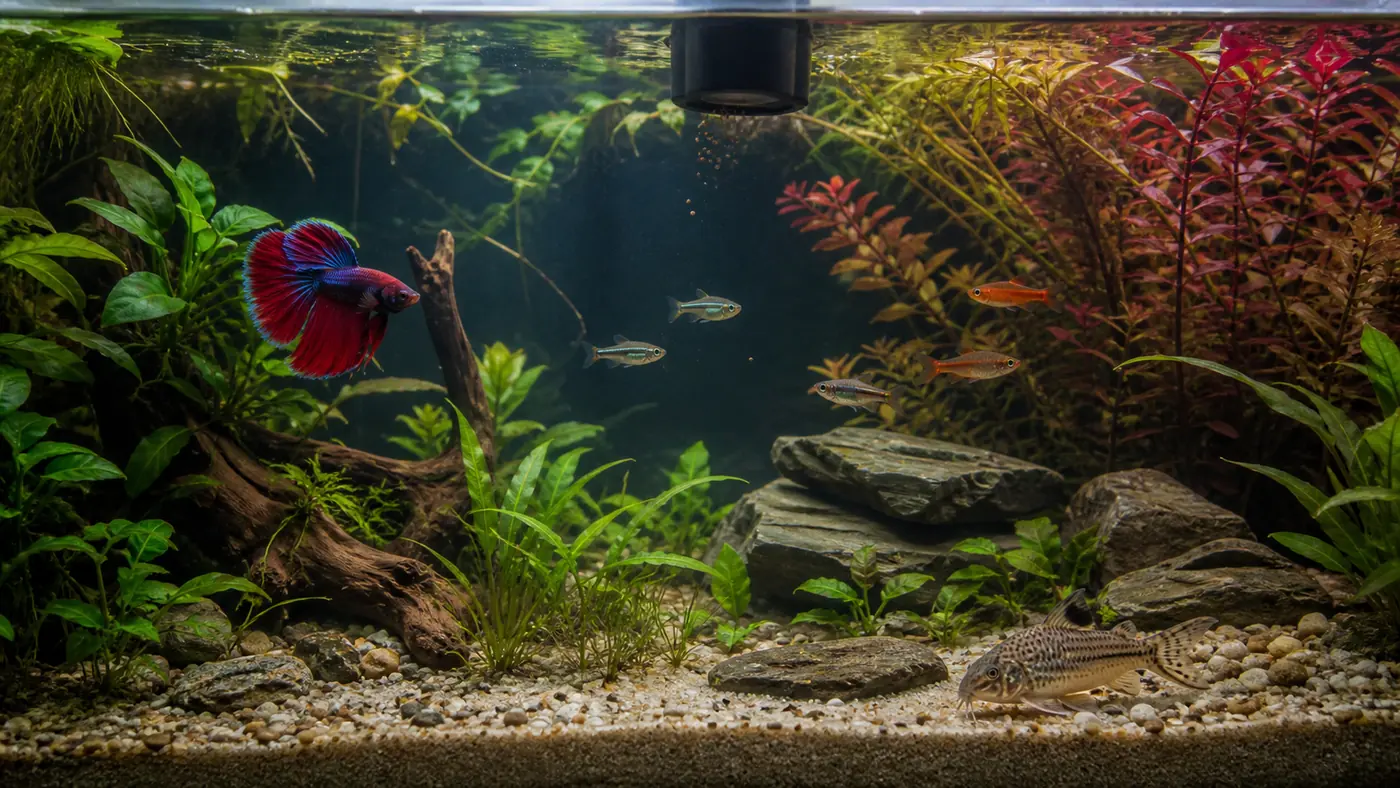
An automatic feeder does not know whether the aquarium contains a betta, six tetras, a goldfish or a mixed community. It turns at the programmed time and releases whatever sits behind the outlet. (EHEIM autofeeder 3581 Operating Manual)
The owner must make the species-specific decisions: food type, particle size, portion, feeding zone and frequency. That is why a feeder that works well on one tank can be completely unsuitable on another. (Merck Veterinary Manual: Providing a Home for Fish)
Use the examples below as decision prompts, not universal prescriptions. Individual species, age and health still require reliable care guidance.
Betta fish: small portions demand precision
Betta pellets are often small, and a conventional drum can release too many through a wide opening. Before placing a feeder above a betta aquarium: (EHEIM autofeeder 3581 Operating Manual)
- confirm that the minimum portion is genuinely small;
- count or weigh several test releases;
- check that pellets do not slip around the closed outlet;
- make sure the food lands where the betta normally feeds;
- avoid assuming that a 24-hour schedule suits every individual routine.
A compartment-style feeder may offer more control when individual pellets need to be pre-measured. Whichever design you use, complete the tray calibration process.
Goldfish: appetite is not a portion guide
Do not use apparent appetite alone to set a larger feeder opening. Choose an appropriate goldfish diet, verify the portion, and monitor uneaten feed and measured water conditions. (Merck Veterinary Manual: Nutrition in Fish) (University of Florida IFAS: Ammonia in Aquatic Systems)
Choose an appropriate goldfish food and observe whether it is eaten or adds visible waste. Do not infer a universal waste load from the species name; use measured water conditions and the actual feeding response. (Merck Veterinary Manual: Nutrition in Fish) (University of Florida IFAS: Ammonia in Aquatic Systems)
Read how overfeeding affects aquarium water quality before automating a generous routine.
Small tropical community fish: distribution matters
In a community of tetras, rasboras, guppies or similar small fish, the feeder may release an acceptable total amount but distribute it poorly. Bold fish gather under the outlet while shy fish remain at the edge. (Merck Veterinary Manual: Nutrition in Fish)
Consider:
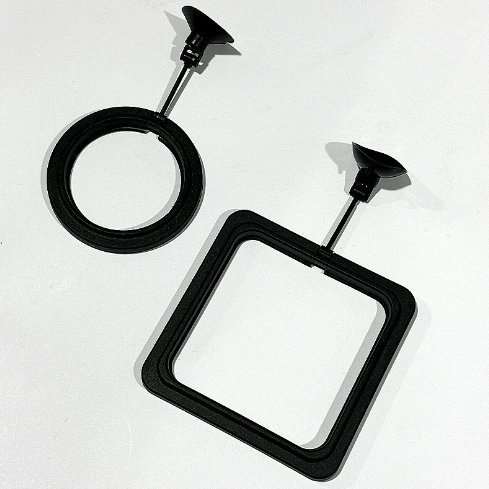
- a feeding ring that keeps floating food in an accessible area;
- slow-sinking food that moves through the water column;
- a particle size that fits the smallest mouths;
- two controlled feeding points when competition is strong;
- observation of several automated cycles.
Do not add more food merely to reach shy fish. Improve distribution first.
Bottom feeders: leftovers are not a complete diet
Catfish, loaches and other bottom-dwelling species should not be expected to survive on whatever escapes the surface fish. They may need appropriate sinking pellets, wafers or targeted feeding after lights change. (Merck Veterinary Manual: Providing a Home for Fish)
A rotating feeder should be used only with the food formats and particle sizes its manufacturer documents. If the required wafer or targeted food is not supported, use a documented compartment system, separate manual feeding or a sitter. (EHEIM autofeeder 3581 Operating Manual)
Cichlids: size and competition vary widely
“Cichlid” covers fish with very different sizes, diets and behaviours. Some accept floating pellets; others need sinking or specialised food. Aggressive competition can concentrate the entire automated portion in one fish. (Merck Veterinary Manual: Fish Nutritional Disorders)
Research the actual species. Use an outlet that matches the pellet size and observe body condition and access. A generic cichlid setting does not exist.
Koi and pond fish: scale and season change the system
Pond feeders are typically larger and may throw food across an area rather than drop it into one point. Feeding also changes with water temperature, season, fish size and pond conditions. (FAO: Freshwater Fish Feeding Management)
An indoor aquarium feeder is not a substitute for a purpose-built outdoor pond feeder. Outdoor equipment must be designed for weather exposure and the intended feed. Follow current koi and pond-care guidance, particularly when temperatures change. (EHEIM autofeeder 3581 Operating Manual)
Fry and juvenile fish: standard feeders may be too coarse
Fry often require frequent small foods, and a standard drum may not provide sufficient precision. Fine food can also pour rapidly through an outlet or compact with humidity. (FAO: Freshwater Fish Feeding Management)
Do not rely on a general holiday feeder for fry without expert guidance and extensive testing. A failure that an adult fish tolerates may be serious for a young animal. (FAO: Freshwater Fish Feeding Management)
Marine and reef aquariums: consider the whole system
Marine fish may have specialised diets, and surface flow can carry floating food into an overflow quickly. A feeder must be positioned so food remains available without compromising circulation. (Merck Veterinary Manual: Nutrition in Fish)
A conventional dry-food feeder covers only the food formats its documentation names. Any other fish, coral or invertebrate feeding routine must be planned and verified separately. (EHEIM autofeeder 3581 Operating Manual)
Nocturnal and shy species
Some fish feed more naturally after the lights dim. A timer can help with consistency, but check that the programmed time aligns with activity and that the food remains accessible. (RSPCA: What to Feed Your Fish)
Use a dim observation light when appropriate and confirm that other fish do not take the food first. Automatic feeding should reproduce observed behaviour, not create a schedule for convenience alone. (RSPCA: What to Feed Your Fish)
Food format is part of species suitability
The feeder must handle the food the species needs:
| Feeding need | Possible approach | Main caution |
|---|---|---|
| Tiny pellets | Fine-adjustment or compartment feeder | Minimum portion may still be too large |
| Floating flakes | Compatible drum feeder | Irregular flow and filter intake |
| Sinking granules | Tested drum feeder | Food may disappear into substrate |
| Large wafers | Compartment or manual placement | May jam conventional outlet |
| Frozen/live food | Specialist system or human feeder | Standard dry feeder is unsuitable |
Source for the preceding checklist: EHEIM autofeeder 3581 Operating Manual
See fish food types for automatic feeders for detailed testing advice.
Questions to answer before buying
- What food does the species need?
- What is the smallest safe daily portion?
- Where in the water column does it feed?
- Will other fish take the food first?
- Can the feeder handle the particle size?
- Does the timer match the established routine?
- Who will check the aquarium during an absence?
Compare models with our automatic fish feeder buyer’s guide.
Is a 24-hour feeder appropriate?
Before considering the DaraSphere model, verify its current timing, supported food formats, minimum portion, mounting and power documentation; then test it with the established species-appropriate routine.
Frequently asked questions
Can one feeder serve a mixed community?
Sometimes, but observe whether every species can access nutritionally suitable food. Multiple formats or separate targeted feeding may be needed. (Merck Veterinary Manual: Nutrition in Fish)
What feeder is best for a betta?
A model capable of reliably releasing a very small, tested portion of appropriate food. The mechanism matters less than the verified result. (EHEIM autofeeder 3581 Operating Manual)
Can I use an aquarium feeder for koi?
Small indoor units are generally not designed for pond scale or weather exposure. Use purpose-built equipment and seasonal pond guidance.
Do bottom feeders eat leftover flakes?
They may eat some, but leftovers are not necessarily a complete or suitable diet. Provide species-appropriate sinking food. (Merck Veterinary Manual: Nutrition in Fish)
Choose for the animal, then test the device
Start with the fish’s biology and normal feeding behaviour. Then select a feeder that can deliver the correct food in a controlled way.
The model name cannot guarantee suitability. Observation, calibration and a backup plan turn equipment into responsible care.
Build a reliable automatic-feeding setup
Start with a compatible feeder, then protect the routine with suitable water-care and maintenance equipment.
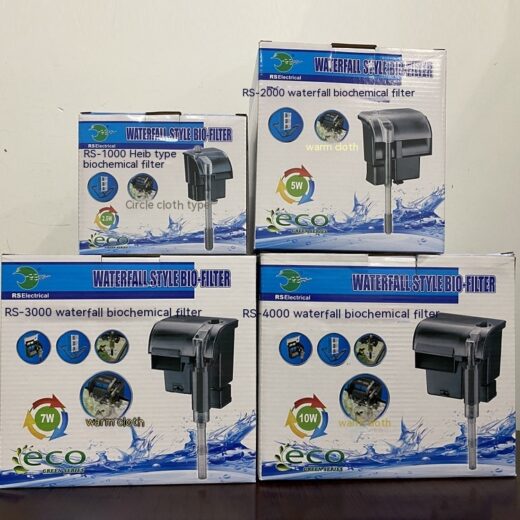
Aquarium Waterfall Bio Filter – RS1000 to RS4000
Products matched to this guide
Selected for relevance to the setup and needs covered above.
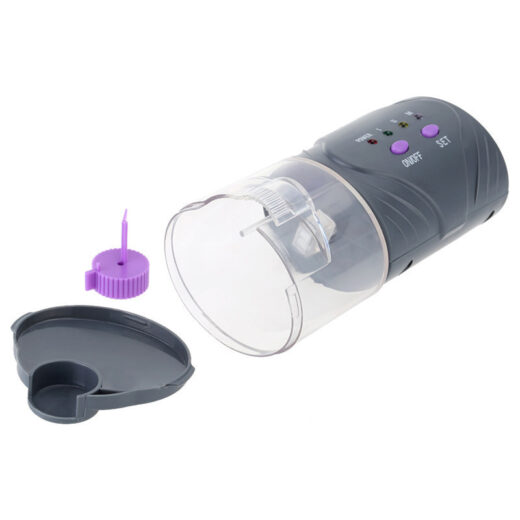
12/24-Hour Automatic Aquarium Fish Feeder
12/24-Hour Automatic Aquarium Fish Feeder — Schedule suitable dry food every 12 or 24 hours and…
View product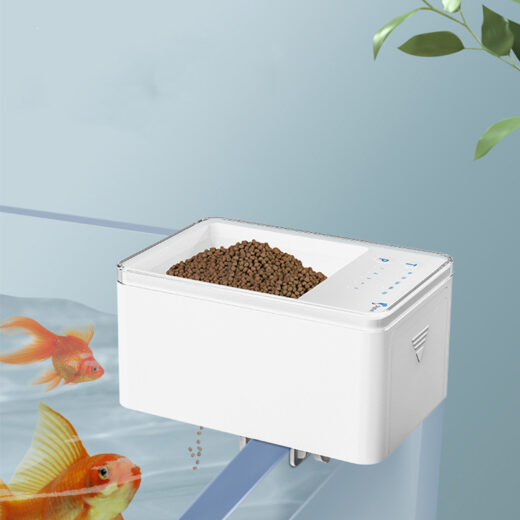
Digital Automatic Fish Feeder with LED Display – 500 ml
A compact 500 ml automatic aquarium feeder with an LED display, 24-hour scheduling and one-to-four daily…
View product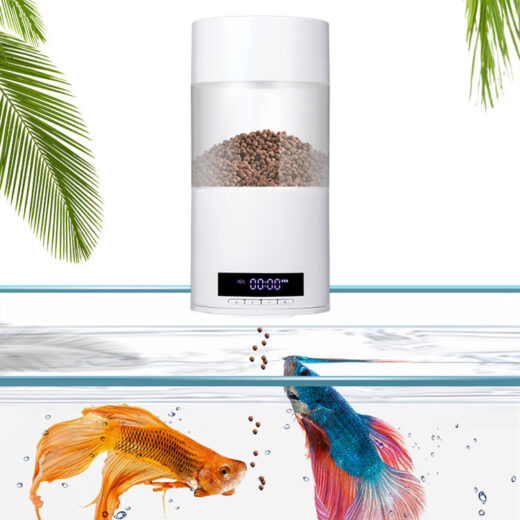
Automatic Aquarium Fish Feeder with 24-Hour Timer
500 ml automatic fish feeder with a 24-hour timer, USB cable and battery-operation option for repeatable…
View product