
Automatic Fish Feeder Features Explained
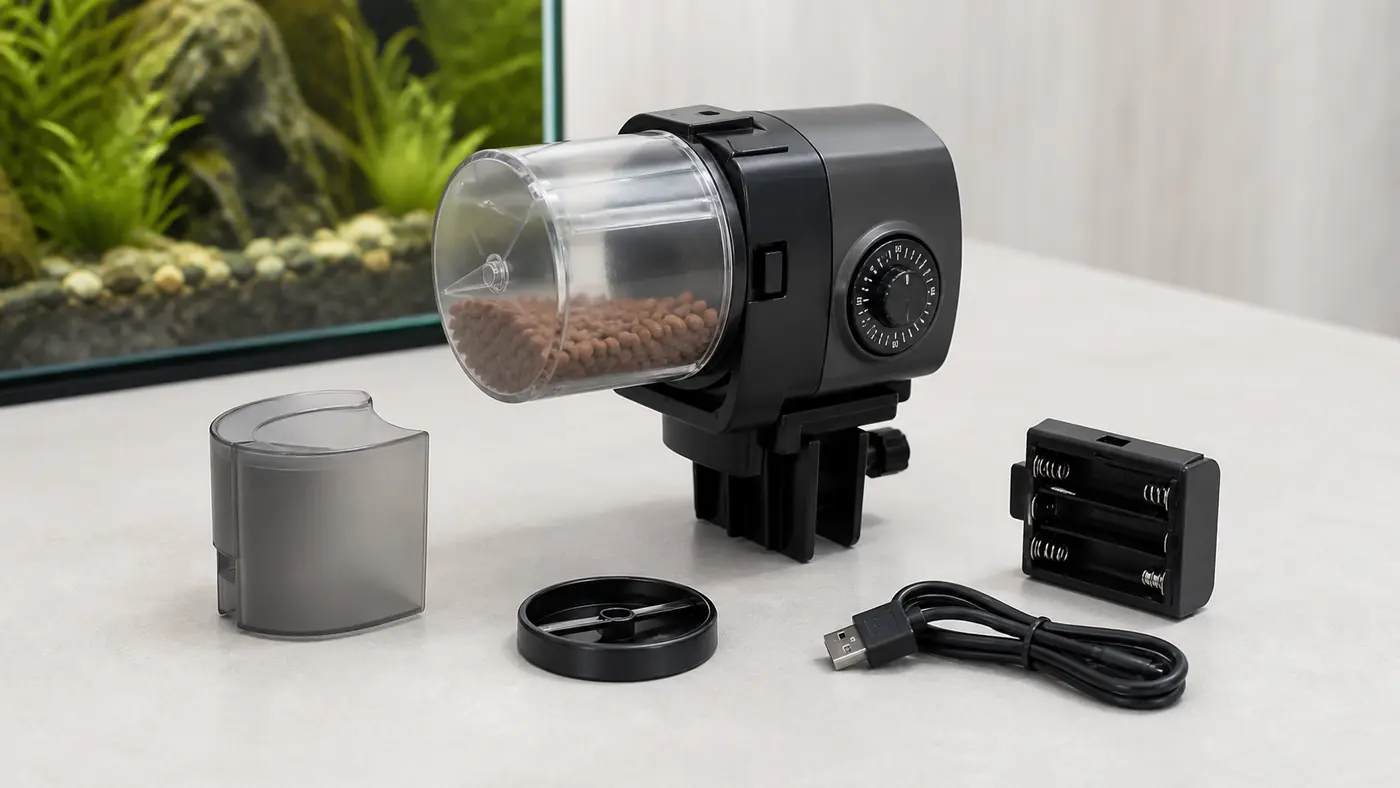
Product pages often describe automatic feeders with numbers: four meals, 100 millilitres, 24 hours, six months of battery life. Those figures are useful only when they answer a practical question. (EHEIM Automatic Feeder Catalogue)
Can the feeder release a safe amount of your food? Will it fit the aquarium? Will the schedule survive a power interruption? Can you keep the food dry?
This guide translates common specifications into the decisions an aquarium owner actually needs to make.
Timer type
Interval timers
An interval feeder repeats after a set period, such as every 12 or 24 hours. It is simple, but activation time matters. If switching it on begins the first cycle, setup must occur at the intended feeding time. (EHEIM autofeeder 3581 Operating Manual)
Clock-based schedules
These models allow one or more specific times each day. They provide flexibility for several small meals, but the display and programming should be easy to verify.
App schedules
Connected feeders add remote changes and alerts. Confirm whether the programme continues when Wi-Fi fails. Our smart feeder guide covers those questions. (EHEIM autofeeder+ Wi-Fi Operating Manual)
The timer should reproduce an appropriate routine; it should not decide one. Build the routine with our aquarium fish feeding schedule.
Portion adjustment
Rotating drum feeders usually adjust the outlet size. A wider opening releases more food, but the relationship is not perfectly linear because particle shape and settling change the flow. (EHEIM autofeeder 3581 Operating Manual)
Compartment feeders separate pre-measured meals. They can be useful for very small portions or different foods but have a limited number of slots. (EHEIM Automatic Feeder Catalogue)
Feeder mechanisms vary. Do not infer food compatibility or portion control from the mechanism name; rely on the exact model’s documented food formats, particle sizes and maintenance instructions. (EHEIM autofeeder 3581 Operating Manual)
The most important specification is the smallest repeatable portion—not the maximum output.
Food chamber capacity
Capacity may be listed in millilitres, grams, meals or days. None of those measures alone tells you how long the feeder will last. (EHEIM Automatic Feeder Catalogue)
Duration depends on:
- food density;
- portion setting;
- feeds per day;
- usable fill level;
- settling inside the chamber;
- the need to keep food fresh.
Calculate capacity from the portion you measured during a tray test. Do not accept a “months of feeding” claim without the conditions behind it. (EHEIM Automatic Feeder Catalogue)
Food-level window or sensor
A transparent drum lets you check the supply quickly. A smart sensor may send an alert. Both features are useful, but neither confirms that the outlet is clear. (EHEIM Automatic Feeder Catalogue)
Inspect the texture of the food as well as the level. Clumping, dust and condensation deserve attention even when the chamber is full. (EHEIM autofeeder 3581 Operating Manual)
Moisture protection
Common approaches include:
- a covered outlet;
- a sealed lid;
- passive ventilation;
- an integrated fan;
- an air-pump connection;
- placement away from the water surface.
Source for the preceding checklist: EHEIM autofeeder 3581 Operating Manual
Ask what the feature actually does. “Moisture-resistant” should not be treated as “maintenance-free.” Follow the feeder clog-prevention guide.
Mounting system
Typical options are a clamp for open glass, a bracket for a lid opening or a flat base with adhesive. Measure the tank and check the food path before purchase. (EHEIM autofeeder 3581 Operating Manual)
A suitable mount should:
- resist movement when controls are pressed;
- keep electronics secure above the tank;
- position food over open water;
- avoid spray and condensation;
- fit without blocking lights or filtration;
- allow removal for cleaning.
The feeder should never balance loosely on a lid.
Power source
Batteries
Advantages include operation during household power cuts and simple placement. Look for a clear low-battery warning and accessible compartment. (EHEIM autofeeder 3581 Operating Manual)
USB or mains power
These avoid routine battery changes but require safe cable routing. Confirm schedule retention after disconnection and consider backup power where appropriate. (U.S. CPSC Home Electrical Safety Checklist)
Dual power
Some models combine external power with battery backup. Verify whether the switch happens automatically and whether both sources are monitored. (EHEIM autofeeder+ Wi-Fi Operating Manual)
Battery-life claims depend on motor use, display, connectivity and battery quality. Treat them as conditional estimates. (EHEIM Automatic Feeder Catalogue)
Manual-feed button
A manual button is valuable for calibration and occasional supervised feeding. It should not become an invitation to add random extra meals. (EHEIM autofeeder 3581 Operating Manual)
Check whether a manual feed changes the schedule or is recorded in the app/history. During setup, collect manual portions over a tray before using the programmed cycle. (EHEIM autofeeder 3581 Operating Manual)
Double-feed function
“Double feeding” may mean two drum rotations one minute apart or two separate daily events. Read the instructions carefully. A double portion is not automatically appropriate because the tank contains more fish. (EHEIM autofeeder 3581 Operating Manual)
Display and indicators
A useful display answers simple questions clearly:
- What time is the next feed?
- Which schedules are active?
- What portion is selected?
- Is the battery low?
- Did an error occur?
Tiny icons and unexplained flashing lights make verification difficult. Clear controls are a safety feature.
Memory after interruption
Remove power briefly during a supervised test. Check whether time, schedule and portion remain stored. If the feeder resets, document the recovery steps and strengthen the backup plan.
Cleaning access
Food-contact parts should be removable or reachable without exposing electronics to water. Narrow corners collect dust and damp fragments. (EHEIM autofeeder 3581 Operating Manual)
Review the manual before purchase if possible. A feeder that is difficult to clean is more likely to be neglected. (EHEIM autofeeder 3581 Operating Manual)
Feature-to-benefit checklist
| Feature | Useful outcome | Verification |
|---|---|---|
| Adjustable outlet | Portion control | Compare five tray releases |
| Multiple schedules | Smaller planned meals | Add total daily quantity |
| Ventilated drum | Drier food | Inspect after several days above tank |
| Low-battery warning | Earlier maintenance | Test indicator per instructions |
| Clear chamber | Quick level check | Also inspect food texture |
| Secure clamp | Reliable food path | Press controls and check movement |
| Memory | Recovery after interruption | Run a controlled power test |
| App alert | Remote awareness | Confirm what the sensor actually detects |
Who benefits from an automatic feeder?
It may help:
- owners with a stable, repeatable dry-food routine;
- households with variable work schedules;
- aquariums that need consistent timing;
- short absences supported by human checks;
- situations where pre-measured automation reduces accidental overfeeding.
It may be unsuitable as the only solution for specialised diets, fry, sick fish or aquariums where food must be placed individually. (RSPCA: What to Feed Your Fish)
Use the species-specific feeder guide before generalising.
DaraSphere’s 24-hour feeder in context
For any simple 24-hour model under consideration, verify the current product documentation for timing, compatible dry food, portion adjustment, mounting and power behavior before purchase; then confirm the result by tray testing.
Confirm tank fit, food compatibility and portion range. Then follow the setup and calibration guide. A simple device still deserves a complete test.
Frequently asked questions
How many feeding times do I need?
Only as many as the species-appropriate routine requires. More programmes do not automatically improve care.
Does a bigger food chamber make a feeder better?
No. Portion accuracy, food freshness, mounting and reliability are usually more important than maximum capacity.
Is USB power better than batteries?
Each has trade-offs. Compare power-cut behaviour, schedule memory, cable safety and maintenance.
What is the most important feature?
The ability to release a safe, repeatable portion of the correct food. That result depends on both design and calibration.
Buy outcomes, not feature counts
A feeder is useful when its specifications translate into predictable care. The timer creates consistency, the outlet controls a tested portion, the mount protects the food path and moisture control keeps dry food moving. (EHEIM autofeeder 3581 Operating Manual)
Compare those outcomes first. Extra screens, schedules and claims come later.
Build a reliable automatic-feeding setup
Start with a compatible feeder, then protect the routine with suitable water-care and maintenance equipment.
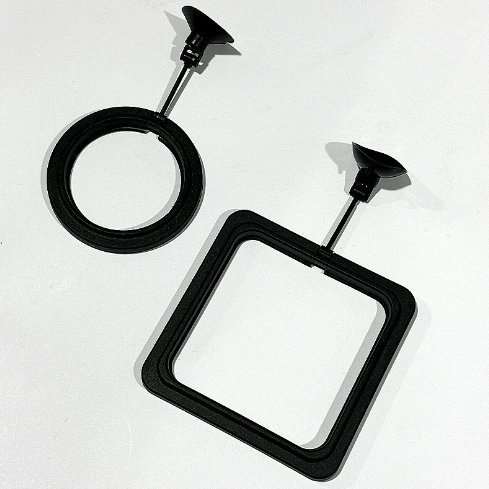
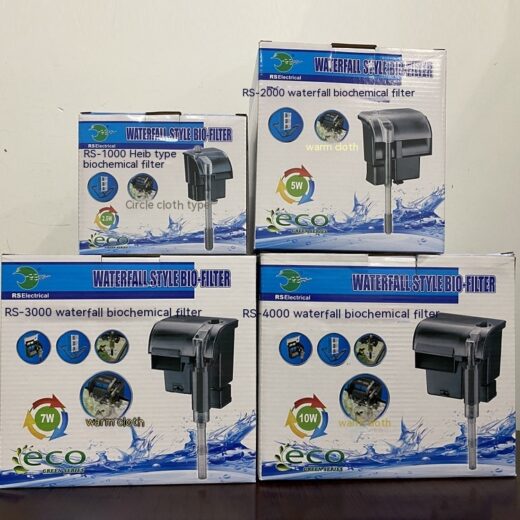
Aquarium Waterfall Bio Filter – RS1000 to RS4000
Products matched to this guide
Selected for relevance to the setup and needs covered above.
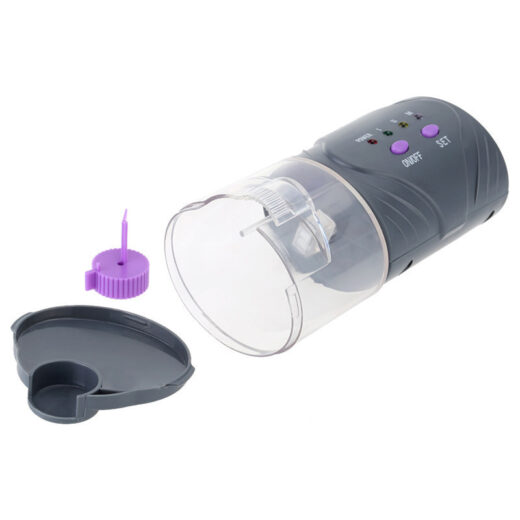
12/24-Hour Automatic Aquarium Fish Feeder
12/24-Hour Automatic Aquarium Fish Feeder — Schedule suitable dry food every 12 or 24 hours and…
View product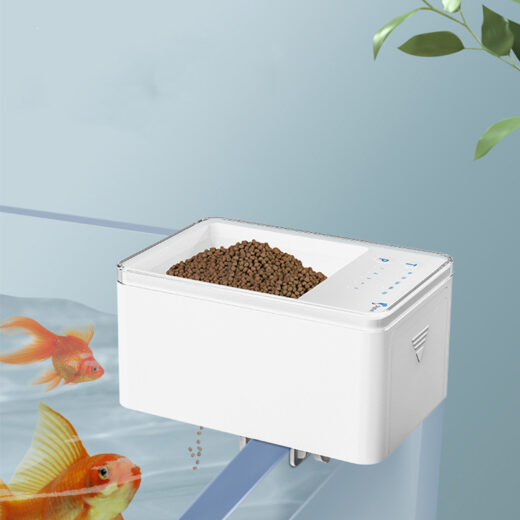
Digital Automatic Fish Feeder with LED Display – 500 ml
A compact 500 ml automatic aquarium feeder with an LED display, 24-hour scheduling and one-to-four daily…
View product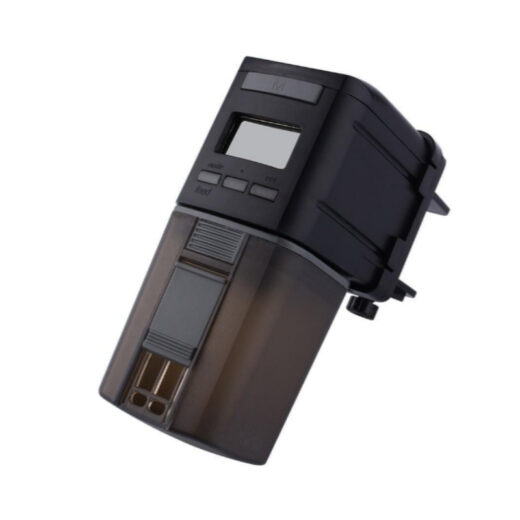
Automatic Fish Feeder for Goldfish & Koi – Standard/Wi-Fi
Automatic dry-food feeder for goldfish and koi, available as a standard black model or Wi-Fi remote-control…
View product