
Beginner Aquascaping Tools: What You Actually Need
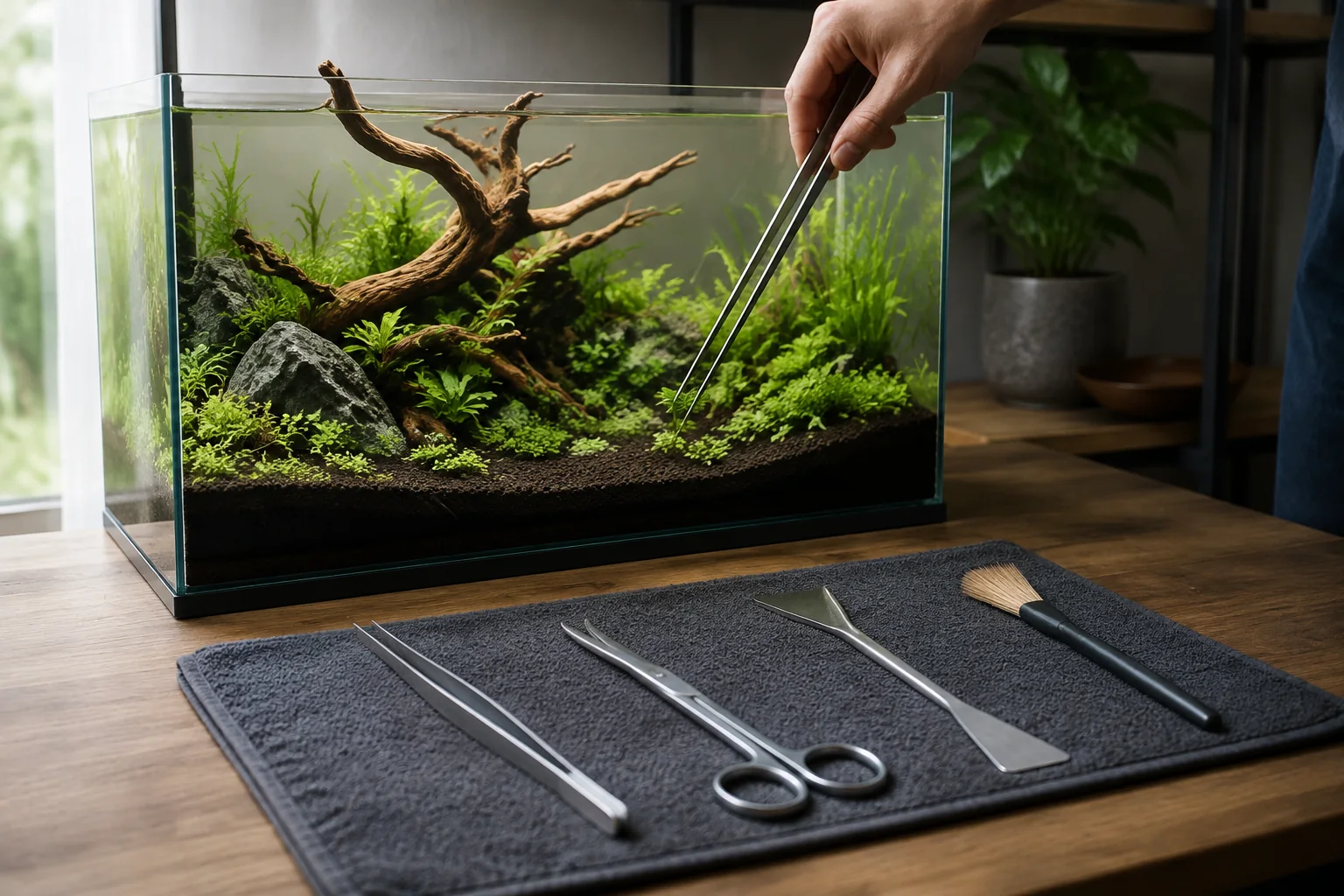
A beginner needs a small number of tools that fit the tank and hands, not a large case of nearly identical stainless-steel shapes.

Tool length, tip alignment and grip matter more than the number of pieces in a set. Short tweezers can force a hand into deep water; very long weak tweezers can twist and crush delicate stems.
Aquarium tools should be used only for the tank, rinsed after use and dried before storage. Rust-resistant material still needs care, especially around salt, fertiliser and scratches.
Key takeaways
- Buy by tank depth and task.
- Check that tweezer tips meet precisely.
- Use scissors designed for controlled plant cutting.
- Keep glass and acrylic cleaning tools separate and correctly labelled.
The five-tool beginner kit
| Tool | Primary task | Selection test |
|---|---|---|
| Planting tweezers | Insert stems and root portions | Tips align without excessive hand force |
| Trimming scissors | Remove leaves and shape growth | Clean controlled cut at tank depth |
| Siphon or baster | Remove debris during maintenance | Flow can be controlled around plants |
| Glass or acrylic cleaner | Remove surface film | Explicitly safe for the tank material |
| Dedicated tray or towel | Organise cuttings and protect furniture | Clean, stable and aquarium-only |
Straight, curved or angled tweezers
Straight tweezers are versatile for vertical planting and precise placement. Angled tips improve visibility around hardscape, while strongly curved tools suit specialised foreground work.
Test the grip with wet fingers and check alignment. A tool that springs open aggressively or has sharp misaligned edges can damage plants.
Scissors by plant habit
Straight scissors work for general stems; curved scissors help shape foreground growth; wave scissors can reach broad carpet areas. Beginners should first choose the one shape that matches the current planting plan.
Trim a small amount and remove every cutting. Large same-day trims can change plant mass, flow and nutrient demand.
Care and contamination control
Rinse tools with clean water after use, dry completely and store away from household chemicals. Do not transfer wet tools between aquariums when disease or pest status is uncertain.
Inspect hinges, welds and coatings. Replace a corroded, flaking or damaged tool rather than polishing contamination into the aquarium.
Practical checklist
- Measure working water depth.
- List the real planting and trimming tasks.
- Check tip alignment and grip.
- Confirm cleaner compatibility with glass or acrylic.
- Prepare a clean tool-drying area.
- Add specialised tools only after a repeated need appears.
Frequently asked questions
What length aquascaping tweezers should I buy?
Choose a length that reaches the substrate while your hand remains controlled above the rim. Very long tools require better stiffness and grip.
Do I need wave scissors as a beginner?
Only if you maintain a broad carpet where the shape solves a repeated access problem. General scissors are enough for many first layouts.
Can kitchen scissors be used in an aquarium?
Dedicated aquascaping scissors offer better reach and contamination control. Household tools may carry detergent, oil or unsuitable coatings.
Sources and editorial method
This guide combines manufacturer documentation, official safety or regulatory guidance where relevant, and DaraSphere catalogue checks. Product availability and specifications can change; verify the current product page before ordering.
Build a planted aquascape starter kit
Begin with a simple layout foundation, then choose lighting and maintenance tools that match the plants and available space.
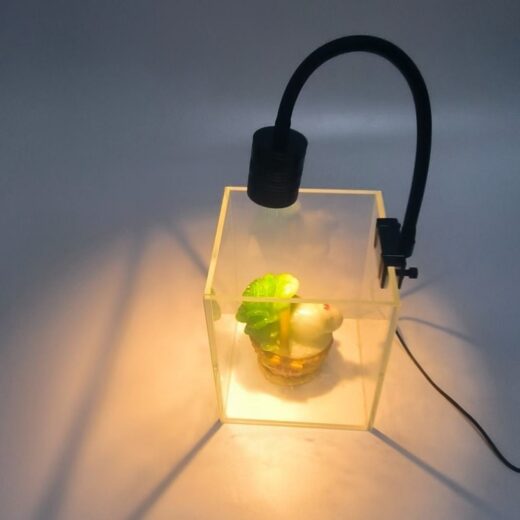
7 W USB Aquarium Plant Spotlight – Standard & Dimmable Models
Products matched to this guide
Selected for relevance to the setup and needs covered above.
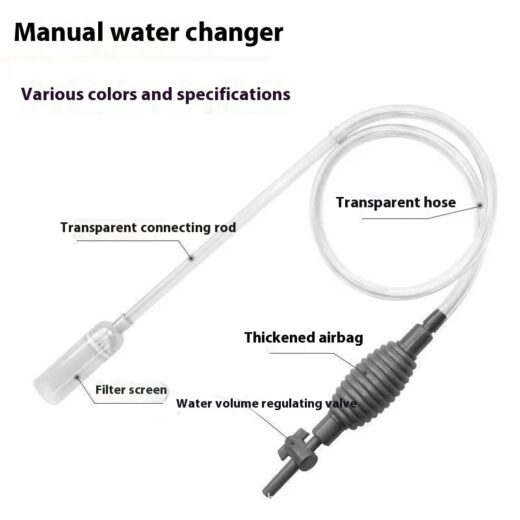
Manual Aquarium Siphon & Water Changer – 1.7–2.4 m
Choose the reach you need for water-change day: 1.7 m, 2.2 m or 2.4 m. Our…
View product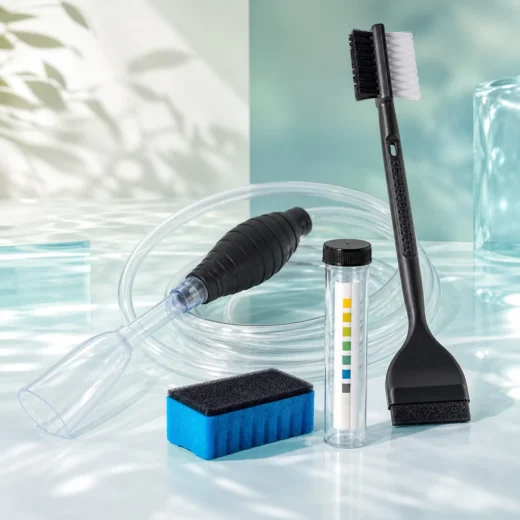
Easy Aquarium Maintenance Bundle
Four practical essentials turn scattered chores into a simple, repeatable care ritual. Shipping calculated at checkout.
View product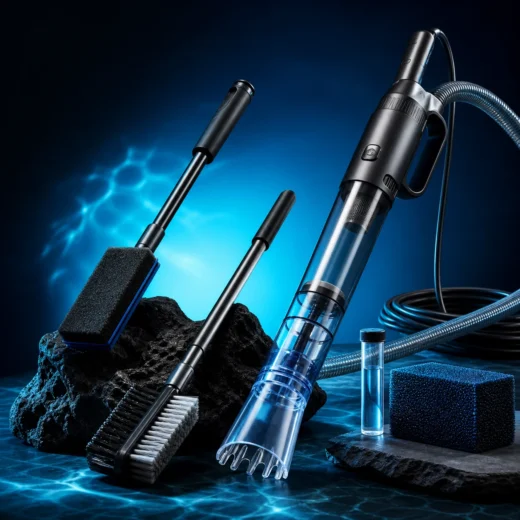
Professional Aquarium Cleaning Bundle
An aquarium cleaning bundle built around an electric gravel cleaner, detail tools and water-quality checks for…
View product