
Do Aquarium Plants Need a Filter? Plants, Fish and Water Flow

Aquarium plants do not have a biological requirement for a powered filter. They need suitable light, nutrients, a source of carbon and appropriate growing conditions. Some plant-only aquariums can provide those conditions without filtration. A planted aquarium containing fish or shrimp needs a separate decision: the animals depend on safe water and enough oxygen. For a beginner with livestock, keeping established filtration is the sensible default.
The useful question is what each part of your setup contributes, and what would be lost if you removed it.
Plants and fish do not have the same filtration needs
A plant can grow without water passing through a filter cartridge. It still needs access to resources, and water movement can help deliver dissolved nutrients around its leaves. Healthy growth also depends on the species, lighting and planting method; buying a filter cannot compensate for an unsuitable plant.
Fish add waste to the same water in which they breathe. Growing plants can take up some dissolved nitrogen, but the amount changes with growth and conditions. A few new plants cannot be assumed to handle the tank’s waste load. For the wider benefits, see what live plants do for fish.
What a filter contributes to a planted aquarium
Mechanical and biological filtration
Mechanical media catches suspended particles, such as loose plant fragments. Caught material still needs removal during maintenance. A visibly clearer tank is useful, but clarity does not tell you whether ammonia or nitrite is present.
Biological filtration provides surfaces for microorganisms that process ammonia into nitrite and then nitrate. Ammonia and nitrite can harm fish; nitrate still needs management. These organisms also colonise other aquarium surfaces, but an established filter can be an important part of the tank’s processing capacity.
Neither ordinary biological filtration nor live plants make every waste product disappear. Plant uptake, removal of trimmings, cleaning and suitable water changes each contribute differently to managing the system.
Water circulation and gas exchange
A filter’s pump moves water as well as pushing it through media. Circulation can distribute nutrients and reduce debris settling on leaves. Movement at the surface helps exchange gases with the air. These are distinct functions: a circulation pump without media does not provide the same particle collection as a filter.
Plants produce oxygen through photosynthesis when conditions allow, but they also consume oxygen through respiration, including in darkness. They are not a constant oxygen supply. A filter supports oxygenation through water movement and surface exchange; the media itself does not generate oxygen.
When plants can grow without a filter
Plant-only containers
A container used to grow aquatic plants without fish, shrimp or snails can be a reasonable place to explore a filterless setup. Plan for the plants’ light and nutrient needs, access for cleaning, and removal of decaying leaves. Check whether gentle circulation would help with persistent debris or uneven conditions.
Without a filter, maintenance still matters. Microbial decomposition of neglected, dying foliage can consume oxygen. If you later want to add animals, reassess the entire setup first. Attractive plant growth alone does not establish that it can safely support livestock.
Purpose-designed filterless systems are a separate project
Filterless aquariums with animals do exist. In her account of potted plants in fish-breeding tanks, Diana Walstad describes maintaining multiple tanks without filters and monitoring nitrogen compounds over several months. This is a report of her particular systems, rather than a guarantee for any planted aquarium.
Replicating a complete method requires understanding its planting, waste inputs, maintenance and monitoring. Switching off an existing filter changes a system that developed with it running. It does not recreate the conditions in someone else’s filterless tank. Equally, “low-tech” does not necessarily mean “filterless”; a simple planted aquarium can still use filtration.
Why beginners with fish should keep established filtration
The RSPCA’s aquarium guidance recommends a properly established, maintained filter for fish and stresses the importance of water testing. That is a useful starting point when you are still learning how feeding, plant growth and maintenance affect your aquarium.
| Tank situation | Practical default | What to monitor |
|---|---|---|
| Plants only, without stocked animals | Filterless growing can be possible; plan cleaning and any needed circulation. | New growth, decaying leaves and debris accumulation. |
| An ordinary planted fish or shrimp aquarium | Keep established filtration and maintain it appropriately. | Ammonia, nitrite, animal behaviour and water movement. |
| A purpose-designed filterless system | Treat it as a separately researched project. | Water quality and the effects of changing growth, feeding or stocking. |
| Plants or animals pushed around by the outlet | Adjust the flow’s direction or distribution. | Animal comfort, debris pockets and surface movement. |
For a new aquarium, plan filtration as part of your planted tank, including establishing biological processing before adding fish. For an existing aquarium, keep the filter in place while planning any substantial redesign. Adding plants is not a reason to stop existing aeration or increase stocking.
Adjust the flow instead of switching the filter off
Before putting hands in the water or adjusting equipment, disconnect aquarium electrical equipment and follow its manufacturer’s instructions, including any heater cooling requirements.
If the outlet flattens stems or sweeps floating plants underwater, first look at where the water goes. Redirecting the outlet or using a compatible flow-distribution attachment may resolve the problem without sacrificing filtration. Follow the equipment instructions and the needs of your animals.
Look beyond the strongest jet. Dense planting or hardscape may leave a quiet pocket where debris gathers while another area receives too much current. Observe several parts of the tank after an adjustment.
Check whether flow has changed as the plants grew. A blocked intake or clogged mechanical media can reduce circulation even when the motor is running. Clear loose plant fragments and service the appropriate parts as instructed. If the filter has become noisy, investigate the cause rather than putting it on the lighting timer.
There is no single turnover rate that suits every planted aquarium. Tank shape, media, plumbing and layout affect the flow that actually reaches the plants. Aim for useful circulation and suitable surface movement without forcing livestock to struggle continuously against the current.
What to check before changing your setup
- Identify the reason. Noise, excessive current and debris on leaves need different solutions. Check equipment condition before removing an established function.
- Record water quality. In a stocked tank, use appropriate ammonia and nitrite tests rather than judging by appearance. Increase monitoring after disruption or unexpected results.
- Watch the animals. Unusual rapid breathing or surface gasping needs prompt investigation of oxygen, water quality and equipment. Do not wait for plant growth to fix it.
- Protect established media. Service it according to instructions without indiscriminately replacing or sterilising the biological media.
- Keep plant care in the routine. Remove loose decaying material and maintain your filter and plants together.
Plants can grow without a filter. Keeping animals safely requires a wider assessment of waste processing, oxygen and ongoing care, so make that decision for the whole aquarium.
Image: AI-generated conceptual illustration of filtration roles. It is not an installation diagram or the internal design of a specific filter.
Build a water-quality starter setup
Combine suitable filtration with monitoring and maintenance tools; equipment supports, but does not replace, a correct cycling process.

ZY-OZ-O3 Aquarium Ozone Generator – 110 / 220 V
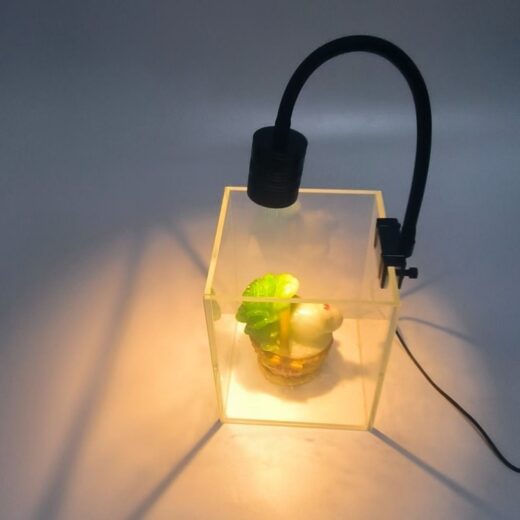
7 W USB Aquarium Plant Spotlight – Standard & Dimmable Models
This is a curated shopping path, not a one-size-fits-all bundle. Confirm dimensions, compatibility, livestock needs and electrical requirements before ordering.