
Aquarium Plant Deficiency Visual Guide
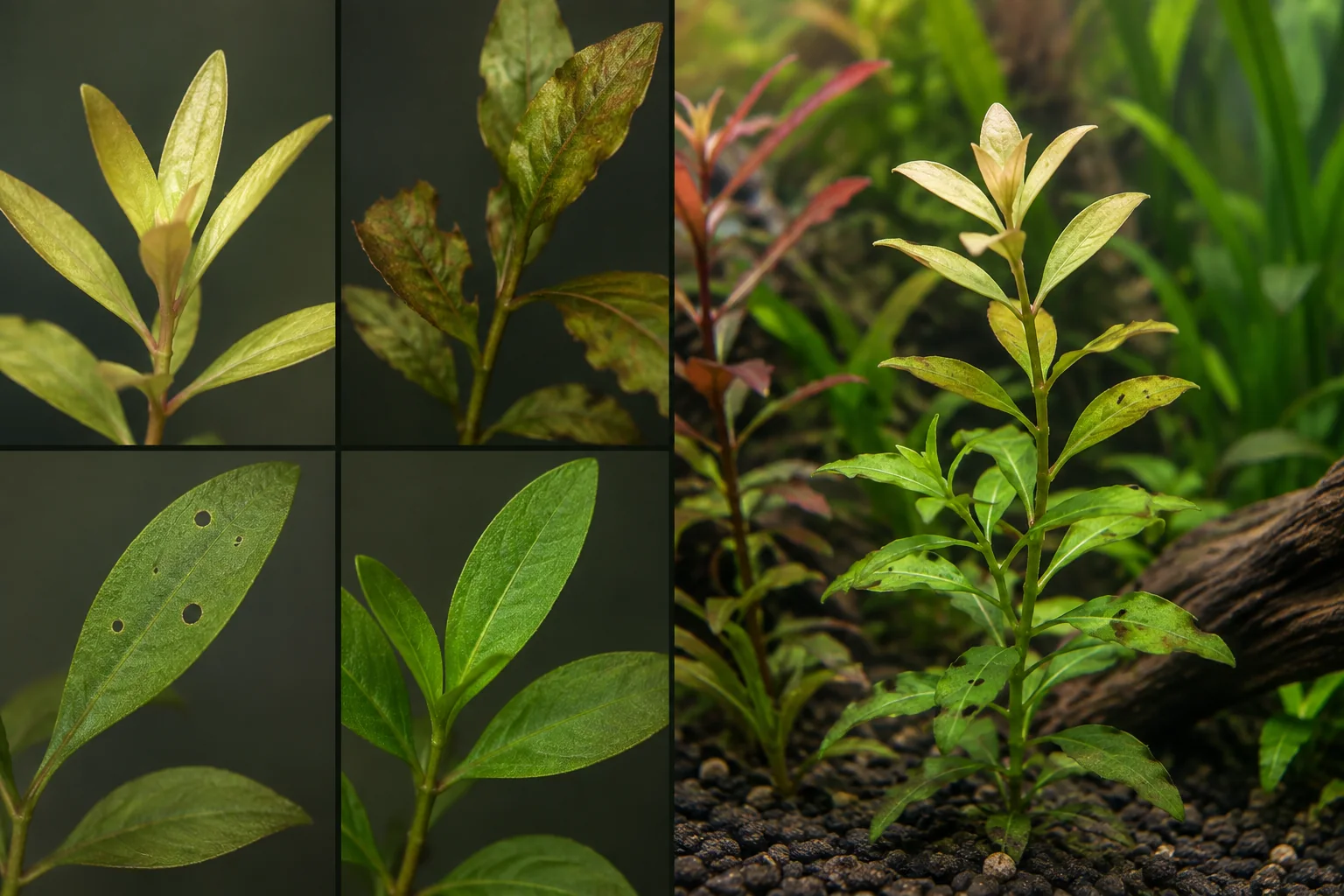
A damaged leaf is evidence, not a laboratory result; diagnosis improves when you record whether symptoms affect old leaves, new leaves or the entire plant.
Online charts often map one leaf colour directly to one nutrient. Real aquariums are less tidy: insufficient light, unstable CO2, damaged roots, emersed-to-submersed transition and nutrient limitation can overlap.
Use this guide as a triage method. It does not replace a verified fertiliser analysis, water tests or the care requirements of the exact plant.
Key takeaways
- Identify the plant before diagnosing it.
- Separate old-leaf symptoms from new-growth symptoms.
- Review recent changes and damaged roots.
- Judge correction by new growth, not by expecting old leaves to heal.
Visual symptom triage
| Pattern | Possible directions | Checks before dosing |
|---|---|---|
| Older leaves yellow first | Mobile nutrient limitation, shading or normal ageing | Fertiliser content, lower-leaf light, overall growth |
| New leaves pale or distorted | Micronutrient availability, root stress or unsuitable conditions | pH, product dose, roots and species needs |
| Pinholes or damaged margins | Nutrient issue, physical damage or grazing | Animal behaviour, flow damage and fertilisation history |
| Whole plant stunted | Light, CO2, temperature, substrate or transition | System demand and recent environmental change |
| Transparent older leaves after planting | Possible emersed-leaf transition or severe stress | Plant source, new submerged growth and decay removal |
Build an evidence log
Photograph the same plant weekly under neutral light. Record dose, water change, photoperiod, temperature and any CO2 or filter adjustment. Note whether healthy new leaves are forming even when old leaves continue to deteriorate.
Compare several specimens of the same species. One crushed leaf suggests local damage; a repeated pattern across new growth supports a system-level cause.
Check the complete growth system
Tropica's plant guidance links plant success to light, fertilisation, CO2 and circulation. If one factor is severely limiting, adding more of another may not help and can increase algae pressure.
Rooted plants and water-column feeders obtain nutrients differently. Confirm whether the product supplies macro nutrients, micro nutrients or both, and whether the plant needs targeted root nutrition.
Make one controlled correction
Use the labelled dose of a known product and avoid stacking several supplements with overlapping ingredients. Correct an obviously short or unstable photoperiod, blocked flow or decaying substrate zone before chasing trace elements.
Allow enough time for new leaves to develop. If symptoms worsen rapidly or affect livestock, stop and seek a qualified aquatic specialist.
Practical checklist
- Identify the exact plant.
- Mark old versus new leaves.
- Photograph the same specimen weekly.
- Review light, CO2, flow and root conditions.
- Compare the fertiliser label with the suspected gap.
- Change one factor and watch new growth.
Frequently asked questions
Can a yellow leaf become green again?
Severely damaged leaves often do not recover. Evaluate whether healthy new growth appears after the supported cause is corrected.
Do holes always mean potassium deficiency?
No. Physical damage, grazing, decay and several growth problems can look similar. Use location, progression and system history.
Should I dose extra iron for red plants?
Red colour depends on species, light, carbon and balanced nutrition. Do not add iron beyond a labelled plan based only on colour.
Sources and editorial method
This guide combines manufacturer documentation, official safety or regulatory guidance where relevant, and DaraSphere catalogue checks. Product availability and specifications can change; verify the current product page before ordering.
Next step: If colour is the main concern, use the red aquarium plants guide before changing light or nutrients.
Build a planted aquascape starter kit
Begin with a simple layout foundation, then choose lighting and maintenance tools that match the plants and available space.
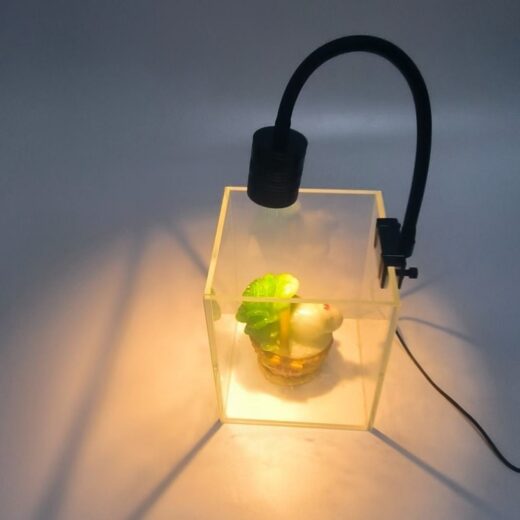
7 W USB Aquarium Plant Spotlight – Standard & Dimmable Models
Products matched to this guide
Selected for relevance to the setup and needs covered above.
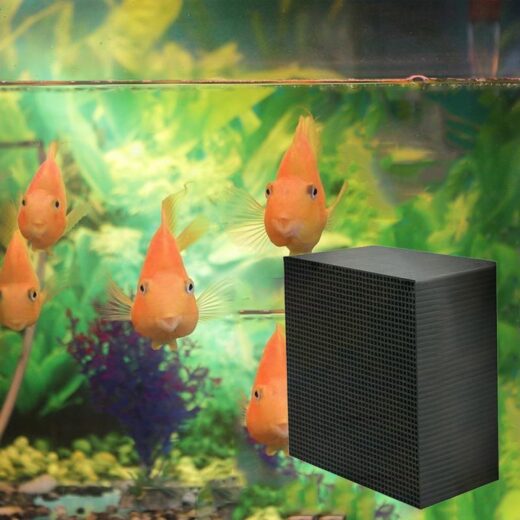
Aquarium Filter Media Combo Set – 1/2/3 Pieces
Aquarium Filter Media Combo Set – 1/2/3 Pieces — supports clearer water and a more manageable…
View product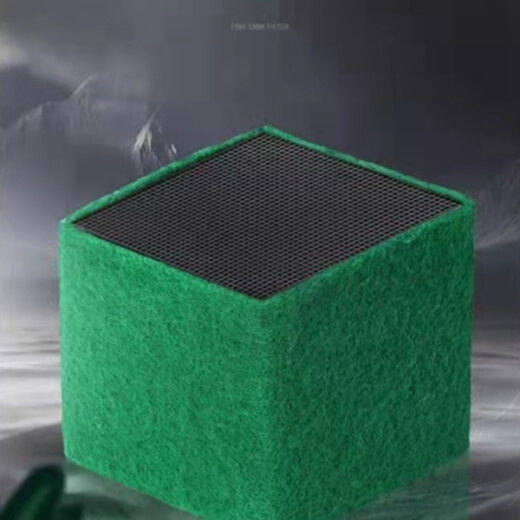
Filter Media Cube – Black/Green, Small/Large, 1–3 Pack
Cube-format aquarium filter media in black or green, small or large, with 1-, 2- and 3-piece…
View product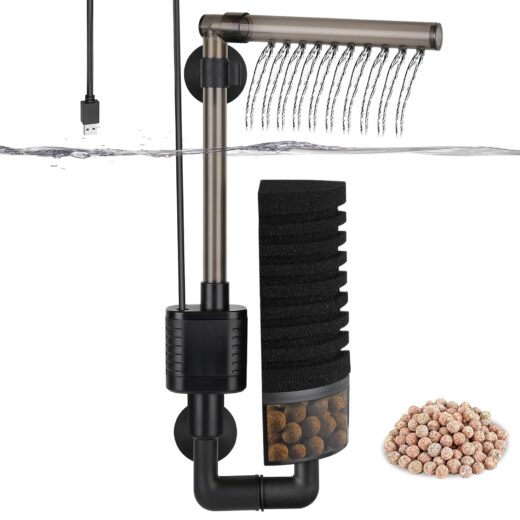
USB Aquarium Sponge Filter with Ceramic Media – Fresh/Saltwater
A compact black USB aquarium filter with two reusable sponges and one bag of ceramic media.…
View product