
Aquascaping for Shrimp: A Shrimp-First Planted-Tank Plan
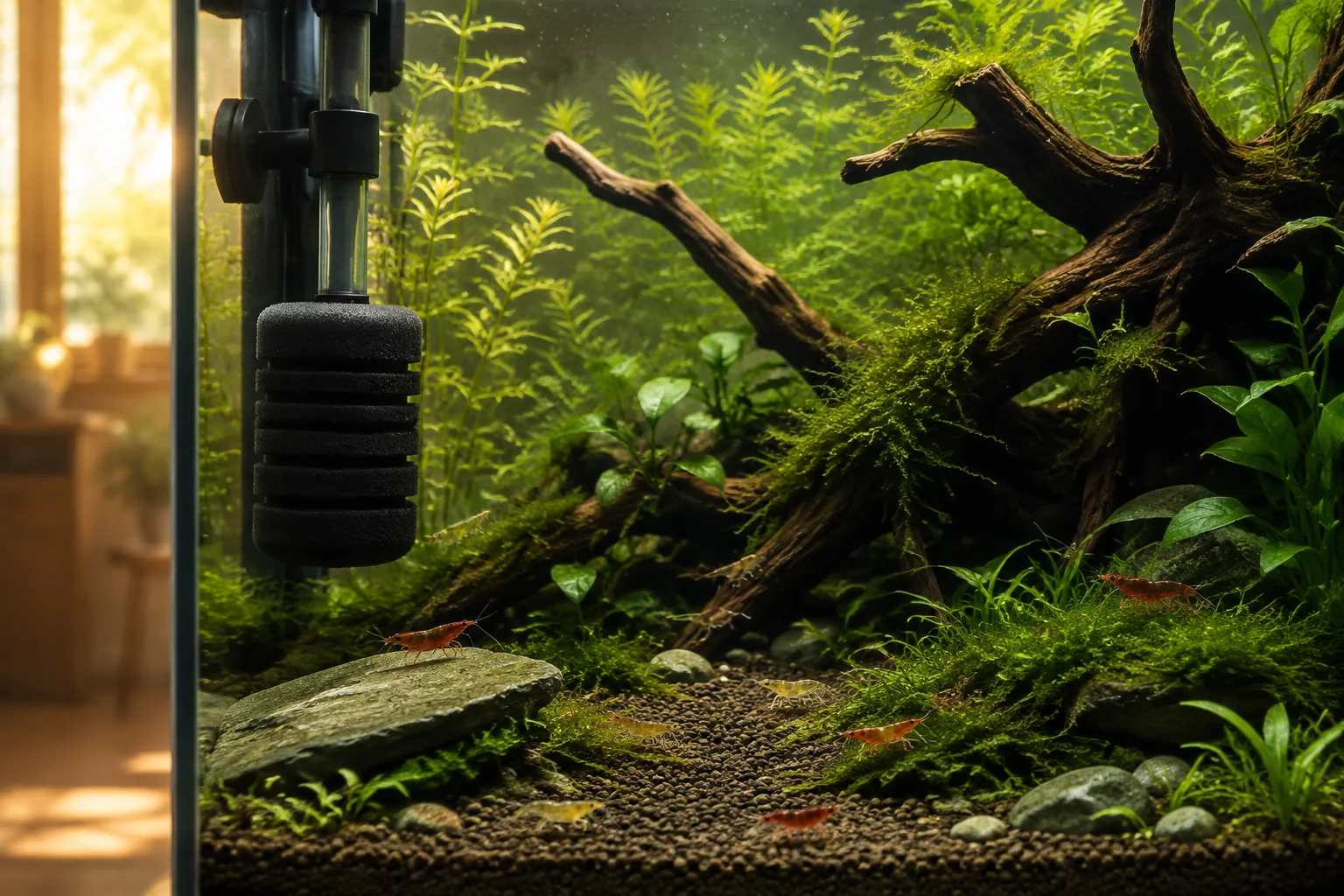
A beautiful shrimp tank is successful only when the aquascape protects small animals, supports grazing and can be maintained without sudden chemistry changes.
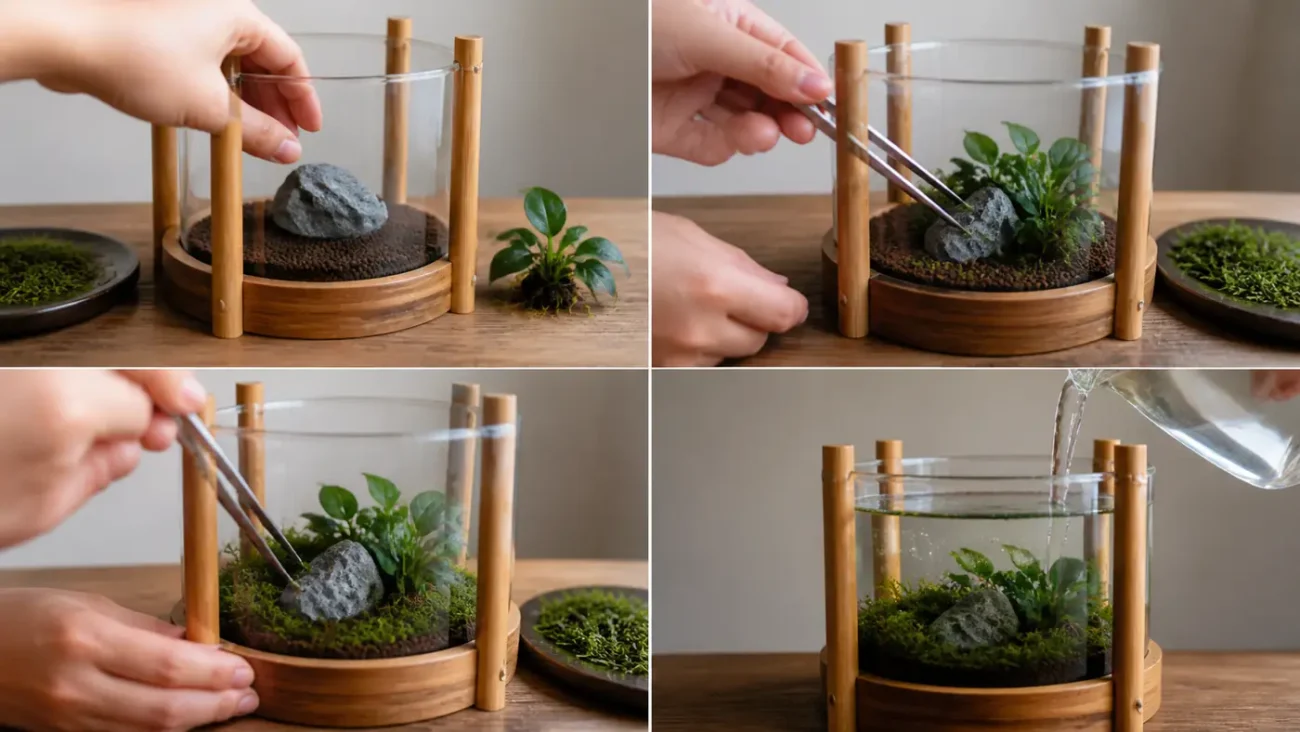
Shrimp interact with almost every surface in an aquascape. Moss, wood, stone and mature leaves provide grazing area, while unprotected intakes, pesticide residues and abrupt water changes create risks.
Species differ. Neocaridina, Caridina and Amano shrimp do not share identical parameter requirements, so choose the species before substrate and water chemistry.
Key takeaways
- Select the shrimp species before active soil or stone.
- Protect every intake and inspect guards for clogging.
- Use plants with a traceable pesticide and treatment history.
- Prioritise mature biofilm and stability over a freshly sterile look.
Shrimp-first equipment and layout
| Element | Shrimp requirement | Design response |
|---|---|---|
| Filter intake | Prevent adults and juveniles entering | Fine suitable guard with frequent cleaning |
| Substrate | Stable species-appropriate chemistry | Choose active or inert substrate from the water plan |
| Hardscape | Safe grazing and shelter | Verified stone and wood with accessible crevices |
| Plants | No harmful treatment residue | Traceable source and appropriate preparation |
| Maintenance | Small predictable change | Easy siphon access and measured replacement water |
Plant sourcing and preparation
Tropica states that its laboratory-grown 1-2-Grow plants are free from algae and pesticides and highlights them for delicate shrimp. That claim applies to the named production method, not to every plant sold in a cup.
Ask how plants were grown and treated. Rinse and prepare them according to the supplier, and never assume a general dip is safe for all plants and shrimp.
Create grazing surfaces without dead zones
Moss, fine-leaved plants and textured hardscape increase surface area, but dense material can trap food and restrict circulation. Leave visible routes for gentle flow and a small open feeding area where leftovers can be removed.
Do not overfeed to create biofilm. A mature tank develops natural grazing surfaces while measured feeding protects water quality.
Maintenance without parameter shock
Match replacement water for the species and avoid large unplanned swings in temperature or dissolved minerals. Siphon carefully with a shrimp guard and inspect buckets before discarding water.
Fertilisers and treatments must be individually verified for shrimp at the labelled dose. Copper is an essential trace element in some formulations but can be toxic at inappropriate exposure; the product and dose matter.
Practical checklist
- Choose the shrimp species and parameter range.
- Select substrate from that chemistry plan.
- Install and maintain intake protection.
- Verify plant production and treatment history.
- Leave an observable feeding and siphon area.
- Mature the aquarium before adding shrimp.
Frequently asked questions
Are all tissue-culture plants shrimp-safe?
Use the producer's specific claim and preparation instructions. Do not apply one brand's pesticide-free statement to every cup on the market.
Can shrimp live in a newly planted tank?
A newly assembled tank usually lacks mature biological stability and grazing surfaces. Add shrimp only after cycling and species conditions are verified.
Do shrimp tanks need a filter?
A filter provides circulation and biological media. Choose gentle adjustable flow with effective intake protection rather than omitting filtration by default.
Sources and editorial method
This guide combines manufacturer documentation, official safety or regulatory guidance where relevant, and DaraSphere catalogue checks. Product availability and specifications can change; verify the current product page before ordering.
Build a planted aquascape starter kit
Begin with a simple layout foundation, then choose lighting and maintenance tools that match the plants and available space.
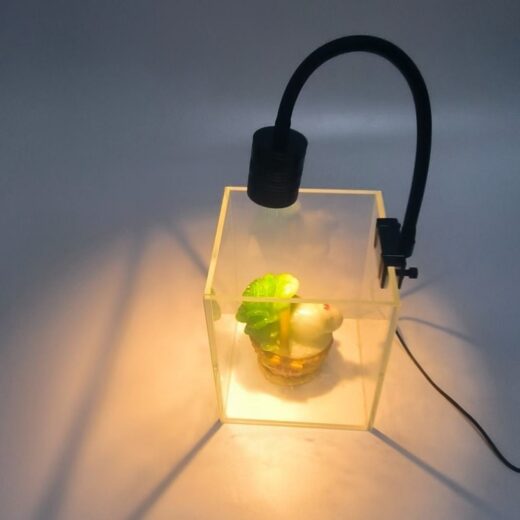
7 W USB Aquarium Plant Spotlight – Standard & Dimmable Models
Products matched to this guide
Selected for relevance to the setup and needs covered above.
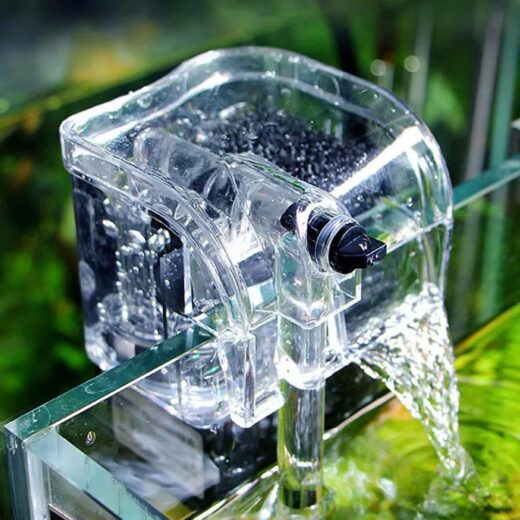
Nano Hang-On Back Aquarium Filter for Betta & Shrimp – 1–5 Gallons
Compact white hang-on-back filter for 1–5 gallon nano tanks, with adjustable flow, aeration and surface skimming.…
View product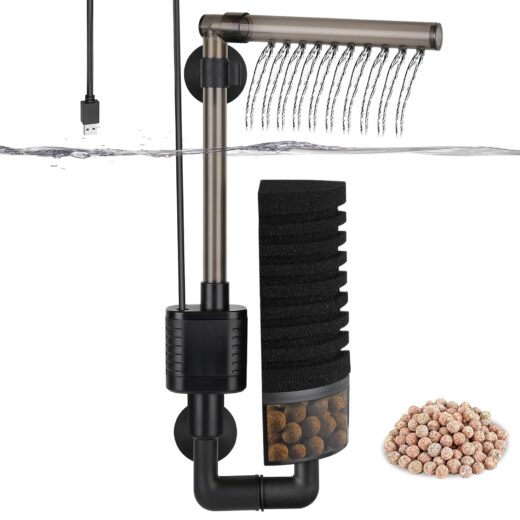
USB Aquarium Sponge Filter with Ceramic Media – Fresh/Saltwater
A compact black USB aquarium filter with two reusable sponges and one bag of ceramic media.…
View product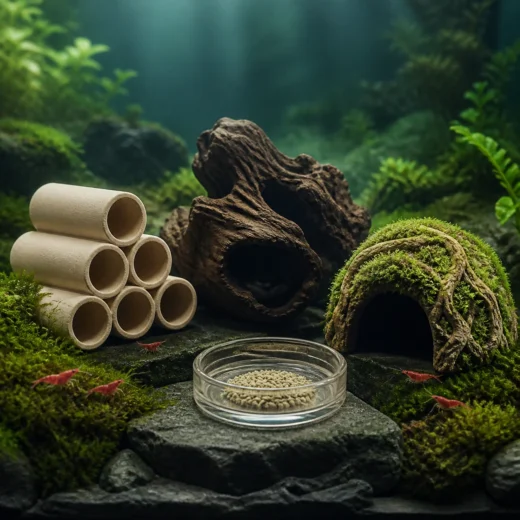
Shrimp Safe-Haven Bundle
A layered collection of shrimp-sized ceramic and resin hides with a precise feeding point for a…
View product