
How Much Are Aquarium Plants? Prices, Units and Budgeting

At Aquarium Co-Op, a U.S. retailer, Java fern and Anubias nana were each listed at US$9.99, and Cryptocoryne wendtii ‘Green’ at US$7.99, when checked on 11 October 2026. One of each would cost US$27.97 before delivery and tax. Those are three specific retail examples, not a worldwide price range. To budget for your aquarium, first establish what each listing includes, then price the quantities you need in your own market.
A Few Aquarium Plant Price Examples
The table records the displayed prices on the retailer’s product pages. All three pages showed an add-to-cart option when checked, but availability and delivery eligibility still need checking for your address. These are third-party research examples, not DaraSphere stock or shipping offers.
| Retailer and market | Exact listing | Sale unit and caveat | Displayed price | Observed date | Shipping and tax |
|---|---|---|---|---|---|
| Aquarium Co-Op, U.S. | Java fern | One listed item; preparation instructions describe a pot. Plant size varies. | US$9.99 | 11 Oct 2026 | Not included here |
| Aquarium Co-Op, U.S. | Anubias nana | One listed item; supplied potted or bare-root depending on availability. | US$9.99 | 11 Oct 2026 | Not included here |
| Aquarium Co-Op, U.S. | Cryptocoryne wendtii ‘Green’ | One listed item; preparation instructions describe a pot. Plant size varies. | US$7.99 | 11 Oct 2026 | Not included here |
The US$7.99–US$9.99 spread describes only these three listings from one seller. It cannot establish the average price of aquarium plants, the cheapest supplier or the cost of filling a tank. A different cultivar, larger specimen or different package can change the comparison.
Keep the currency label when saving a quote. Readers shopping elsewhere should collect local prices rather than treat these dollar amounts as euro prices or assume an equivalent local offer.
What Does “One Plant” Mean?
Shop quantities usually count sale units. One cup, pot or bunch can contain very different amounts of plant material. Tropica’s explanation of how aquarium plants are packaged illustrates why the package belongs alongside the price.
Pots, bare-root plants and stem bunches
A pot may contain a clump that can be divided, but the number of useful divisions depends on the plant and its size. Bare-root describes the supplied form; it does not specify a universal size or number of shoots. The Anubias example above may arrive in either form.
For a stem bunch, look for the stated stem count and approximate length. If a seller simply says “one bunch”, ask what that means before comparing it with another listing. A photograph of a mature aquarium tells you little about the quantity in the package.
Tissue-culture cups and planting portions
Tissue-culture cups contain young plants grown in laboratory conditions. The grower’s guidance for dividing tissue-culture plants describes separating the contents into planting portions after removing the growing medium. Those portions still need to establish and grow.
A cup that makes several small planting portions is not equivalent to the same number of mature potted plants. Check cup size, species and preparation instructions. A price per portion can help plan distribution, but it does not prove that one format is better value.
Plants attached to wood or rock
A mounted plant includes the supporting piece as well as the plant. Compare the dimensions and plant material included, and decide whether that piece suits your layout. Its full price should not be used as a bare-plant price benchmark.
Build a Plant-Only Budget
Start with a shortlist and write down the exact sale unit beside each quantity. “Two pots” is clearer than “two plants” when you are estimating an order. Here are two worked examples using the observed prices above.
| Example basket | Calculation | Plant subtotal |
|---|---|---|
| One item from each listing | US$9.99 + US$9.99 + US$7.99 | US$27.97 |
| Two items from each listing | (2 × US$9.99) + (2 × US$9.99) + (2 × US$7.99) | US$55.94 |
These baskets demonstrate the maths. Neither is a planting recommendation for a particular tank size, and neither promises complete coverage. Quantities depend on the layout, supplied size, planting spacing and how much growth you are willing to wait for.
Delivered plant cost = sum of quantity × unit price, plus delivery, tax and any applicable import charges.
Use the seller’s actual checkout amounts for your destination. Avoid adding tax twice if it is already included in the displayed price. If an order combines plants and equipment, record their subtotals separately and count the delivery charge only once in the overall budget.
Compare complete baskets across sellers. A lower item price can lose its advantage after delivery, while buying unwanted extras to meet a free-shipping threshold can increase your total spend.
Keep Setup and Ongoing Costs Separate
The plant subtotal answers what you pay for the plants themselves. A new aquarium may also need suitable lighting, substrate, nutrition and other equipment. An established tank may already provide these. List what you have before adding anything to the budget, then plan the rest of your planted-tank setup around the plants you actually want to keep.
For ongoing costs, note consumables you expect to use, such as fertiliser or CO2 refills if your chosen setup uses injection. There is no useful universal monthly plant-care figure without knowing the system, products and local prices.
A modest purchase can become expensive if it requires equipment you had not planned for. First choose plants that fit your setup, then compare prices among suitable options. It also helps to understand aquarium plant care demands before choosing a fast-growing or more demanding variety. Maintenance time matters alongside the receipt.
Check Before You Buy
- Identity: confirm the species and cultivar, especially when two listings use similar common names.
- Quantity: record the pot, cup, bunch, bare-root specimen or mounted piece, plus any stated size or count.
- Availability: recheck the selected option and stock status. An unavailable sale price cannot fund an order.
- Delivery: confirm the destination is served and read any weather-related shipping conditions.
- Arrival terms: check the seller’s live-arrival policy and what evidence or reporting deadline applies if something arrives damaged.
- Total: save the delivered price and date in the correct currency before comparing another basket.
Aquarium Plant Cost Questions
Are tissue-culture cups always cheaper?
No. Compare the same species, the amount supplied and the result you need. Several small portions may suit distributed planting, while a larger specimen may better suit an immediate focal point. Neither format wins automatically.
How many plants should I buy for my tank?
Sketch the areas you want planted and check the grower’s spacing and mature-size guidance. Aquarium volume alone cannot tell you how many pots or cups you need. Leave room for access and growth when setting quantities.
Can propagation reduce future spending?
It can. Suitable plants may provide cuttings, runners or divisions once established. The method and timing depend on the species and growth conditions, so treat future propagation as a possibility rather than guaranteed savings on your first order.
Featured image: AI-generated conceptual illustration of sale formats, not DaraSphere stock.
Build a planted aquascape starter kit
Begin with a simple layout foundation, then choose lighting and maintenance tools that match the plants and available space.
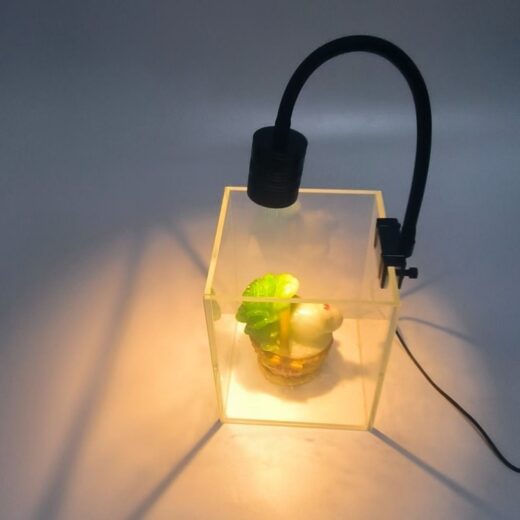
7 W USB Aquarium Plant Spotlight – Standard & Dimmable Models
This is a curated shopping path, not a one-size-fits-all bundle. Confirm dimensions, compatibility, livestock needs and electrical requirements before ordering.