
Are Aquarium Plants Hard to Keep Alive?

Featured image: AI-generated conceptual illustration, not a photograph of a tested aquarium or a guaranteed result.
Not necessarily. Many low-demand aquarium plants are manageable for beginners when the light, nutrients, and planting method suit the species. More demanding plants, or a goal of rapid, dense growth, can add equipment and maintenance. A few compatible plants are a sensible starting point for a freshwater aquarium without injected CO2.
The useful question is what you can consistently provide. If you have not set up the aquarium yet, start with our beginner planted-tank setup guide.
What Makes Some Aquarium Plants Easier Than Others?
Difficulty depends on the plant and the result you want. Keeping a Java fern growing gradually is a different project from maintaining a short, dense carpet of a demanding species. These examples show the range:
| Plant | Why consider it? | Placement and limitation |
|---|---|---|
| Java fern and Anubias nana | Slow-growing choices; Java fern has low light demand, and Anubias nana tolerates shade. | Attach to wood or rock. Keep the thick horizontal stem exposed. |
| Cryptocoryne wendtii ‘Green’ | Low light and CO2 demand, with medium growth in Tropica’s classification. | Plant roots in the substrate; keep the base of the leaves above it. |
| Java moss, Taxiphyllum barbieri | Low light and CO2 demand; useful on decorative surfaces. | Secure to the surface and trim when growth becomes excessive. |
| Glossostigma elatinoides | A contrasting example: Tropica rates its light and CO2 demand as high. | A foreground plant requiring more careful planning; weak light can encourage upward growth. |
These are species-specific examples, not rules for every fern, moss, or carpeting plant. For a wider comparison, choose aquarium plants for your setup.
Match the Plant to Your Light and CO2 Setup
Plants still need carbon when you do not inject CO2. Suitable low-demand plants can use what is available naturally in the aquarium. Tropica’s CO2 guidance distinguishes its Easy plants from more demanding categories. Choose within your planned equipment level rather than expecting every plant to produce the same growth without injection.
Plant It Where It Is Meant to Grow
Java fern, Microsorum pteropus, and Anubias nana, Anubias barteri var. nana, have a rhizome: the thick horizontal stem from which roots and leaves grow. It must stay above the substrate, the material covering the tank bottom. Roots and rhizomes are different parts. See how to plant Anubias and Java fern without burying the rhizome.

What Do Beginner Aquarium Plants Need?
Start with suitable light, access to nutrients, correct placement, and repeatable care. An “easy” label helps narrow your choices; it does not tell you whether a particular spot in your aquarium meets the plant’s needs.
Suitable Light on a Consistent Schedule
Light intensity is how much light reaches the plant; duration is how long the light stays on. Note the light model, any dimmer setting, shading, and daily timer schedule before making changes. A timer makes the daily schedule repeatable, and checking that it actually switches the light on and off is a useful first step. Equipment checks also feature in Tropica’s start-up guidance.
There is no single lighting duration that fixes every tank. Consider the species, shading, and whether the aquarium is newly set up. Our guide explains how to set a stable aquarium light schedule without confusing more hours with a better-matched light.
Nutrients That Fit the Plant and Tank
Decide how nutrients will reach the plants you selected. Liquid fertilizer adds nutrients to the water; substrate supplements place nutrients near roots. Neither belongs on every shopping list. Fish waste should not be assumed to supply everything a growing plant needs.
Tropica’s fertilization advice makes frequency dependent on the setup and product instructions. Follow the relevant label and water volume for dosing. Record what you use, including nutrients already supplied by the substrate, before adding another product.
A Routine You Can Keep Up With
Inspect new growth, remove decaying material, and trim as needed. Anubias nana grows slowly, but its older leaves can collect algae; moss may need trimming as it spreads. Choose a layout you can reach for these jobs. Care becomes harder when every check requires dismantling the arrangement.
Are Melting Leaves a Sign That the Plant Is Dying?
Sometimes, but an old leaf deteriorating does not settle the question. “Melting” describes leaves becoming translucent, soft, or broken down. A newly introduced plant may be adapting from growth above water to life underwater, or to different tank conditions. Aquarium Co-Op’s nutrient guide notes that yellowing or translucent leaves on a new plant can be mistaken for a deficiency.
Look for New Growth and Check the Planting Method
Compare older leaves with emerging ones, and check the plant’s base. For rooted rosette plants such as crypts, the crown, where the leaves meet, should remain above the substrate. Java fern also develops reproductive spots beneath its leaves, so a dark spot alone is not proof of disease.
Write down when the change began and which leaves are affected. Before increasing fertilizer, check possible causes of damaged aquarium leaves.
When to Investigate Further
A soft, deteriorating rhizome deserves closer investigation rather than an assumption that the plant is adjusting. Aquarium Co-Op’s melting guide describes several possible causes, including planting errors and rot.
| What you notice | What to check | Next step |
|---|---|---|
| Older leaves turn translucent after transfer | New growth, changed conditions, and planting method | Remove decaying tissue and observe the trend. Recovery is not guaranteed. |
| A buried Java fern or Anubias rhizome | Identify the thick stem separately from the roots | Correct its position so the rhizome is exposed. |
| A soft, deteriorating rhizome | Whether damage is spreading through the main tissue | Investigate possible rot; do not simply wait for “melt” to pass. |
These checks guide the next question; they cannot identify a specific disease from appearance alone.
A Simple Care Routine for a Low-Tech Start
Here, low-tech means a setup without injected CO2, built around compatible plants. Use this observation plan alongside the aquarium’s existing care schedule:
- On arrival: confirm the plant’s identity and placement, check the light timer, and take a reference photo. Note the date and any already-damaged leaves.
- During the first week: briefly check leaves, the plant’s base, and equipment each day. Look for fresh growth without expecting it on a deadline. Record any changes you make.
- At the end of the week: compare the plant with the original photo. Correct a specific problem you have identified, such as a covered rhizome, rather than changing several settings at once.
This is a practical observation framework, not a tested recovery schedule or a promise of growth in seven days. Fertilizing and water care must fit the actual aquarium. Plant observations also do not replace water testing, biological cycling, or the care needs of fish and other animals.
Before You Buy Your First Plants
Make a short list you can explain, rather than collecting several plants with unknown requirements:
- Check the exact species or variety and whether its needs match your tank.
- Decide whether you intend to use injected CO2 and what growth rate you expect.
- Identify the planting position, available light, and room for growth.
- Plan nutrient provision using the substrate information and relevant product instructions.
- Allow for checking leaves, removing damaged material, and necessary trimming.
If you cannot yet explain where a plant will go or how you will care for it, pause that choice. Selecting fewer compatible species makes the initial decisions easier to follow.
Common Beginner Questions
Do All Aquarium Plants Need Injected CO2?
No. Many low-demand species can be kept without it, though they still require carbon. More ambitious growth targets may justify additional equipment and attention. Use the plant list and your care capacity to decide whether added CO2 fits your planted tank.
Can Aquarium Plants Grow in Gravel?
Some can, with suitable nutrient provision and correct planting. Gravel is not a complete care plan by itself. Crypt roots belong in the substrate with the crown exposed; Java fern and Anubias rhizomes must remain uncovered. Specialist planting soil is therefore not a universal requirement.
How Much Maintenance Do Live Plants Need?
It depends on species, growth rate, plant mass, and the appearance you want to maintain. Slow-growing plants still need observation and cleaning; spreading moss can require trimming. Plan around those jobs instead of relying on a fixed number of minutes or a maintenance-free promise.
For your first attempt, choose a few plants whose needs match the light, substrate, and care you can provide now. Learn their placement and watch their progress before expanding the plant list. That gives you a clearer starting point than buying equipment to support an unknown mix.
Build a planted aquascape starter kit
Begin with a simple layout foundation, then choose lighting and maintenance tools that match the plants and available space.
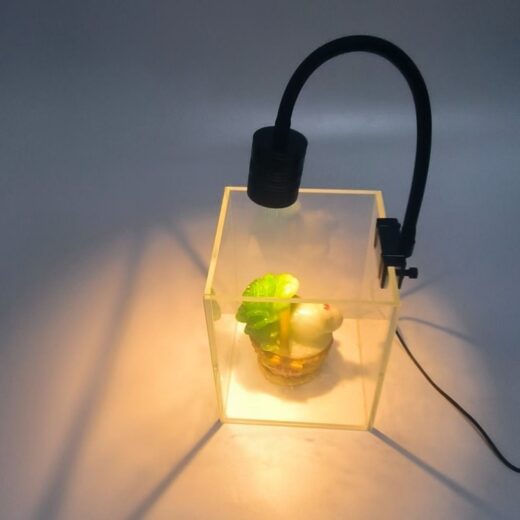
7 W USB Aquarium Plant Spotlight – Standard & Dimmable Models
This is a curated shopping path, not a one-size-fits-all bundle. Confirm dimensions, compatibility, livestock needs and electrical requirements before ordering.