
Why Are Aquarium Plants Dying? A Step-by-Step Troubleshooting Guide

Aquarium plants can decline after a move, an unsuitable planting position, equipment trouble, or a mismatch between their needs and the tank. The useful first question is how much living plant remains. Losing old leaves while a firm crown produces new growth calls for a different response from a rhizome that is becoming soft throughout.
Start with the animals and equipment, then inspect the affected plant and reconstruct when the trouble began. Remove decomposing material, correct a problem you can identify, and judge the response from new growth. Adding more light, fertiliser and CO2 together makes the result harder to interpret.
First, Check Whether This Is a Plant-Only Problem
Look at Livestock and Equipment Before Changing Plant Care
If fish are gasping, breathing unusually fast or losing balance, their welfare takes priority. Check filter operation, surface movement and the actual water temperature; test ammonia and nitrite if you can. If CO2 is running and excess gas is suspected, stop injection and increase aeration while investigating. Seek prompt help for persistent distress. A plant-care adjustment should not delay an urgent water-quality response.
Remove Decaying Material Without Tearing Down the Tank
Lift out detached leaves and gently siphon loose debris. Trim leaves that are disintegrating with clean scissors, protecting the plant’s growing point. Leave sound tissue in place. Avoid repeatedly uprooting plants or stripping the substrate simply because a few leaves look poor.
Dying Leaves or a Dying Plant?
Check New Growth, the Crown and the Rhizome
“Melt” describes leaves becoming translucent, soft or broken down; it does not identify one disease. Aquarium Co-Op’s guide to common reasons aquarium plants lose leaves covers several possible triggers. A leaf photograph alone cannot establish which applies.
Look for a developing leaf, an intact stem tip or a firm growing base. On a rosette plant, the crown is where the leaves meet the roots. On Anubias or Java fern, the rhizome is the thicker stem carrying roots and leaves. Inspect accessible parts gently. A living growing point gives the plant a possible route to recovery; it offers no guarantee.
- Are animals distressed? Yes: prioritise water quality and equipment. No: inspect the plant.
- Is the crown, rhizome or stem breaking down? Yes: assess whether any healthy growing section remains. No: examine the timing of leaf loss.
- Was it recently planted or moved? Yes: check transition and placement. No: review changes, shade and nutrition.
A Brown Surface Coating Needs a Different Check
A removable brown film on an otherwise intact leaf is a different starting point. Use the brown aquarium plant troubleshooting guide for that surface check. Continue here when the plant itself is losing tissue or failing to replace leaves.
Did the Problem Start After Planting?
Transition Stress and Shipping Damage
Write down the arrival and planting dates. Some aquarium plants are grown with their leaves above water and must adjust to submerged conditions. Older leaves may deteriorate during that change, although melting is not inevitable. Cryptocoryne can lose much of its foliage while retaining a viable base and roots.
Check the condition on arrival: crushed stems, dried leaves or exposure to temperature extremes may explain later damage. Keep photographs and the plant label. If the growing base remains sound, avoid moving it repeatedly while looking for replacement growth. If deterioration reaches that base, reassess rather than assuming every loss is harmless adjustment.
Incorrect Placement or a Buried Rhizome
Confirm the species and its planting method. Anubias and Java fern need an exposed rhizome; roots may enter the substrate. Rooted rosettes such as swords and crypts need their crown clear of the substrate. Bulbs and tubers differ, so do not apply one burial depth to all of them.
Use Tropica’s planting methods for different aquarium plant forms, or correct the planting position of rhizome plants with the detailed attachment guide. Correct a clear placement mistake carefully, then let the plant settle.
Did an Established Plant Start Declining?
Review Recent Changes and Equipment Failures
Start with what happened before the first damaged leaves appeared. Consider a moved plant, changed water source, new treatment, altered feeding or fertiliser routine, and changes to light or CO2. Check that the light timer actually runs as intended and that filters and heaters work normally. Record suspected connections without treating timing alone as proof.
Check Shading, Crowding and Plant Requirements
A tank can change even when its settings do not. Floating plants spread; tall stems shade shorter neighbours. Compare affected plants with healthy ones elsewhere. If only a shaded group declines, clearing that specific obstruction is more informative than increasing the whole tank’s lighting.
Confirm that the plant is suitable for permanent submersion and for your temperature, light and carbon supply. The guide to aquarium plant difficulty helps assess that fit. Watch animals and nearby equipment if damage is confined to one plant: chewing, uprooting or a rubbing decoration needs a targeted response.
Review Nutrition Without Guessing From One Leaf
Record whether damage begins on older or newer leaves, and read the fertiliser label. Products supply different nutrients; using one does not establish that every requirement is covered. Review dose, frequency, plant growth and the substrate’s nutrient supply together.
Yellowing or holes alone cannot reliably select a supplement. Investigate nutrient symptoms carefully before changing the routine. Follow the relevant product instructions and livestock precautions rather than stacking several supplements.
Choose One Supported Correction
Use the pattern below to choose the next check. These are working possibilities, not diagnoses.
| Pattern and timing | Evidence to collect | First correction | What would change the plan |
|---|---|---|---|
| Old leaves deteriorate after arrival | Planting date, arrival condition, new growth | Keep suitable conditions steady; remove loose decay | The growing base begins breaking down |
| Decline follows a move or setting change | Previous settings and date of change | Fix a confirmed problem; pause unnecessary adjustments | Replacement growth also deteriorates |
| Gradual decline in an established tank | Shade, plant mass, feeding and substrate history | Address one supported limitation | New growth remains poor or other species decline |
| Soft, deteriorating crown or rhizome | Close photographs and planting position | Remove clearly dead tissue; retain a viable section only if identifiable | Damage spreads or no sound growing section remains |
| One plant has torn or detached parts | Animal behaviour, decor and water movement | Remove the observed mechanical cause | Damage continues without that cause |
What to Record Before You Change Anything
Take a whole-tank photograph and a close-up from the same position each time. A phone note is enough for this observation sheet:
- Date, plant identity and whether affected leaves are old or new
- Visible new growth and the condition of the growing base
- Temperature, light schedule and any water-test results
- Fertiliser name, amount, frequency and substrate details
- Recent changes, the correction made and what happened next
If you lack a test, record “not measured”. Do not turn an estimate into a result. A shop may be able to test a sample; ask for the actual readings.
Why Start-Up Advice Depends on the Tank
A fertiliser routine that works in one new tank may be unsuitable in another. Before copying a start-up schedule, check what is already supplying nutrients and whether that schedule was designed for a setup like yours.
Check your substrate’s instructions, plant form and actual nutrient sources. New nutrient-rich soil and plain gravel present different starting conditions. Avoid both automatic fertiliser withdrawal and an automatic dose increase. Light and injected CO2 also need a coordinated plan; neither is a universal rescue treatment.
Track Recovery and Decide What to Keep
Judge Healthy New Growth, Not Old Damage
Review photographs weekly while checking animals and removing loose decay during normal care. The weekly comparison is a recording schedule, not a recovery deadline. Look for leaves that emerge and remain intact, stable growing points, and less ongoing tissue loss. Old holes and dead patches will not disappear.
Keep the successful correction consistent. Once growth stabilises, build a repeatable maintenance routine around equipment checks, pruning and appropriate feeding.
When to Seek Help or Replace a Plant
Rapidly spreading softness, collapse of the growing base, or repeated deterioration of new leaves warrants another assessment. Share your log and close photographs with a knowledgeable aquatic-plant supplier. Appearance alone cannot identify a pathogen or justify a chemical treatment.
If you cannot identify a sound section to retain, remove the decomposing plant. Where the species’ needs exceed what you want to provide, choosing a better-matched replacement is reasonable. Do not leave widespread decay indefinitely in the hope that every plant can recover.
Questions About Dying Aquarium Plants
Does Melting Always Mean the Plant Is Dead?
No. Some plants can replace lost leaves when viable growing tissue remains and conditions support growth. Continued destruction of the crown, rhizome or stem is a more serious sign than older-leaf loss alone.
Do I Need CO2 to Save My Plants?
Not necessarily. Many undemanding species grow without injection. Check species choice, planting and equipment first, then decide whether injected CO2 fits your tank. Increasing gas without a safe, monitored plan can endanger livestock.
How Long Should I Wait for New Growth?
There is no reliable deadline for every species and setup. Follow the condition of surviving tissue and developing leaves. Slow growth with a sound base allows patience; spreading breakdown calls for action rather than another arbitrary waiting period.
Featured image: AI-generated conceptual illustration, not a diagnostic photograph or a documented recovery.
Build a planted aquascape starter kit
Begin with a simple layout foundation, then choose lighting and maintenance tools that match the plants and available space.
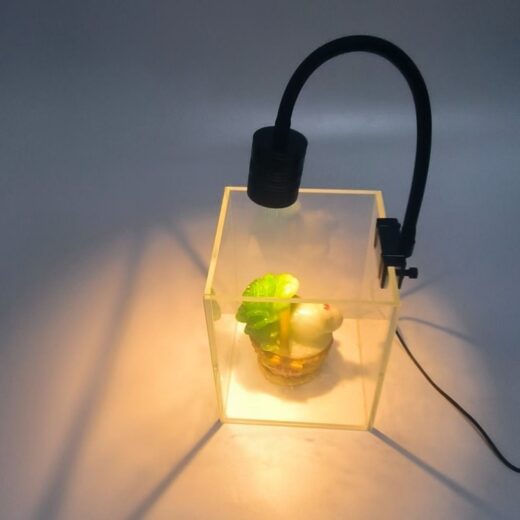
7 W USB Aquarium Plant Spotlight – Standard & Dimmable Models
This is a curated shopping path, not a one-size-fits-all bundle. Confirm dimensions, compatibility, livestock needs and electrical requirements before ordering.