
Do Aquarium Plants Need to Be Acclimated? Before and After Planting

Aquarium plants need to adapt to new growing conditions, but fish-style drip acclimation is not a universal requirement. For many plants, the practical starting point is inspection, preparation and correct planting, followed by steady care. Follow any species-specific instructions from the grower, especially if the plants have arrived in poor condition.
The important distinction is between getting a plant ready to enter the aquarium and the biological adjustment that continues afterwards. A short soak cannot complete the change from above-water growth to life underwater.
What Does Acclimation Mean for Aquarium Plants?
Three different jobs often get bundled under the same word:
- Preparation: unpacking, inspecting and removing growing medium or packaging as appropriate.
- Quarantine: keeping plants separately to observe them and manage introduction risks.
- Adaptation: the plant responding to its new light, water conditions and growing position, sometimes by producing different leaves.
These jobs can overlap, but completing one does not prove the others are finished. A clean-looking plant may still carry unwanted hitchhikers. A carefully prepared plant may still lose older leaves. Equally, leaf loss does not show that you failed to carry out a required dripping procedure.
Start With the Plant You Received
Inspect Before You Plant
Check the label and the grower’s handling instructions. Unpack gently and look at the stems, leaf bases and any visible roots. Keep plants moist while working, and photograph substantial damage before trimming anything. If a plant arrives with extensive soft, disintegrating tissue, contact the supplier rather than assuming time in the aquarium will repair it.
Find out how it was grown if that information is available. A pot describes the packaging; it does not tell you whether the leaves developed underwater. Plants taken from another aquarium have a different starting point from small plantlets supplied in a sealed tissue-culture cup.
| Plant arrives as | Preparation focus | What may happen next |
|---|---|---|
| Intact tissue-culture cup | Rinse away growing medium and divide as directed | Small plantlets establish in their new conditions |
| Potted or bundled plant | Inspect and remove packaging or mineral wool according to the plant’s instructions | Above-water leaves may give way to submerged growth |
| Plant from another aquarium | Inspect for damage and hitchhikers; compare growing conditions | Adjustment to different light and water may affect older leaves |
| Plant damaged in transit | Assess remaining sound tissue and document serious damage | Recovery depends on what survived; it is not assured |
Prepare and Position It Correctly
For tissue-culture plants, follow the supplier’s directions for rinsing off gel or liquid growing medium and separating portions. Handle tiny plantlets carefully. For potted plants, avoid tearing roots while removing the pot and unwanted packing material; preparation can differ for carpeting plants.
Tropica’s planting guidance separates methods by plant form rather than prescribing a universal acclimation bath. Keep Anubias and Java fern rhizomes, the thicker stems carrying roots and leaves, above the substrate. Check the planting method for your particular plant before placing it.
If you are working around fish and an existing layout, use the separate guide to adding plants to an established aquarium for the planting session itself.
Decide About Quarantine Separately
Quarantine addresses what might arrive with the plant. Ask about its source and any treatments, particularly when it is going into a shrimp aquarium. A rinse cannot establish that a plant is free of pesticide residues.
If you decide to isolate it, provide suitable growing conditions in a separate container and choose a plan around the particular concern. Floating it in the display tank does not keep hitchhikers out of that tank. Neither a fixed holding period nor a generic chemical dip can guarantee every plant is safe. Check the supplier’s assurances for the actual product rather than extending a tissue-culture guarantee to every plant sold in a cup.
What Changes After Planting?
Emersed Leaves and Submerged Growth
Many aquarium plants are grown emersed, with their leaves above water. After submersion, some species develop foliage better suited to underwater conditions. New leaves may differ in shape, thickness or colour, and older leaves may deteriorate during the transition.
That change involves growth. Briefly matching water temperature cannot produce the new foliage. Nor does every plant have to shed all its leaves. A tank-grown plant can also react to a move because its previous lighting, water and nutrient supply were different.
Give New Growth a Consistent Starting Point
Use light and nutrition appropriate to the species and setup. Avoid changing several settings every time an older leaf looks worse. More light or fertiliser is not automatically the missing ingredient.
Take a photograph after planting and note the starting conditions. Then follow a steady plant-care routine, checking developing leaves and removing loose decay. Correct an obvious planting mistake, but avoid repeatedly uprooting an otherwise settled plant to inspect its roots.
When Should Leaf Melt Concern You?
“Melt” describes tissue breaking down; it does not name a single cause. Aquarium Co-Op’s explanation of plant melt covers environmental changes, shipping damage, incorrect planting and other problems.
Look beyond the damaged leaves. A firm crown or rhizome and a developing leaf are encouraging signs that living growing tissue remains. They support continued observation under suitable conditions, without guaranteeing recovery.
Softness spreading through the growing base, collapsing stems or repeated loss of new leaves warrants a closer assessment. Remove material that is disintegrating and check the plant’s placement and requirements. Do not label worsening rot as harmless acclimation simply because the plant is new. Use the plant-decline troubleshooting guide if the problem continues. If livestock are distressed, checking water quality and equipment takes priority over waiting for plant growth.
Common Questions
Do Aquarium Plants Need Drip Acclimation?
There is no universal requirement to drip aquarium water into a container of plants. Use the grower’s instructions for your species and arrival condition. Preparation and suitable ongoing care remain important whether or not a particular supplier recommends a gradual transfer.
How Long Does Plant Adaptation Take?
There is no reliable deadline for every species, growth form and aquarium. Follow the condition of the growing point and the progress of replacement leaves. Healthy new growth is more useful evidence than reaching a set number of days; spreading tissue breakdown is a reason to reassess sooner.
Image: AI-generated conceptual process diagram. Plant forms are illustrative; the sequence does not promise recovery or a fixed adaptation time.
Build a planted aquascape starter kit
Begin with a simple layout foundation, then choose lighting and maintenance tools that match the plants and available space.
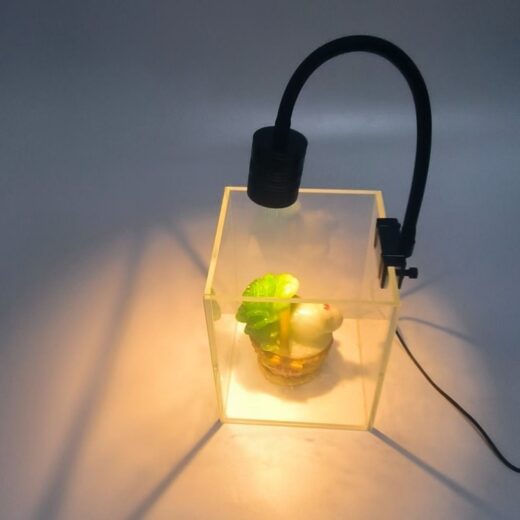
7 W USB Aquarium Plant Spotlight – Standard & Dimmable Models
This is a curated shopping path, not a one-size-fits-all bundle. Confirm dimensions, compatibility, livestock needs and electrical requirements before ordering.