
Can You Add Plants to an Established Aquarium? A Low-Disruption Guide

Yes, you can add live plants to an established aquarium. Suitable plants can usually go into the tank you already have, with the fish, filter and most of the layout staying in place. There is no general need to empty the aquarium or replace its substrate.
The practical goal is to give each plant a suitable position while protecting the system that already supports your livestock. Start with a manageable planting area, prepare the plants outside the tank, and leave major equipment or substrate changes for a separate plan. Adding a few plants is a different job from rebuilding the aquarium.
Match the Plants to the Aquarium You Already Have
Check Light, Water Conditions and Tankmates
Before buying, note your tank’s temperature, normal water conditions, lighting and whether you use injected CO2. Choose plants whose requirements fit those conditions. A shaded corner beneath wood offers different growing conditions from an open patch directly under the light, even in the same aquarium.
Check the plant’s mature dimensions, too. A small shop pot can become a broad rosette that occupies a fish’s swimming route or shades neighbouring plants. Leave room for growth and for reaching the glass, heater and filter intake during maintenance.
Consider what your animals do. Plant-eating fish may damage soft leaves, while digging fish can loosen newly planted roots. Tougher foliage or plants attached to stable decor may be more practical, but no plant is guaranteed to withstand every tankmate. Use the plant guide to choose plants that fit your existing aquarium.
Look at the Substrate and Available Space
Check whether the existing sand or gravel can hold roots without needing a deep excavation. A nutrient-free substrate may need an appropriate feeding plan for the chosen plants; its age does not prove that it contains everything they need.
With little usable substrate, consider an attached epiphyte or a suitable floating plant. You can explore how plants can benefit your fish without committing to a complete planted-tank conversion.
Choose a Low-Disruption Planting Route
Use the existing layout to decide where to start. You do not need to fill every available space in the first session.
| Existing setup | Practical option | Avoid |
|---|---|---|
| Substrate you want to leave untouched | Attach a suitable epiphyte to stable, accessible decor | Burying the rhizome or moving a supporting rock |
| Accessible substrate that can hold roots | Plant a few small zones with space between plants | Stirring up the whole bottom at once |
| Little planting space on the bottom | Add a compatible floating plant and manage its spread | Covering the entire surface or obstructing equipment |
| Plans to replace soil or rearrange large rocks | Prepare a separate rescape and livestock-protection plan | Treating major reconstruction as a simple plant addition |
How to Add Plants Without Restarting the Tank
1. Prepare and Inspect Plants Outside the Aquarium
Set out clean tools and inspect the plants on a tray for damaged tissue, debris and hitchhikers. Remove packaging and prepare each plant according to its form without tearing fine roots. Rinse tissue-culture growing medium away as directed, and keep exposed plants moist. Ask the supplier about origin and treatments, especially for a shrimp aquarium; a quick rinse or clean appearance cannot establish that a plant is pesticide-free. If its history concerns you, keep it separately under suitable growing conditions while you investigate. Buce Plant’s discussion of plant quarantine explains introduction risks. Isolation serves a different purpose from plant acclimation, offers no universal guarantee and does not justify a one-size-fits-all chemical dip.
2. Make Space Without Stripping the Tank
Before putting hands or tools in the water, disconnect aquarium electrical equipment and follow the heater’s cooling instructions. Keep filter media wet and minimise the interruption, following the equipment manuals.
Choose the first planting spot before putting your hands in. Move slowly, keep the fish away from tools, and leave their shelters available. Clear only loose surface debris from the working area rather than deep-cleaning the entire substrate.
You can normally work in a filled tank. If lowering the water slightly makes access easier, keep the remaining depth suitable for the livestock and follow equipment instructions. Do not expose an operating heater or let a filter run dry. Refill with appropriately conditioned, temperature-matched water when finished.
3. Plant Locally or Attach an Epiphyte
For a rooted plant, open a small planting pocket and settle the roots without churning the surrounding substrate. Keep a rosette’s crown, where the leaves emerge, clear of burial. Space individual stems so they are not compressed into a tight bundle.
For Anubias or Java fern, identify the rhizome: the thicker stem from which roots and leaves grow. Keep it exposed and secure the plant to suitable decor. The guide to attaching epiphytes without burying the rhizome covers fastening options. Tropica’s planting guide also separates methods by plant form.
Place compatible floaters where the outlet will not repeatedly force them underwater. Leave open surface space and check that their roots cannot obstruct the intake. Preserve adequate circulation rather than disabling filtration to keep the floaters still.
4. Protect the Established Filter
Keep the existing biological media. Nitrifying bacteria live on that media and other submerged surfaces, including substrate and decor. Replacing media, removing much of the substrate and planting together combines several disturbances.
Follow the equipment’s safety instructions whenever hands are in the water. If equipment must be switched off, keep biological media wet, minimise downtime and verify normal operation afterwards. Check the intake for plant fragments and confirm that the outlet is moving water normally.
What to Monitor After Planting
Before starting, record the temperature and ammonia and nitrite results so you have a baseline. Postpone optional planting if livestock are already distressed or water quality needs attention.
Afterwards, look for loose leaves, floating stems, blocked equipment and an unusual change in fish behaviour. Net or gently siphon out debris. Recheck ammonia and nitrite after noticeable substrate disturbance, substantial plant decay or unexpected cloudiness; an older tank is not automatically protected from a problem.
Some new plants lose older leaves after a change of environment or transport damage. Remove tissue that is breaking down, then look for firm growing points and developing leaves. Leaf loss alone does not prove that the whole plant is dead, but continued deterioration deserves investigation. Avoid repeatedly uprooting a plant to check its roots.
Gasping, rapid breathing or loss of balance needs prompt attention to water quality, aeration and equipment, rather than waiting for plants to settle. Once the aquarium is stable, follow a planted-aquarium maintenance routine that includes pruning, debris removal and checking flow.
When This Becomes a Larger Rescape
Replacing most of the substrate, adding fresh active soil or rebuilding heavy hardscape needs a separate plan. Some active soils change pH and other water conditions and have specific start-up water-change instructions. Read the exact product guidance before introducing one to an occupied aquarium.
Plan how livestock will be protected, how filtration will continue, and which water tests will determine whether conditions remain suitable. Do not assume a mature filter makes every new material safe. If the plant you want requires extensive changes, choosing a better-fitting plant may be the simpler route.
Common Questions
Do You Need to Remove the Fish?
Usually not for a few carefully placed plants. Work around them and retain their hiding places. Heavy rock movement, extensive digging or prolonged disruption calls for a separate plan, which may include suitable temporary housing.
Do You Need New Substrate?
Not automatically. Many rooted plants can use suitable existing sand or gravel with nutrition matched to their needs. Epiphytes and floaters offer options that do not require a new substrate bed. Choose the plant and planting method before deciding whether anything needs replacing.
Image: AI-generated conceptual illustration of a planting session, not a photographed or tested DaraSphere aquarium.
Build a planted aquascape starter kit
Begin with a simple layout foundation, then choose lighting and maintenance tools that match the plants and available space.
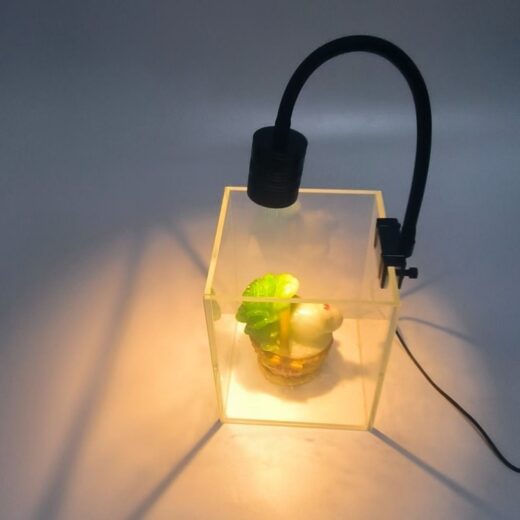
7 W USB Aquarium Plant Spotlight – Standard & Dimmable Models
This is a curated shopping path, not a one-size-fits-all bundle. Confirm dimensions, compatibility, livestock needs and electrical requirements before ordering.