
How to Prepare Driftwood for an Aquarium
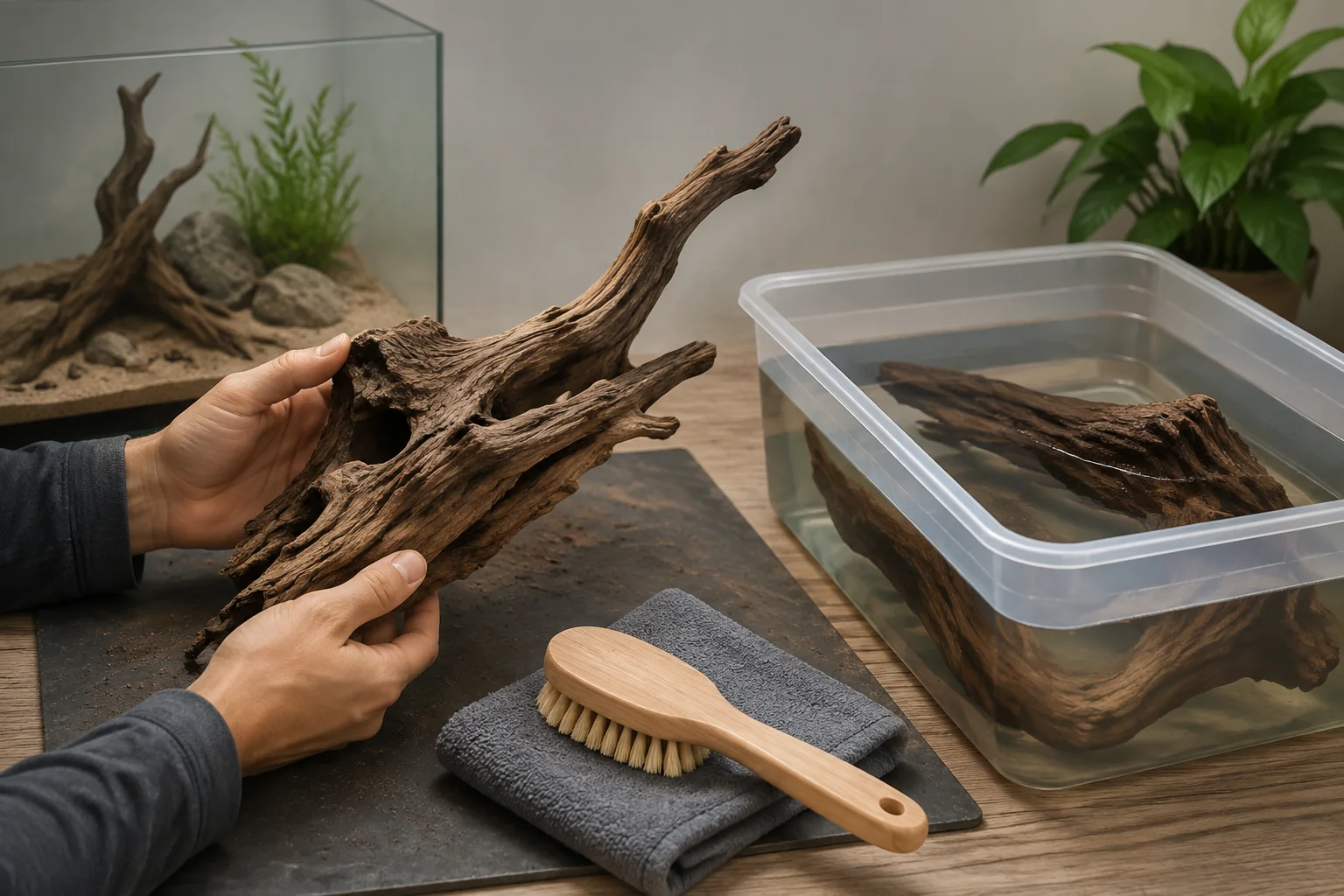
Preparation cannot make unknown, chemically treated or rotting wood aquarium-safe; source verification comes before cleaning.
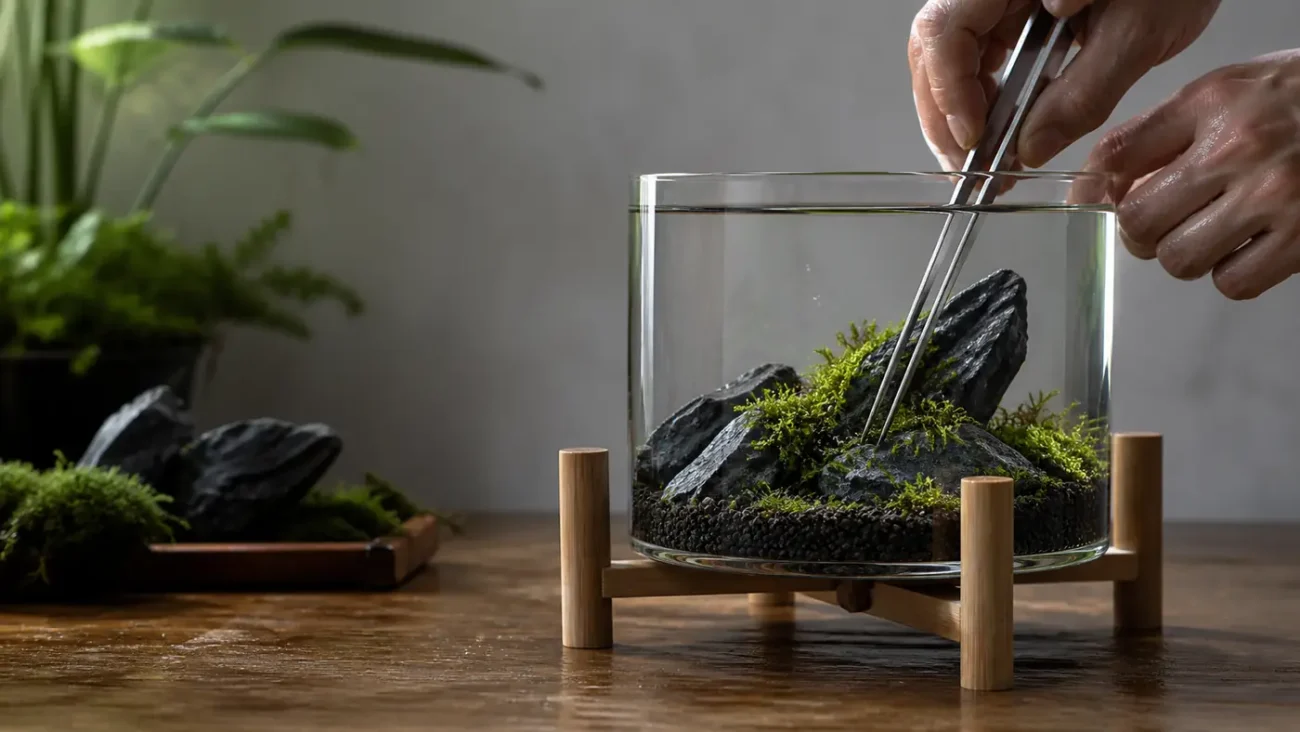
Wood affects composition, water colour, biofilm and sometimes chemistry. Tannins from suitable aquarium wood can colour water without automatically making it unsafe, while pesticide, paint, preservative or rot can create a genuine hazard.
Do not collect wood from a road, treated garden, polluted shoreline or protected area. Legal collection and species identification are part of preparation.
Key takeaways
- Buy or identify the exact wood before treatment.
- Never use soap, household disinfectant, bleach or scented cleaner unless an authoritative aquarium-specific method explicitly calls for a product.
- Soaking helps waterlog wood and reveal tannin release.
- Stabilise the final structure before plants or animals are added.
Accept or reject the wood before cleaning
- Accept wood with a verified aquarium-safe species or reputable aquatic product source.
- Reject painted, sealed, pressure-treated, pesticide-exposed or chemically scented pieces.
- Reject wood with soft structural rot, oily residue, metal fasteners or unknown industrial history.
- Check that collection and transport are legal in the source location.
| Observation | Meaning | Decision |
|---|---|---|
| Hard surface with loose natural bark | May need mechanical cleaning | Remove loose material and inspect beneath |
| Soft, collapsing sections | Structural decay | Reject |
| Persistent chemical odour or sheen | Possible contamination | Reject |
| Tea-coloured soak water | Likely tannin release | Continue supplier-recommended soaking and assess tank plan |
Clean and soak without household chemicals
Scrub under clean water with a dedicated stiff brush. Rinse crevices and remove loose dirt. If the supplier recommends boiling and the piece fits safely, use a container and method that will not crack, burn or expose anyone to unstable heavy wood.
Large pieces are usually soaked in a clean aquarium-only container. Change water when it becomes heavily coloured or fouled, and keep the container covered safely without creating a hazard.
Tannins, buoyancy and biofilm
Some suitable woods release tannins for weeks or months. Decide whether amber water fits the aquarium; activated carbon or water changes may reduce colour, but every intervention should match the inhabitants and filter plan.
Fresh submerged wood can develop a pale biofilm. Identify it, remove excess mechanically if desired and continue monitoring. Do not assume every surface growth is harmless when animals or water quality show a problem.
Install a stable framework
ADA's Nature Aquarium process uses driftwood as the composition framework and emphasises stable placement. Build outside the tank, document the arrangement and use only aquarium-safe supports or adhesives according to their instructions.
Keep points away from glass, leave flow and cleaning access and anticipate that waterlogged wood may shift if it is not mechanically secure.
Practical checklist
- Verify species, source and collection legality.
- Reject treated, scented, oily or rotting wood.
- Scrub with water and a dedicated brush.
- Follow supplier soaking guidance.
- Inspect tannin release and buoyancy.
- Dry-build and stabilise the final framework.
Frequently asked questions
Do I have to boil aquarium driftwood?
Not always. Follow the supplier's method. Large pieces may be unsafe or impractical to boil and can instead require extended clean soaking.
Are tannins harmful to fish?
Tannins from suitable wood are not automatically harmful, but they can affect colour and chemistry. Confirm the exact wood and the needs of the intended species.
Can I use wood from outside?
Only with reliable species identification, legal collection and confidence that it has no treatment, pollution or rot. Reputable aquarium wood is the safer option.
Sources and editorial method
This guide combines manufacturer documentation, official safety or regulatory guidance where relevant, and DaraSphere catalogue checks. Product availability and specifications can change; verify the current product page before ordering.
Build a practical aquarium maintenance kit
Choose tools that fit the tank material and size, then add filtration support and monitoring for a repeatable care routine.
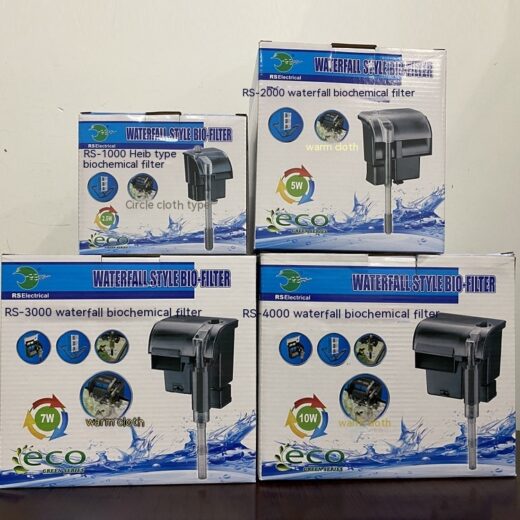
Aquarium Waterfall Bio Filter – RS1000 to RS4000
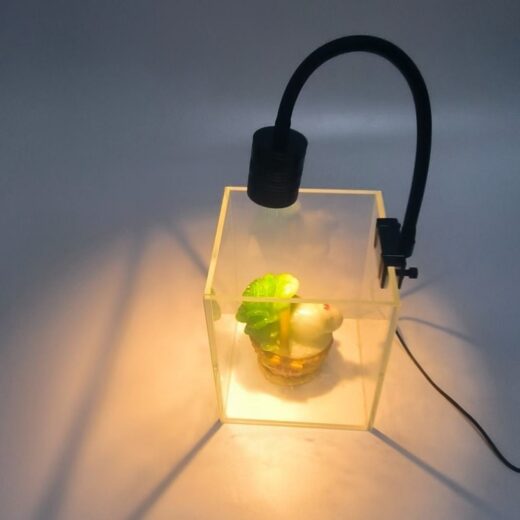
7 W USB Aquarium Plant Spotlight – Standard & Dimmable Models
Products matched to this guide
Selected for relevance to the setup and needs covered above.
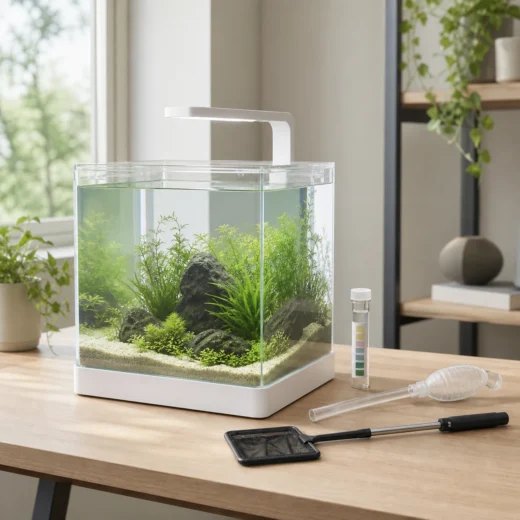
Desktop Aquarium Quick-Start Bundle
Four-piece desktop aquarium starter bundle with an acrylic tank system, 6-in-1 test strips, manual siphon cleaner…
View product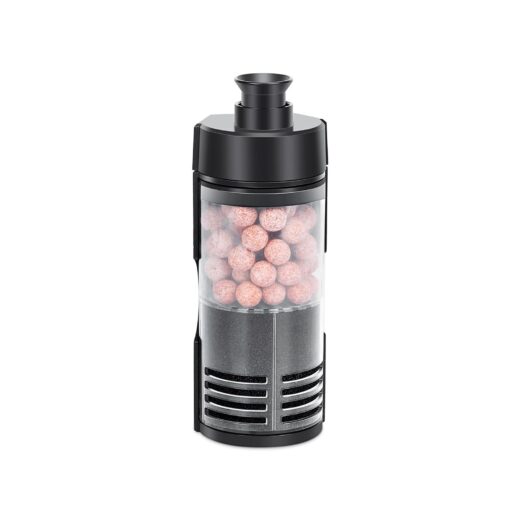
Bio Sponge Filter for Betta, Shrimp & Fry – 2–20 Gallons
Bring sponge and ceramic-media filtration together in a compact, air-driven filter. Choose Small for 2–5-gallon aquariums…
View product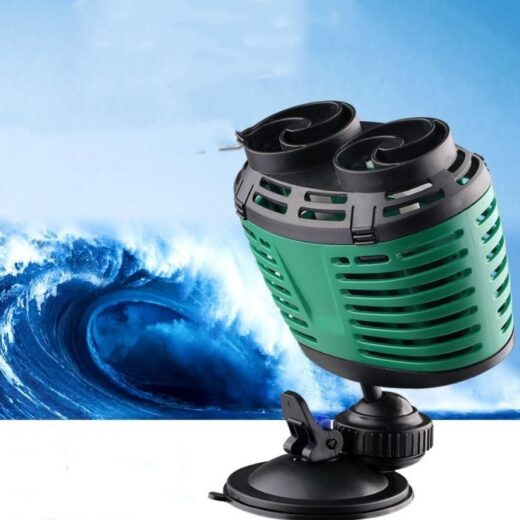
Silent Mini Aquarium Wavemaker – 200A/201A/202A
Compare the 200A, 201A and 202A mini aquarium wavemaker options; verify model, voltage, plug, mounting method…
View product