
How Overfeeding Affects Aquarium Water Quality
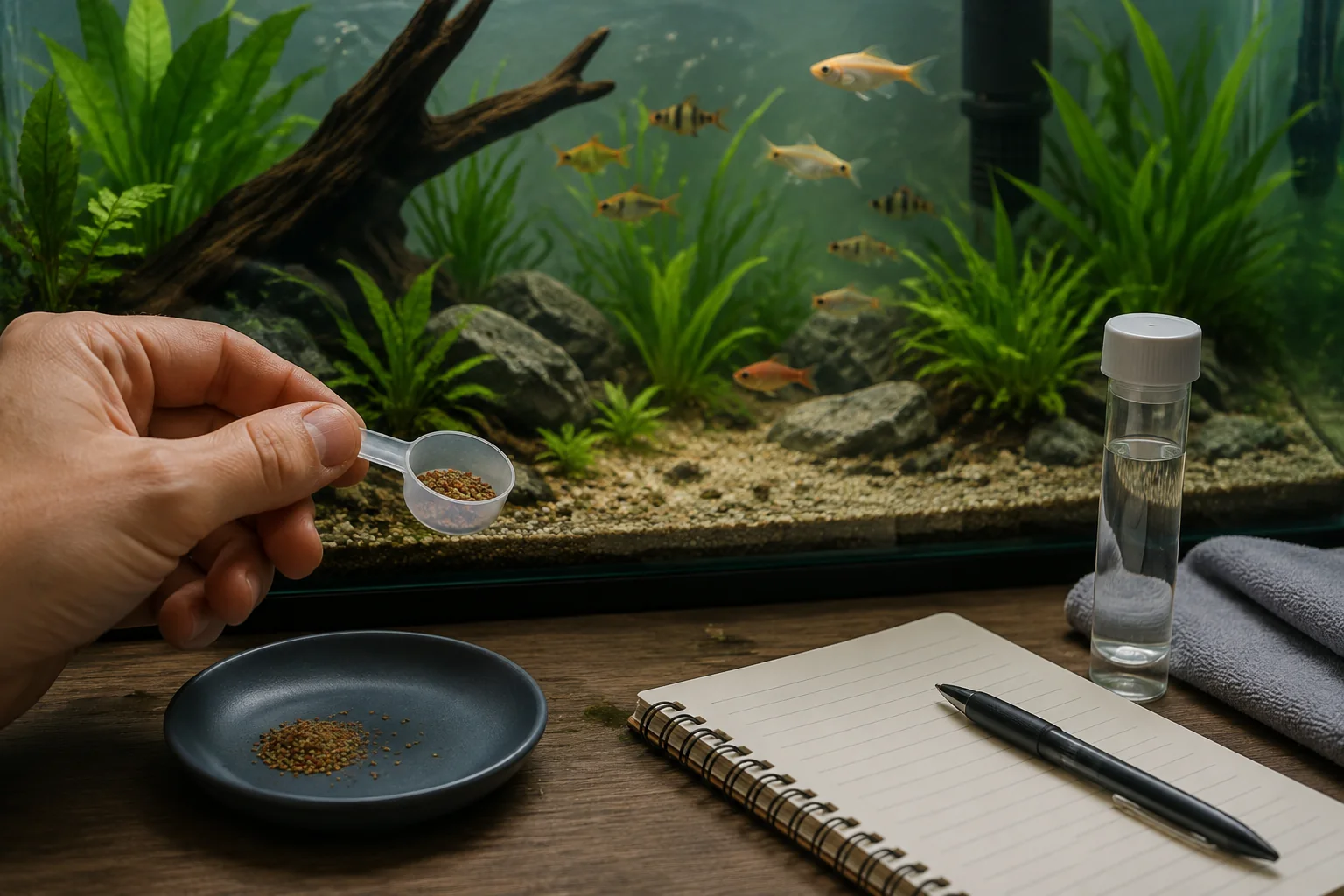
Overfeeding does not always look dramatic. It can begin with a few extra flakes, a feeder outlet that moved slightly or a helpful family member adding a second meal.
The fish may eat some of the excess. The rest settles, enters the filter or breaks down in places you cannot easily see. The result is more waste for the aquarium’s biological system to process. (University of Florida IFAS: Ammonia in Aquatic Systems)
Correcting the problem starts with reducing the source and checking the whole tank—not with one aggressive clean-up.
Use the responsible fish-care guidance to connect feeding decisions with suitable habitats and day-to-day welfare.
What happens to uneaten food?
Food that remains in the aquarium decomposes. Fish that consume excessive food also produce more waste. Both increase the load on the filter and can contribute to deteriorating water conditions. (University of Florida IFAS: Ammonia in Aquatic Systems)
Depending on the aquarium, you may see:
- cloudy water;
- food trapped behind decor;
- increased debris on the substrate;
- unusual odour;
- more frequent filter clogging;
- algae growth associated with excess nutrients;
- changes in measured ammonia, nitrite or nitrate;
- stressed or abnormal fish behaviour.
Source for the preceding checklist: University of Florida IFAS: Ammonia in Aquatic Systems
These signs are not unique to overfeeding. A dead organism, filter problem, overcrowding or maintenance issue may produce similar symptoms. Test and inspect before deciding on the cause.
Observe what happens during feeding
Stand beside the aquarium for the full meal. Note where food travels and which fish receive it.
Food that disappears from view has not necessarily been eaten. It may enter an overflow, lodge in plants or sink behind hardscape. A feeding ring or different drop point can help, provided it does not interfere with essential circulation. (Merck Veterinary Manual: Providing a Home for Fish)
If you use a timer, supervise several cycles. Follow the automatic feeder calibration guide and compare multiple releases rather than one.
Signs an automatic feeder is delivering too much
- the portion looks larger as the drum empties;
- fine food accumulates around the outlet;
- fish cannot finish before food disperses;
- food remains on the substrate after each cycle;
- the outlet adjustment has shifted;
- the feeder gives a double release;
- mixed food has separated inside the chamber.
Source for the preceding checklist: EHEIM autofeeder 3581 Operating Manual
Switch the feeder off while investigating. Do not simply skip observation and reduce the opening at random. Collect several portions over a tray and recalibrate with the exact food.
What to do after an accidental large feeding
Stay calm and avoid adding more food. Remove accessible excess with an appropriate net or siphon. Check that the filter is operating and test water according to the tank’s normal husbandry plan. (University of Florida IFAS: Ammonia in Aquatic Systems)
The right response depends on the severity, aquarium maturity, stocking and measured water conditions. A partial water change may be appropriate, but sudden, unnecessary changes can also stress fish. Use conditioned, temperature-matched water and follow reliable aquarium-care guidance. If fish are gasping, distressed or water tests are dangerous, seek qualified help promptly. (University of Florida IFAS: Ammonia in Aquatic Systems)
Do not dismantle or aggressively wash biological filter media in untreated tap water as a reflex. Protect the beneficial filtration system while removing the waste source. (Merck Veterinary Manual: Providing a Home for Fish)
Reduce portions without starving individual fish
The tank can receive too much food while shy fish receive too little. Before cutting the entire ration, watch distribution. (Merck Veterinary Manual: Nutrition in Fish)
Try:
- feeding smaller measured portions;
- placing food in two controlled locations;
- using an appropriate sinking food for bottom dwellers;
- allowing shy fish access without adding repeated surface meals;
- matching particle size to mouth size;
- recording what is actually eaten.
Our aquarium fish feeding schedule provides a simple seven-day observation log.
Food format can affect waste
Large flakes may break and enter the filter. Pellets that are too large may be rejected. Fine granules can disappear into substrate. The nutritionally correct food still needs an appropriate size and feeding behaviour. (EHEIM autofeeder 3581 Operating Manual)
See flakes, pellets and granules for automatic feeders before changing the dispenser or diet.
Prevent the problem with a repeatable portion
Manual feeding is more consistent when you use a small scoop, counted pellets or pre-measured containers instead of a pinch. Automatic feeding is more consistent when you collect several tray portions and record the outlet setting. (EHEIM autofeeder 3581 Operating Manual)
After any refill, food change or feeder movement, repeat the test. Check the outlet for moisture because a partial clog can later release a larger lump. Read how to prevent feeder clogs for maintenance steps.
Do not use water clarity as the only measure
Clear water can still have unsuitable parameters, and cloudy water is not always caused by feeding. Maintain the tank’s established testing and maintenance schedule. (University of Florida IFAS: Ammonia in Aquatic Systems)
Useful records include:
- feeding amount and time;
- ammonia, nitrite and nitrate results where appropriate;
- temperature;
- maintenance dates;
- filter-flow changes;
- livestock changes;
- visible leftovers.
Patterns across several entries are more useful than a single guess.
A safer automatic-feeding routine
A 24-hour feeder can repeat a daily dry-food routine only when it is correctly matched, calibrated and monitored. Begin with the smallest repeatable portion, confirm where the food lands and observe several cycles.
For travel, pair the feeder with the holiday aquarium checklist and arrange human checks.
Frequently asked questions
Can overfeeding cause cloudy aquarium water?
Excess food and waste can contribute, but cloudiness has several possible causes. Test the water, inspect equipment and review recent changes. (University of Florida IFAS: Ammonia in Aquatic Systems)
Should I stop feeding after an accidental large portion?
Do not add another meal automatically. Remove excess, assess the fish and water, and use species-appropriate advice to decide the next feeding. (University of Florida IFAS: Ammonia in Aquatic Systems)
Why are my fish still begging after eating?
Approaching a person or feeder does not by itself establish that the ration is inadequate. Use body condition, diet suitability, access, leftovers and measured water conditions instead. (Merck Veterinary Manual: Nutrition in Fish)
Can an automatic feeder improve water quality?
It can improve portion consistency when calibrated, but an incorrect setting can overfeed consistently. Water quality still depends on stocking, filtration and maintenance. (EHEIM autofeeder 3581 Operating Manual) (University of Florida IFAS: Ammonia in Aquatic Systems)
Feed the fish, not the filter
Every portion should have a clear purpose and destination. Measure it, watch it and adjust based on the aquarium—not on how generous the meal looks.
When feeding becomes repeatable, waste is easier to control and changes are easier to diagnose. That is the real value of a good routine, whether the food comes from your hand or a timer.
Next step: For a broader setup, calibration and travel plan, continue with the automatic fish feeder guides.
Build a water-quality starter setup
Combine suitable filtration with monitoring and maintenance tools; equipment supports, but does not replace, a correct cycling process.
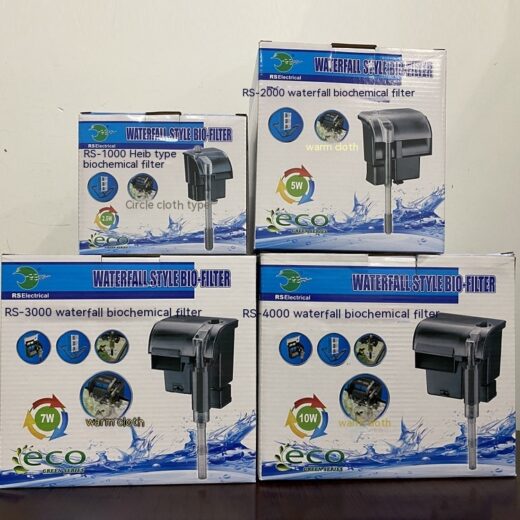
Aquarium Waterfall Bio Filter – RS1000 to RS4000
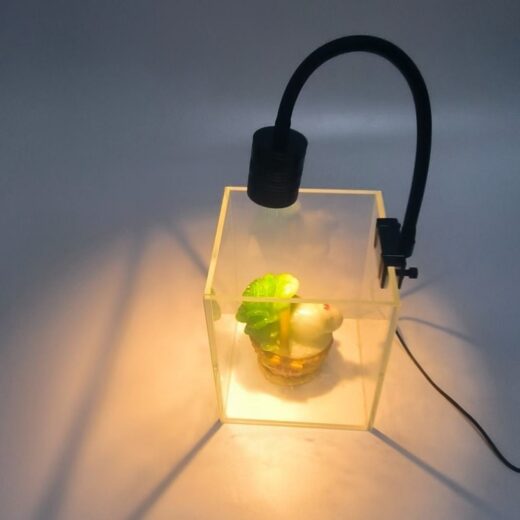
7 W USB Aquarium Plant Spotlight – Standard & Dimmable Models
Products matched to this guide
Selected for relevance to the setup and needs covered above.
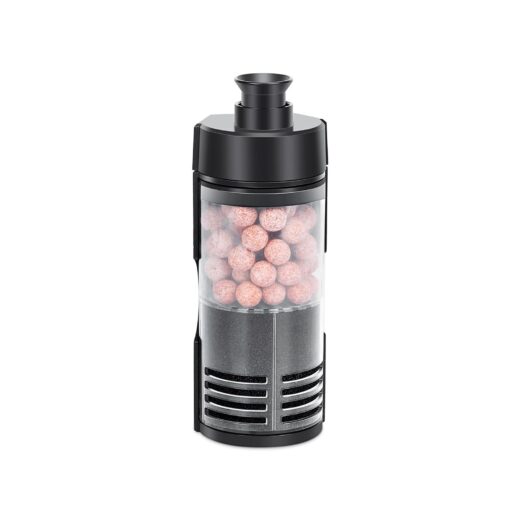
Bio Sponge Filter for Betta, Shrimp & Fry – 2–20 Gallons
Bring sponge and ceramic-media filtration together in a compact, air-driven filter. Choose Small for 2–5-gallon aquariums…
View product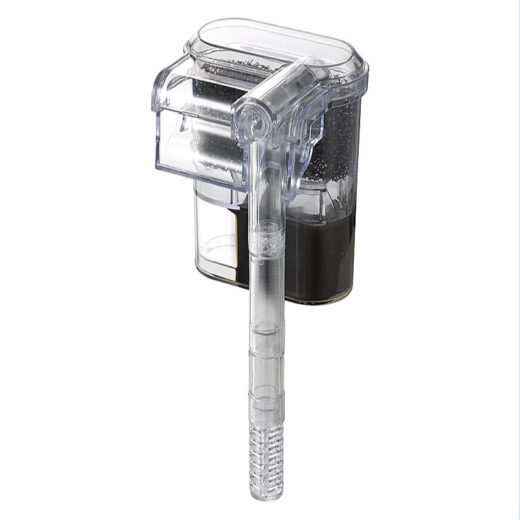
USB Mini Hang-On Waterfall Aquarium Filter
A compact USB-powered hang-on waterfall filter for small aquariums. Its transparent-grey ABS housing keeps the tank…
View product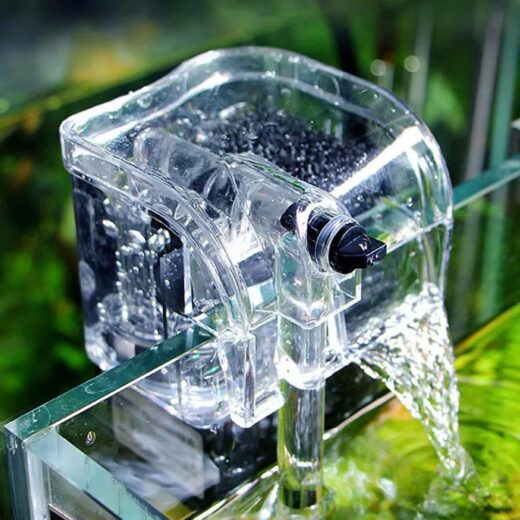
Nano Hang-On Back Aquarium Filter for Betta & Shrimp – 1–5 Gallons
Compact white hang-on-back filter for 1–5 gallon nano tanks, with adjustable flow, aeration and surface skimming.…
View product