
How to Calculate the Real Water Volume of a Mini Aquarium Bowl
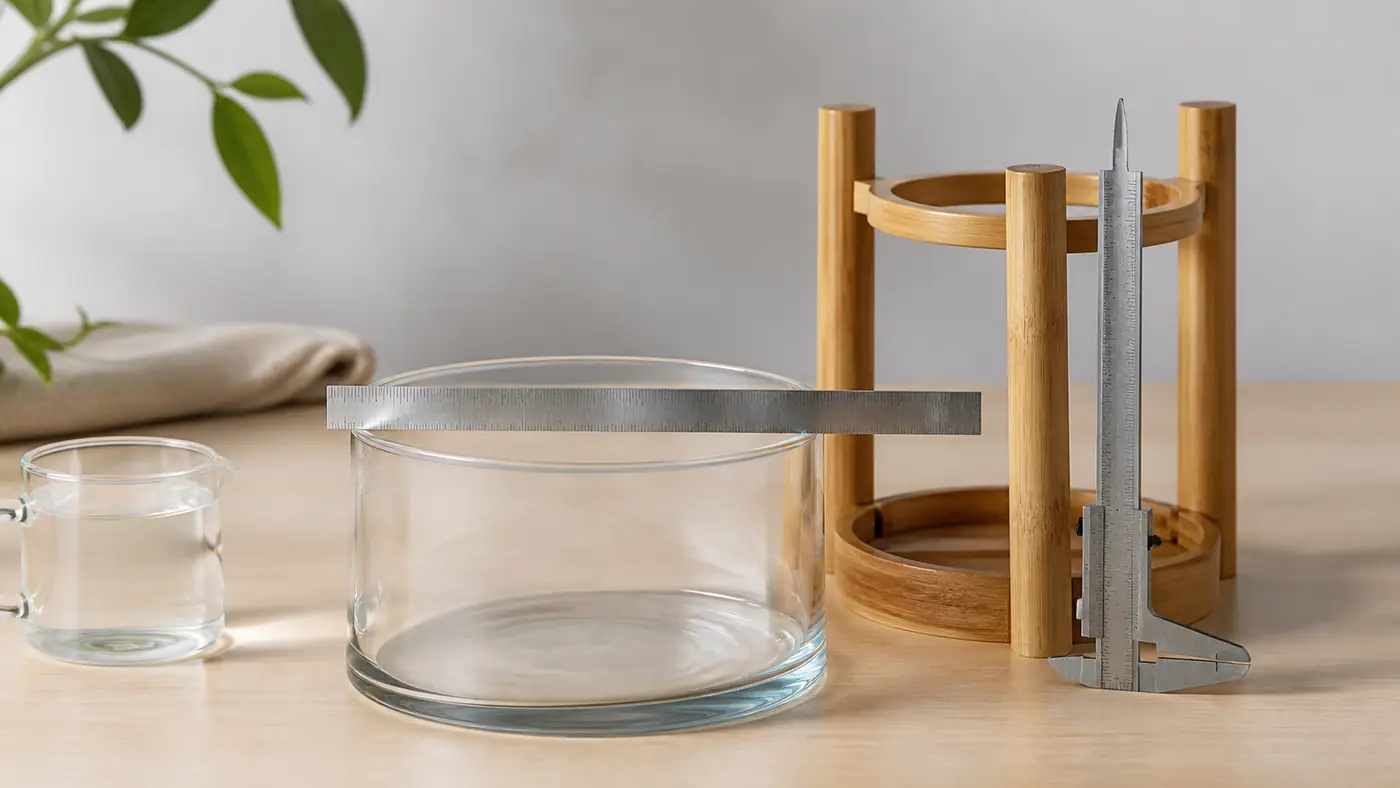
Capacity is the first number to establish before planning any aquarium container. It affects temperature stability, fertiliser dosing, water changes and—most importantly—whether the container could meet an animal’s needs. (Merck Veterinary Manual: Tank Volume Formulae)
Measure the clear internal diameter and intended water height. The worked example below uses a hypothetical 10 cm internal diameter and 15 cm water height; do not treat those example numbers as verified product dimensions. (Merck Veterinary Manual: Tank Volume Formulae)
The cylinder formula
Use:
Volume = π × radius² × water height (Merck Veterinary Manual: Tank Volume Formulae)
The radius is half the internal diameter. For a 10 cm diameter cylinder:
- radius = 5 cm;
- radius² = 25 cm²;
- water height = 15 cm;
- volume = 3.1416 × 25 × 15 = 1,178 cm³.
One litre equals 1,000 cm³, so the theoretical gross capacity is approximately 1.18 litres. (NIST Metric Conversion Tables)
Why gross volume is not usable volume
The gross result assumes the cylinder is filled to its full measured height and contains nothing except water. A real display includes an air gap, substrate, stone, wood and plant material. (Merck Veterinary Manual: Tank Volume Formulae)
For example, leaving 2 cm below the rim reduces the water column to 13 cm. The calculation becomes: (Merck Veterinary Manual: Tank Volume Formulae)
3.1416 × 5² × 13 = 1,021 cm³, or about 1.02 litres before décor.
After hardscape and substrate, the actual water may be substantially lower. The reliable method is to record how much measured water you add during setup. (Merck Veterinary Manual: Tank Volume Formulae)
Measure the inside, not the outside
External dimensions include glass thickness and the bamboo structure. Measure the clear internal diameter at the intended water line and the vertical height of the water itself. (Merck Veterinary Manual: Tank Volume Formulae)
If the container tapers, has a rounded base or changes diameter, treat the result as an estimate. You can divide an irregular shape into sections or confirm capacity by filling it with a measuring jug.
A practical fill test
- Place the empty bowl on a stable, water-resistant surface.
- Add the final substrate and hardscape.
- Fill a measuring jug with a known quantity of dechlorinated water.
- Add water slowly to the intended level.
- Record every full and partial jug added.
- Mark the total in your maintenance notes.
Source for the preceding checklist: Merck Veterinary Manual: Tank Volume Formulae
That measured total is more useful than a product-page capacity because it reflects the actual layout.
Why every displaced object matters
A dramatic stone may look small outside the bowl but occupy a significant percentage of its volume. Thick substrate can consume valuable water depth, and overcrowded hardscape leaves little open space.
The mini aquarium bowl aquascaping guide explains how to create scale without filling the container with material.
Use volume for dosing and water changes
Never dose fertiliser, conditioner or treatment from the outside dimensions. Use the measured water volume and follow the manufacturer’s instructions. In a roughly one-litre container, products designed for large aquariums can be difficult to measure accurately. (Merck Veterinary Manual: Tank Volume Formulae)
A 25% water change in 1.0 litre is only 250 ml. Use a small marked jug or syringe for repeatability, and match the replacement water appropriately. (NIST: Circumference, Area and Volume)
Read mini aquarium water quality and cycling before treating a small bowl like a stocked aquarium.
Volume is not a stocking rule
Knowing the litre capacity does not make the bowl suitable for fish. Species need horizontal swimming space, stable temperature, filtration and behavioural enrichment as well as water. (RSPCA: Choosing an Aquarium for Pet Fish)
Compare these limitations in fish bowl vs nano aquarium and can fish live in a mini aquarium bowl?.
Frequently asked questions
How many litres is a 10 cm × 15 cm cylinder?
Approximately 1.18 litres when calculated as a perfect cylinder filled to 15 cm. Real usable volume is lower. (Merck Veterinary Manual: Tank Volume Formulae)
Should I include substrate in the calculation?
Calculate gross water space first, then measure the actual water added after substrate and décor are installed. (Merck Veterinary Manual: Tank Volume Formulae)
Can I estimate with external dimensions?
Only roughly. Internal dimensions are more accurate because glass thickness and the frame do not hold water. (Merck Veterinary Manual: Tank Volume Formulae)
Does evaporation reduce toxins?
No. Evaporation removes water while leaving many dissolved substances behind. Topping up is not the same as a water change. (NIST: Circumference, Area and Volume)
Record the measured number
Once the display is assembled, write down the actual fill volume. That single number prevents guesswork whenever you change water, add conditioner or compare the bowl with a larger aquarium.
Return to the complete desktop aquarium bowl guide for the full setup sequence.
Plan a responsible small-aquarium setup
Confirm real water volume and livestock requirements first, then compare tanks, filtration and maintenance equipment as one system.
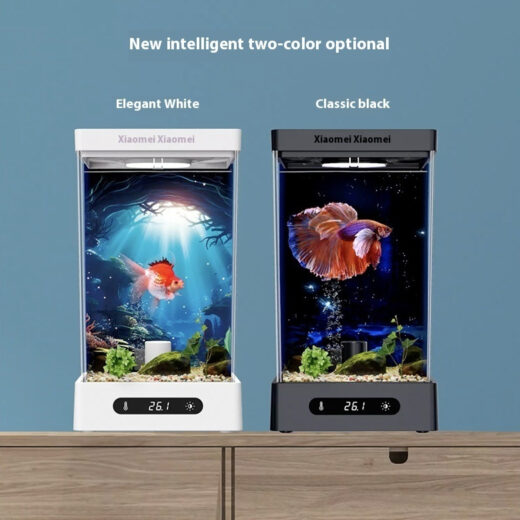
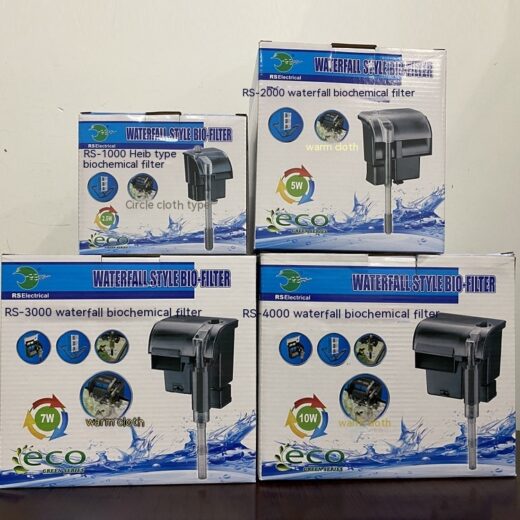
Aquarium Waterfall Bio Filter – RS1000 to RS4000
Products matched to this guide
Selected for relevance to the setup and needs covered above.
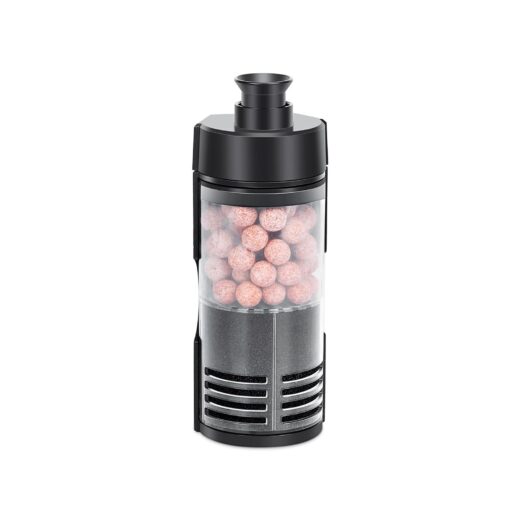
Bio Sponge Filter for Betta, Shrimp & Fry – 2–20 Gallons
Bring sponge and ceramic-media filtration together in a compact, air-driven filter. Choose Small for 2–5-gallon aquariums…
View product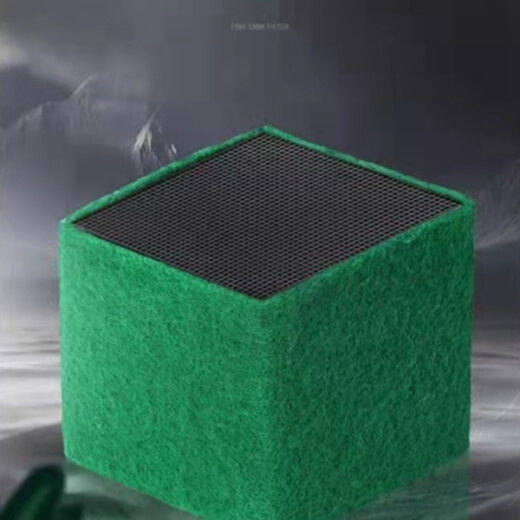
Filter Media Cube – Black/Green, Small/Large, 1–3 Pack
Cube-format aquarium filter media in black or green, small or large, with 1-, 2- and 3-piece…
View product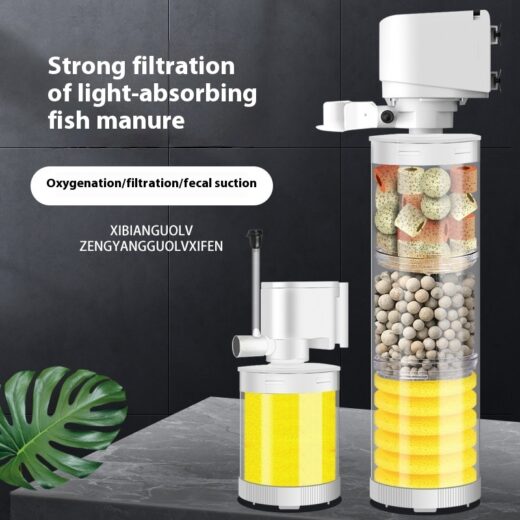
WP-Series Internal Aquarium Filter & Replacement Parts — 5–30 W
This WP-series listing combines complete filter models and replacement-part options. Choose WP1300A 5 W, WP2300A 10…
View product