
Green Spot Algae in Aquariums: Diagnosis and Control
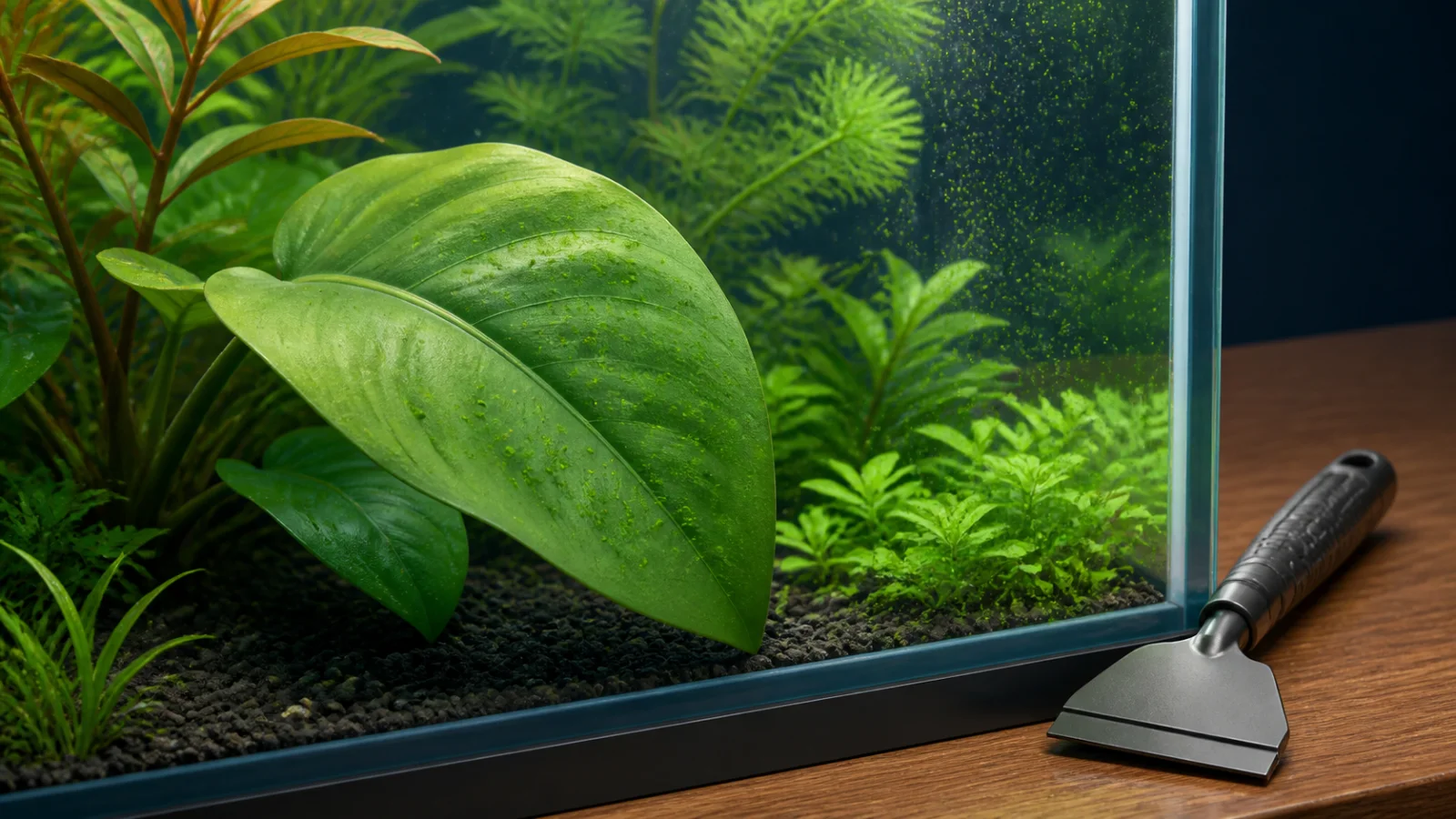
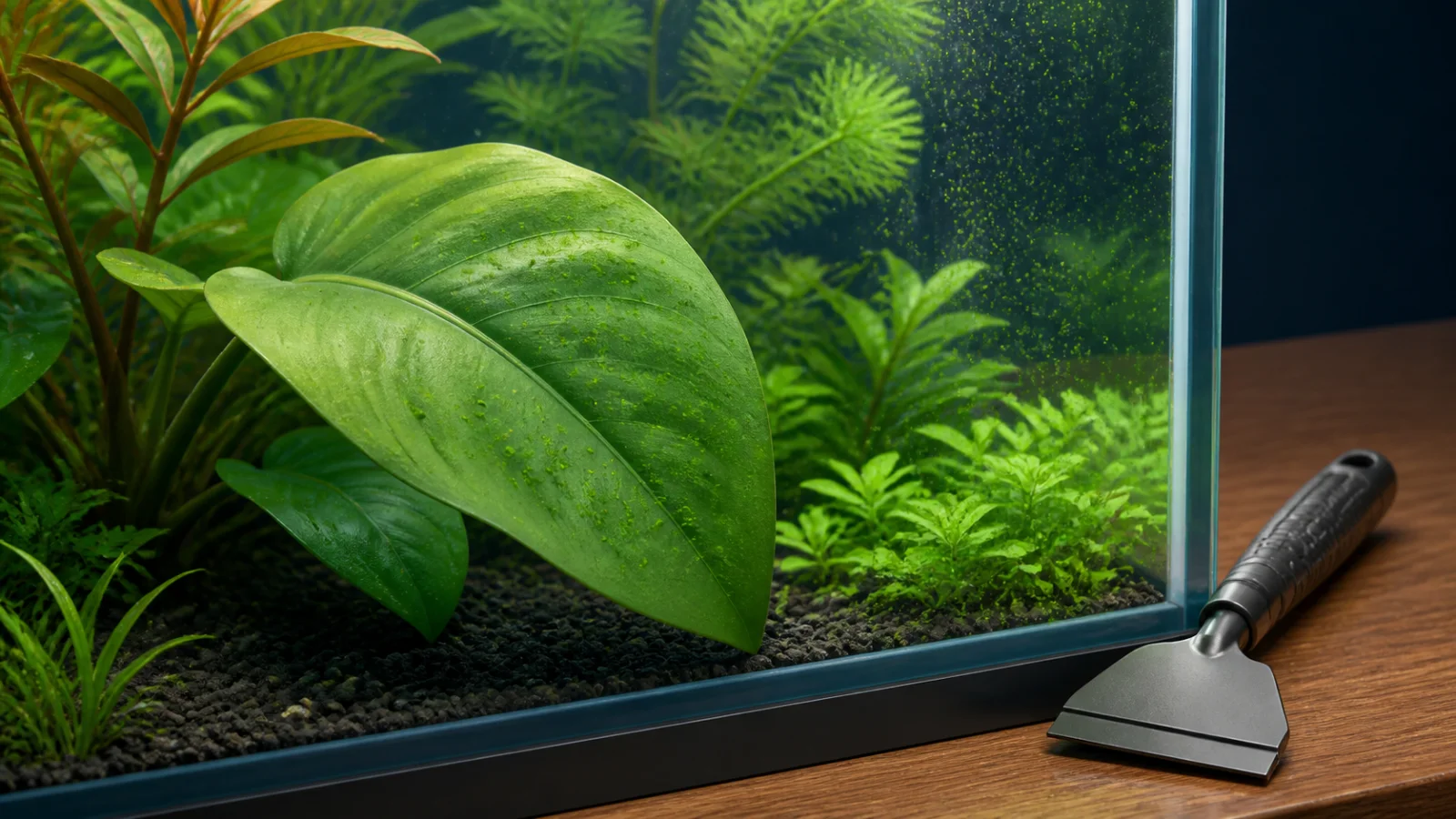
Hard green dots on glass or older slow-growing leaves are a useful working description of green spot algae, but appearance alone is not a water-test result. Diagnose the deposit and its pattern before changing light, nutrients or livestock.
Diagnosis before treatment
- Confirm texture, colour and shape on more than one surface.
- Separate easy glass removal from damage to living leaves.
- Map recurrence by location instead of treating the whole tank blindly.
- Review recent light, cleaning and plant-growth changes.
- Change one plausible driver and keep a dated comparison area.
Step 1: check that “green spot” is the right working label
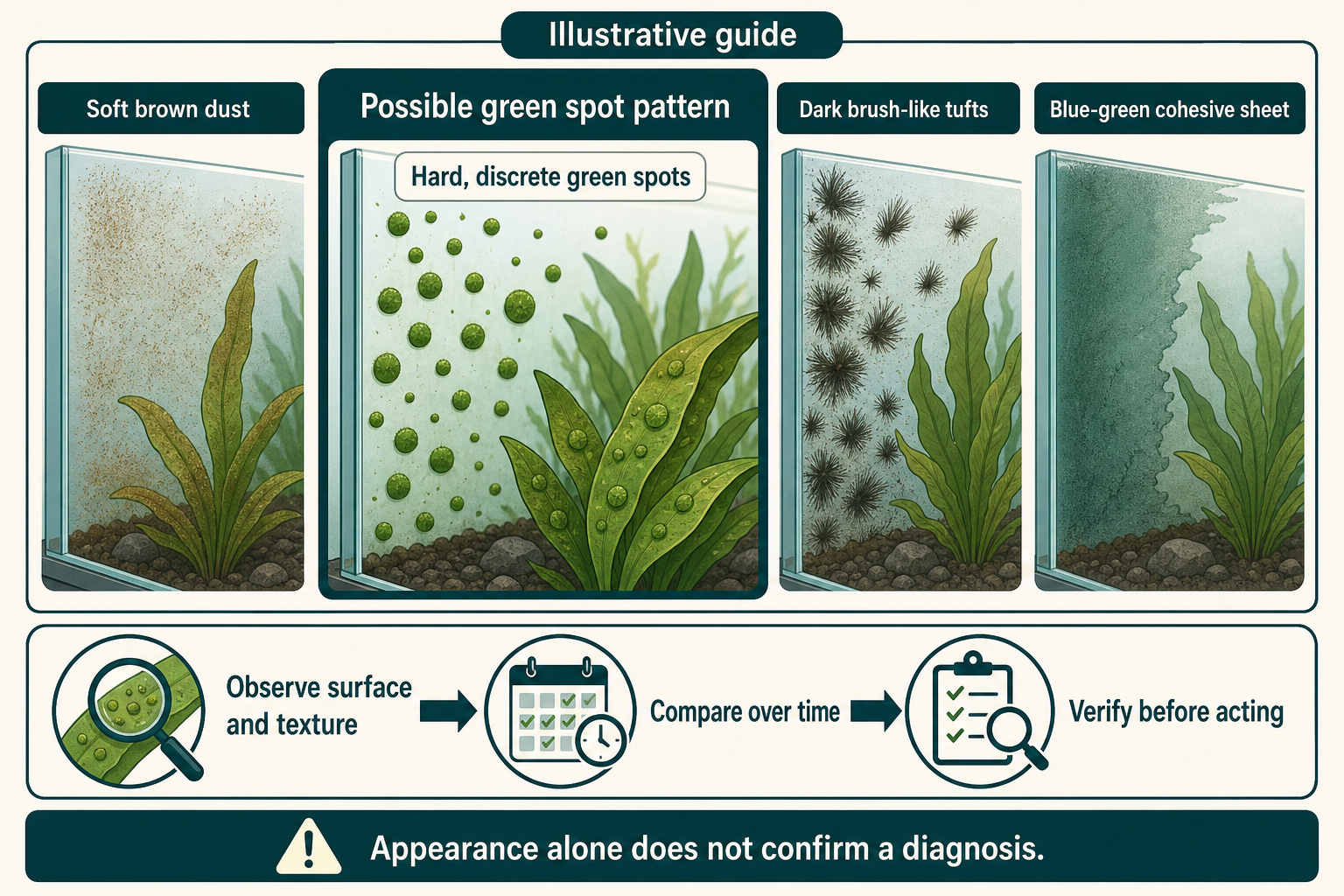
Green spot algae is commonly described in aquariums as small, firm green marks that resist a casual wipe. That description is useful for maintenance, but it is not a species-level identification. Use it to choose a cautious first action, not to justify a chemical or nutrient correction.
- Hard green dots: consistent with the working diagnosis, especially when they occur on glass and long-lived leaves.
- Soft green haze: treat as a different surface film until repeated observation shows otherwise.
- Brown dust that wipes away: does not fit the same removal pattern.
- Threads or tufts: require a filamentous-algae diagnosis.
- White or pale crust near the waterline: investigate mineral deposits before calling it algae.
Step 2: map where it returns
Clean only a clearly bounded test area first. Note the date, the side of the tank, distance from the fixture and whether direct room light reaches it. Mark a second comparison zone that receives different light. This simple map distinguishes a local exposure pattern from a tank-wide recurrence and avoids relying on memory.
On plants, record whether spots are limited to old leaves or are appearing on new growth. Old Anubias or other slow leaves can remain exposed for a long time; scrubbing them aggressively may damage tissue without correcting the conditions that favour renewed deposits. Remove a leaf only when pruning it makes sense for the plant, not merely to make the diagnosis disappear.
Step 3: choose the least disruptive response
- Clean the viewing pane safely. Use a pad or scraper approved by the aquarium manufacturer. A tool suitable for glass may scratch acrylic; trapped substrate can scratch either surface.
- Restore the normal maintenance baseline. Remove loose debris, keep the established water-change routine and check that filtration and circulation are operating as intended.
- Audit light exposure. Verify the timer, fixture intensity and any direct sunlight. Do not change intensity and duration together, because the next observation will not identify which change mattered.
- Review the nutrition programme. Confirm which products are being used, their label doses and whether separate products overlap. A photograph of algae cannot prove a specific nutrient deficiency or surplus.
- Observe the cleaned boundary. Compare new spot formation over a consistent interval while the rest of the routine stays stable.
Three common scenarios
Spots cluster on the brightest front pane
Prioritise the local light map: direct sun, a concentrated beam or a longer exposure at that pane may explain the pattern better than a whole-tank nutrient theory. Correct the verified exposure and keep a cleaned comparison area.
Spots are mostly on old, slow-growing leaves
Protect viable new growth. Gently clean only leaves that tolerate it, prune damaged leaves as part of normal plant care, and review whether the plant is receiving stable light, carbon and nutrition appropriate to its requirements.
Green material wipes off everywhere
Pause the green-spot plan. A soft coating is a different maintenance problem, so document it and use broader algae-identification guidance before escalating.
Why single-nutrient fixes fail
Online advice often treats green spots as proof of one phosphate condition. A visual pattern alone cannot establish that conclusion: the water source, substrate, fertiliser formula, feeding, plant mass and test method all affect interpretation. Adding or withholding a nutrient without those facts can create a second problem while leaving the original light or maintenance pattern unchanged.
If a nutrient change is being considered, use the complete product label and a reliable measurement plan, or seek qualified aquarium-plant guidance. Avoid combining that change with a new light schedule, deep cleaning and livestock addition in the same week.
Chemical and livestock cautions
Do not treat an unidentified deposit with an algaecide. Product ingredients, concentration and species compatibility must be verified from the current label before use. Snails, shrimp and fish also differ in the algae they graze and in their care needs; an algae problem is not, by itself, a reason to add livestock.
Seven-day observation card
- Photograph the deposit before cleaning.
- Record whether it is hard, soft, dusty, filamentous or crust-like.
- Clean one labelled area with a surface-safe tool.
- Record fixture timing, intensity setting and direct room light.
- Keep water care and feeding consistent.
- Make only one justified adjustment.
- Compare the same areas under the same viewing light.
Green spot algae questions
Should I scrape every affected leaf?
No. Leaf texture and condition matter. Aggressive scraping can damage living tissue; prioritise safe glass cleaning, gentle treatment of robust leaves and sensible pruning of older damaged leaves.
Does green spot algae prove phosphate is low?
No. Appearance alone cannot establish a nutrient concentration or requirement. Review the full fertiliser programme and use appropriate measurements before changing a dose.
Will a blackout solve hard green spots?
A blackout is not the first-line response for a hard, localised surface deposit. Confirm the algae type, remove accessible spots safely and correct the verified light or maintenance pattern.
Algae-control sources
Build a practical aquarium maintenance kit
Choose tools that fit the tank material and size, then add filtration support and monitoring for a repeatable care routine.
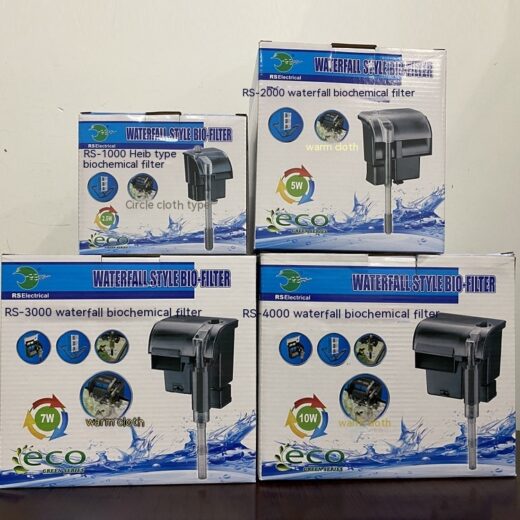
Aquarium Waterfall Bio Filter – RS1000 to RS4000
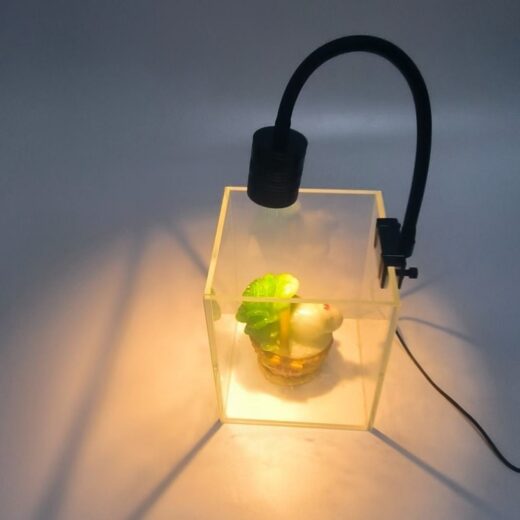
7 W USB Aquarium Plant Spotlight – Standard & Dimmable Models
Products matched to this guide
Selected for relevance to the setup and needs covered above.
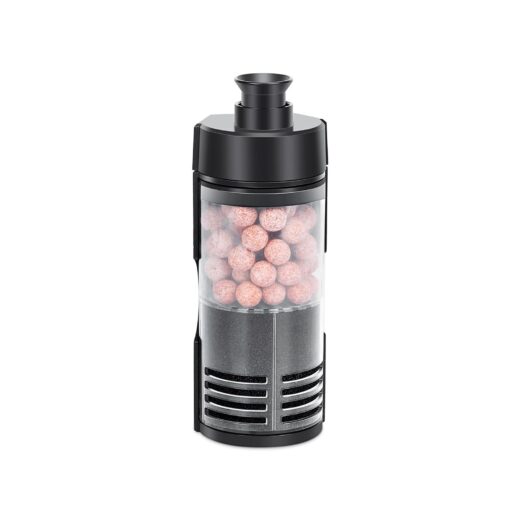
Bio Sponge Filter for Betta, Shrimp & Fry – 2–20 Gallons
Bring sponge and ceramic-media filtration together in a compact, air-driven filter. Choose Small for 2–5-gallon aquariums…
View product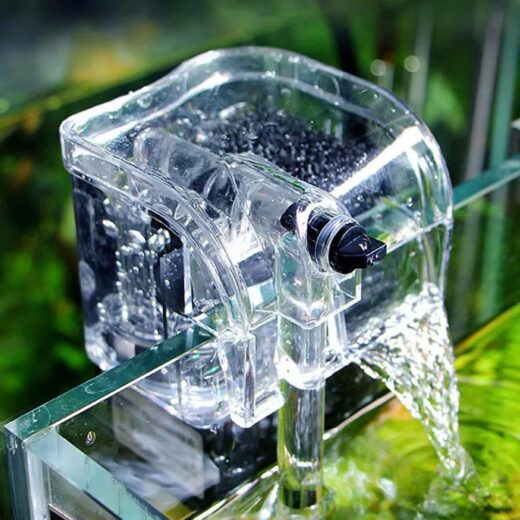
Nano Hang-On Back Aquarium Filter for Betta & Shrimp – 1–5 Gallons
Compact white hang-on-back filter for 1–5 gallon nano tanks, with adjustable flow, aeration and surface skimming.…
View product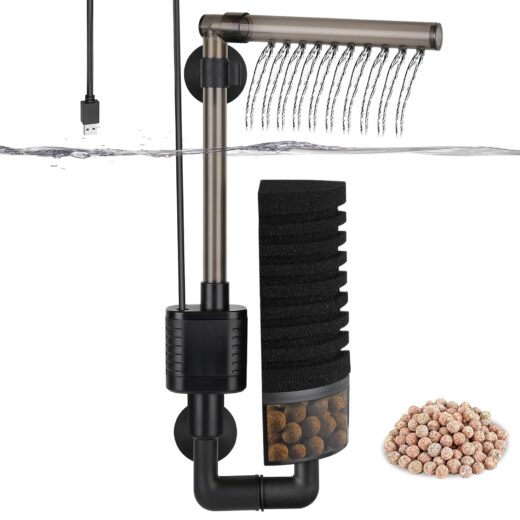
USB Aquarium Sponge Filter with Ceramic Media – Fresh/Saltwater
A compact black USB aquarium filter with two reusable sponges and one bag of ceramic media.…
View product