
How to Create a Planted Aquarium Bowl Without Fish
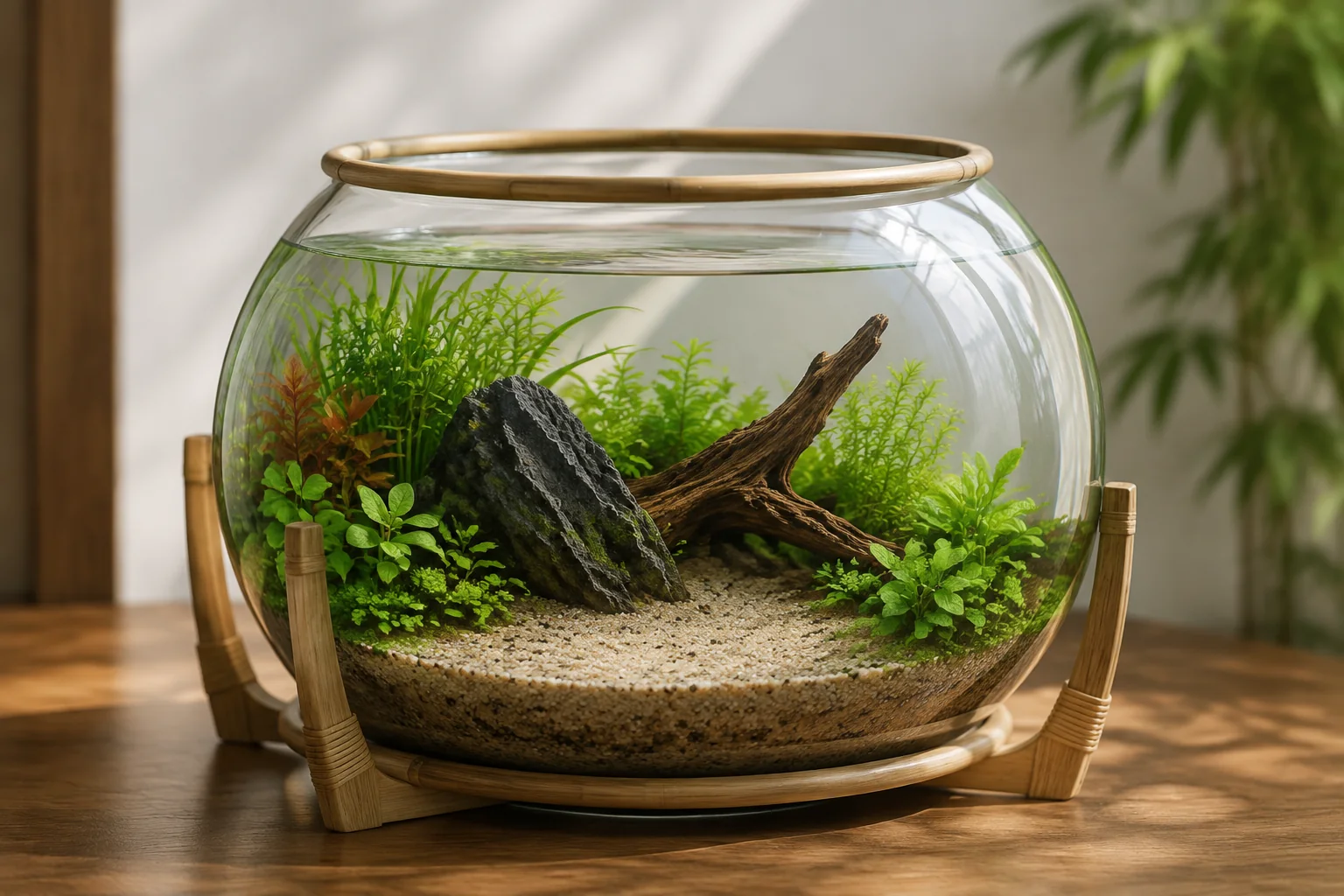
A plant-only bowl keeps the visual appeal of an aquarium while avoiding the welfare problems created by putting fish in an extremely small volume. It is still a living display, but its inputs and risks are easier to control. (RSPCA: Choosing an Aquarium for Pet Fish)
The DaraSphere bamboo glass mini aquarium bowl is particularly suited to a restrained plant composition because the natural frame already provides texture.
Plan the scale on paper
Measure the actual internal width and intended water height, then draw that verified space at full scale. This prevents buying materials that dominate the container. (Merck Veterinary Manual: Tank Volume Formulae)
Confirm the real water volume and remember that every centimetre of substrate reduces water depth.
Choose one layout idea
Simple concepts work best:
- one small stone with Anubias nana ‘Petite’ attached;
- a tiny branch with Java moss and open sand;
- a moss-covered pebble group;
- a single emergent plant with roots in water and leaves above the rim;
- a seasonal propagation display without permanent livestock.
Avoid mixing every attractive material. The bamboo frame, glass, water and one strong plant group already create several textures.
Prepare materials safely
Use aquarium-safe glass, substrate, stone, wood, thread or adhesive. Rinse inert materials with clean water. Do not boil unknown rocks, and do not use soap, perfume, painted décor or metal fasteners. (Purdue Extension: Aquarium Care and Cleaning)
If attaching an epiphyte, keep its rhizome above the substrate. Tie or glue it to a small hardscape piece with a product confirmed as aquarium-safe. (Tropica: Planting in the Aquarium)
See best plants for mini aquarium bowls for growth habit and trimming considerations.
Build from back to front
- Clean the empty glass with water and a soft cloth.
- Add a thin, deliberate substrate layer.
- Position the main stone or wood while the bowl is dry.
- Add plants with clean tools.
- Pour dechlorinated water onto a small dish.
- Stop below the rim and check the composition from every side.
- Remove loose leaves and trapped debris.
Source for the preceding checklist: Purdue Extension: Planting Your Aquarium
The complete mini aquarium bowl aquascaping guide explains perspective, negative space and hardscape scale.
Use controlled light
Direct sunlight can overheat a tiny water volume and encourage algae. Place the bowl in bright indirect room light or use a small controllable aquarium light positioned safely above the water. (Merck Veterinary Manual: Providing a Home for Fish)
Start with a conservative photoperiod and change only one variable at a time. Longer light is not a cure for slow growth. If algae increases, review intensity, duration, nutrients and decaying material together. (Purdue Extension: Planting Your Aquarium)
Our desktop bowl placement guide covers heat, glare, vibration and spill risks.
Maintain a plant-only bowl
Inspect it several times a week. Remove melting leaves before they decompose, wipe accessible algae with a soft aquarium-only tool and trim plants before they fill the entire water column. (Purdue Extension: Planting Your Aquarium)
Top up evaporation with appropriate water, but remember that topping up does not remove accumulated minerals. Periodic partial water changes may still be necessary depending on fertiliser, substrate and measured conditions. (NIST: Circumference, Area and Volume)
Do not dose fertiliser by guesswork. Use the measured water volume, the exact product instructions and a device capable of measuring the stated amount; if that cannot be done reliably, do not dose. (Merck Veterinary Manual: Tank Volume Formulae)
Do you need a filter?
Whether a plant-only display can run without filtration depends on the identified plants, substrate, light and maintenance; it is not self-sustaining, and decaying plant matter still needs removal. (Purdue Extension: Planting Your Aquarium)
If animals are introduced, the biological demands change completely. Read cycling and water quality in mini aquariums before making that decision.
Frequently asked questions
Can I use tap water?
Tap-water chemistry varies. If chlorine or chloramine is present, use a conditioner according to its instructions. Consider hardness and pH when choosing plants. (Merck Veterinary Manual: Providing a Home for Fish)
Can I add aquarium seeds?
Be cautious with “carpet seeds” sold without a confirmed aquatic species name. Some are terrestrial plants that fail after submersion. Buy correctly identified aquatic plants from a reputable supplier. (Purdue Extension: Planting Your Aquarium)
Is a plant-only bowl maintenance-free?
No. It needs trimming, debris removal, glass cleaning and observation of algae and water condition. (Purdue Extension: Planting Your Aquarium)
Can I put a fish in later?
The bowl’s size does not become suitable for fish because plants have matured. Choose a properly sized aquarium for livestock. (RSPCA: Choosing an Aquarium for Pet Fish)
Let the plants be the subject
A miniature bowl succeeds when it looks intentional rather than crowded. Use the bamboo frame as part of the composition, keep the plant list short and maintain open water and clean glass.
Continue with the complete desktop bamboo glass aquarium bowl guide.
Next step: For plant selection based on documented growth needs, continue with the aquarium plants guide.
Build a planted aquascape starter kit
Begin with a simple layout foundation, then choose lighting and maintenance tools that match the plants and available space.
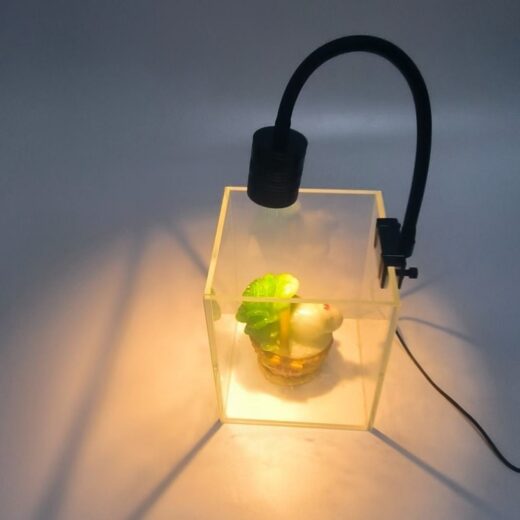
7 W USB Aquarium Plant Spotlight – Standard & Dimmable Models
Products matched to this guide
Selected for relevance to the setup and needs covered above.
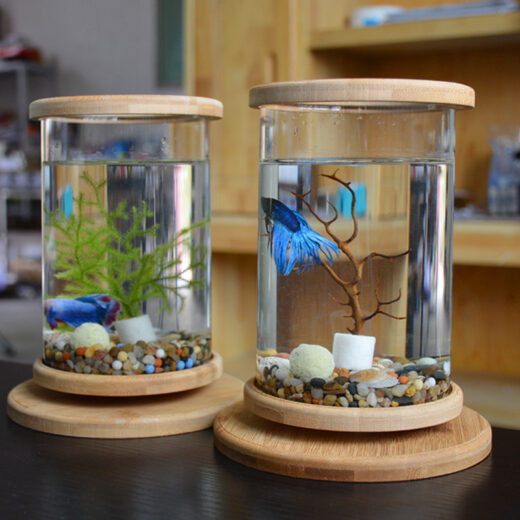
Bamboo & Glass Desktop Mini Aquarium Bowl – Approx. 14.5 × 18 cm
A compact clear-glass vessel framed in natural bamboo. The complete piece is approximately 14.5 cm in…
View product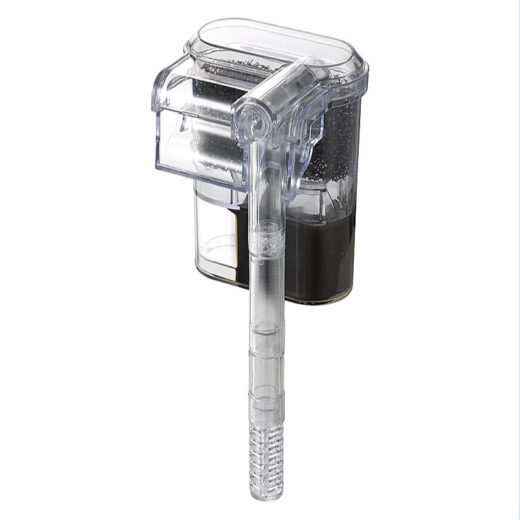
USB Mini Hang-On Waterfall Aquarium Filter
A compact USB-powered hang-on waterfall filter for small aquariums. Its transparent-grey ABS housing keeps the tank…
View product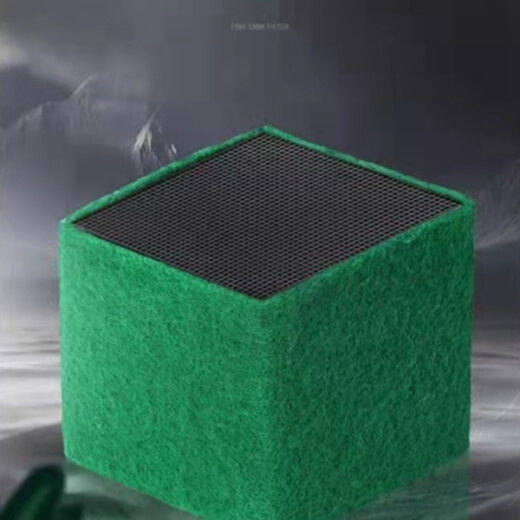
Filter Media Cube – Black/Green, Small/Large, 1–3 Pack
Cube-format aquarium filter media in black or green, small or large, with 1-, 2- and 3-piece…
View product